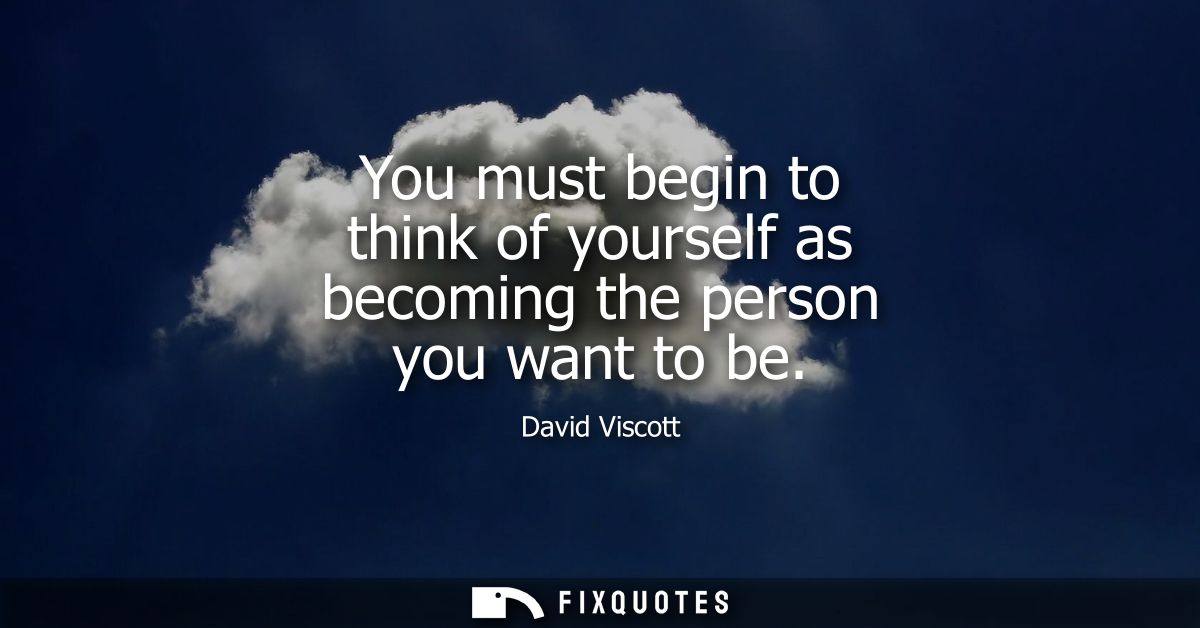
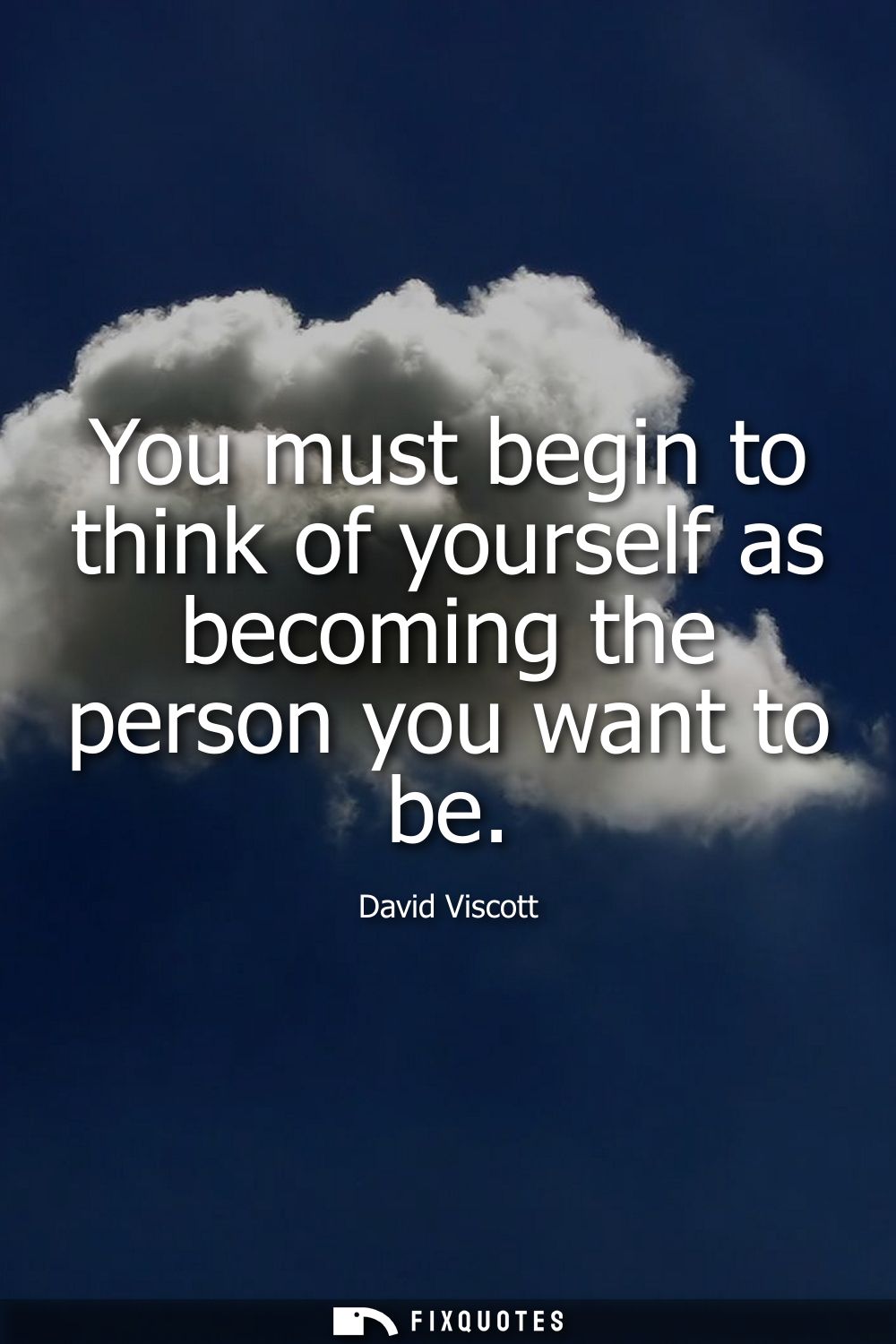
"You must begin to think of yourself as becoming the person you want to be"
About this Quote
The key move is the grammatical sleight of hand: “think of yourself as becoming.” He doesn’t demand you already be the person you want to be, which would trigger the familiar shame spiral. He also doesn’t let you hide in “one day” fantasies. “Becoming” is a bridge word, a psychological halfway house where change is allowed to be unfinished without being optional. Identity here isn’t a static label; it’s a process you’re responsible for authoring.
Subtextually, the quote targets a common obstacle in therapy: people try to change behaviors while clinging to an old self-concept. If you still think of yourself as “the type of person who can’t,” every new habit feels like an exception, fragile and temporary. Viscott is pushing a cognitive reframe: the story you tell about who you are sets the ceiling for what you’ll attempt, tolerate, and repeat. It’s less manifesting than pre-commitment. Start relating to yourself as a work in progress, and your choices stop feeling like auditions and start feeling like evidence.
Quote Details
| Topic | Self-Improvement |
|---|---|
| Source | Help us find the source |
| Cite |
Citation Formats
APA Style (7th ed.)
Viscott, David. (2026, January 15). You must begin to think of yourself as becoming the person you want to be. FixQuotes. https://fixquotes.com/quotes/you-must-begin-to-think-of-yourself-as-becoming-161827/
Chicago Style
Viscott, David. "You must begin to think of yourself as becoming the person you want to be." FixQuotes. January 15, 2026. https://fixquotes.com/quotes/you-must-begin-to-think-of-yourself-as-becoming-161827/.
MLA Style (9th ed.)
"You must begin to think of yourself as becoming the person you want to be." FixQuotes, 15 Jan. 2026, https://fixquotes.com/quotes/you-must-begin-to-think-of-yourself-as-becoming-161827/. Accessed 29 Mar. 2026.