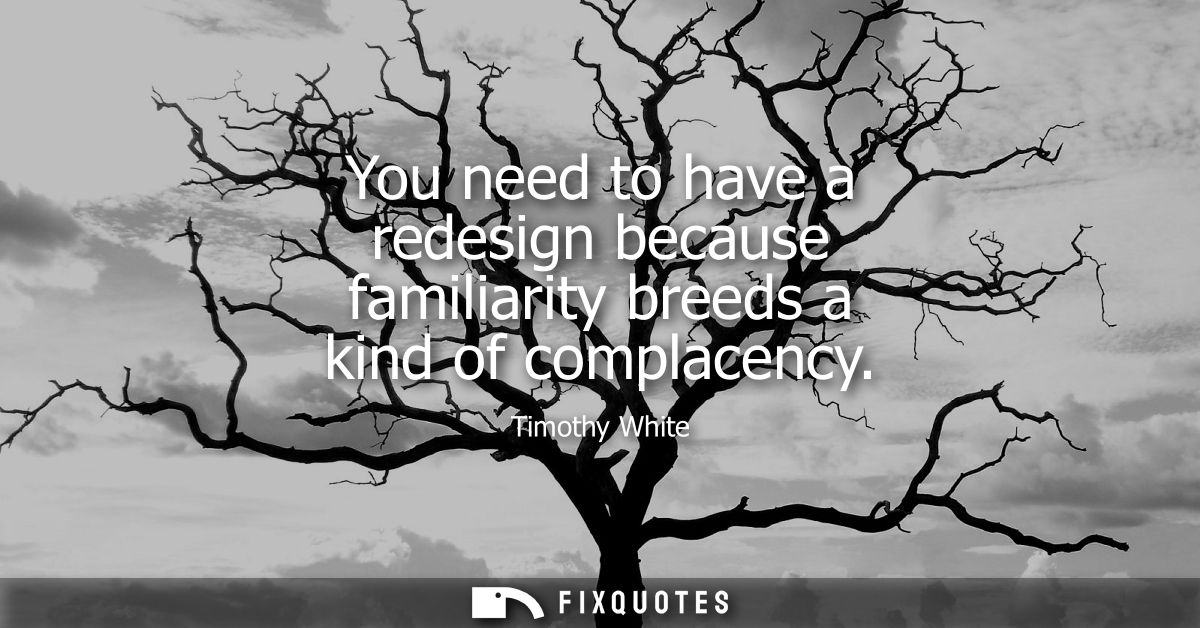
"You need to have a redesign because familiarity breeds a kind of complacency"
About this Quote
The intent is practical but also moral. White is arguing that taste is not a fixed asset; it’s a muscle that atrophies. Redesign becomes a forcing mechanism: a disruption that makes creators re-justify their choices and makes consumers re-notice what they’ve been taking for granted. Embedded in the wording is a little jab at institutions that mistake brand consistency for vitality. Familiarity here is portrayed as a sedative, not a strength.
In the context of late-20th-century media and music criticism - where magazines fought for relevance, scenes rose and fell quickly, and “cool” was a fast-moving target - White’s claim reads like survival strategy. A redesign signals that you’re still watching the culture, not merely curating your past successes. It’s also self-implicating: critics, too, can get lazy, recycling hardened opinions. The line works because it frames change not as novelty-chasing, but as discipline.
Quote Details
| Topic | Reinvention |
|---|---|
| Source | Help us find the source |
| Cite |
Citation Formats
APA Style (7th ed.)
White, Timothy. (2026, January 16). You need to have a redesign because familiarity breeds a kind of complacency. FixQuotes. https://fixquotes.com/quotes/you-need-to-have-a-redesign-because-familiarity-113508/
Chicago Style
White, Timothy. "You need to have a redesign because familiarity breeds a kind of complacency." FixQuotes. January 16, 2026. https://fixquotes.com/quotes/you-need-to-have-a-redesign-because-familiarity-113508/.
MLA Style (9th ed.)
"You need to have a redesign because familiarity breeds a kind of complacency." FixQuotes, 16 Jan. 2026, https://fixquotes.com/quotes/you-need-to-have-a-redesign-because-familiarity-113508/. Accessed 2 Apr. 2026.