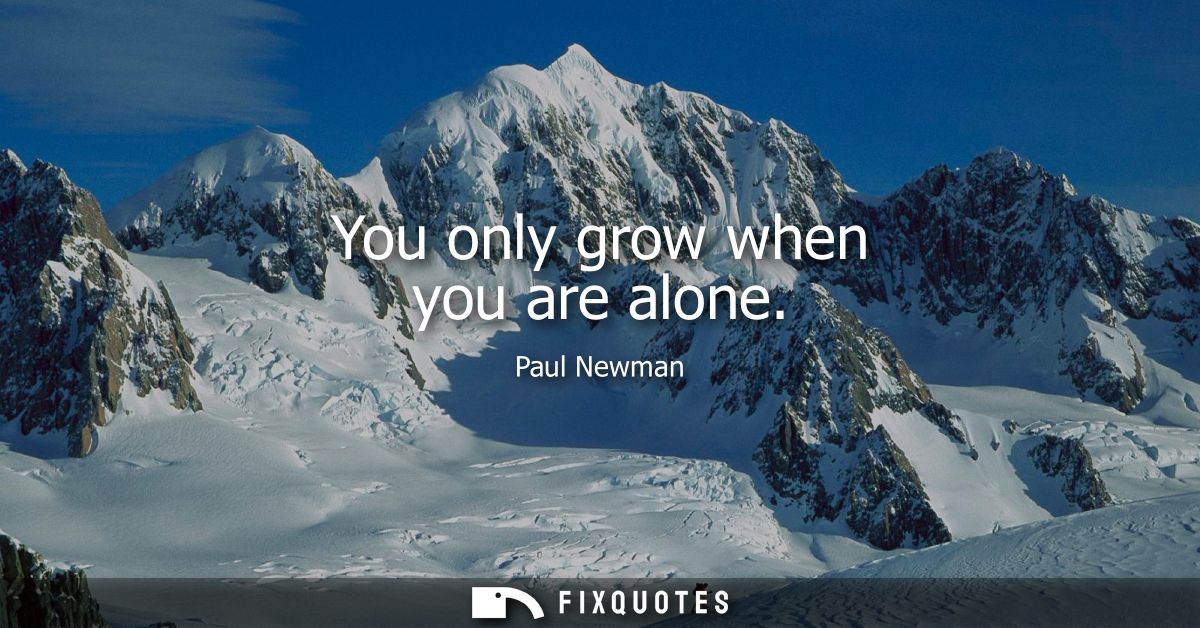
"You only grow when you are alone"
About this Quote
Newman’s line lands like a quiet rebuke to the crowd-pleasing myth that growth is something you perform in public. Coming from an actor - a man whose job was literally to be watched - it has the tang of hard-earned privacy. “Alone” here isn’t loneliness as tragedy; it’s solitude as a kind of workshop. The intent is almost practical: strip away the feedback loop of other people’s expectations and you finally hear your own notes, including the ones that sound off.
The subtext is about control. In relationships, workplaces, even friendships, you end up negotiating a version of yourself that keeps the peace. Alone, there’s no audience to charm, no role to keep consistent, no partner’s narrative to accommodate. Newman implies that real development requires a space where you can be wrong without witnesses, where you can change your mind without having to justify the change.
Context matters: Newman’s public image was famously polished - the blue-eyed icon, the golden couple with Joanne Woodward, the late-life philanthropist brand that became a cottage industry of goodwill. That kind of visibility can calcify a person into a product. The quote reads as a counterweight to celebrity itself: a reminder that if you never exit the room where you’re being applauded (or judged), you’ll start editing your life for the reaction.
It’s also a warning disguised as advice. Togetherness can be anesthetic; constant company can keep you from confronting the boring, difficult, necessary work of becoming someone you actually recognize.
The subtext is about control. In relationships, workplaces, even friendships, you end up negotiating a version of yourself that keeps the peace. Alone, there’s no audience to charm, no role to keep consistent, no partner’s narrative to accommodate. Newman implies that real development requires a space where you can be wrong without witnesses, where you can change your mind without having to justify the change.
Context matters: Newman’s public image was famously polished - the blue-eyed icon, the golden couple with Joanne Woodward, the late-life philanthropist brand that became a cottage industry of goodwill. That kind of visibility can calcify a person into a product. The quote reads as a counterweight to celebrity itself: a reminder that if you never exit the room where you’re being applauded (or judged), you’ll start editing your life for the reaction.
It’s also a warning disguised as advice. Togetherness can be anesthetic; constant company can keep you from confronting the boring, difficult, necessary work of becoming someone you actually recognize.
Quote Details
| Topic | Self-Improvement |
|---|
More Quotes by Paul
Add to List