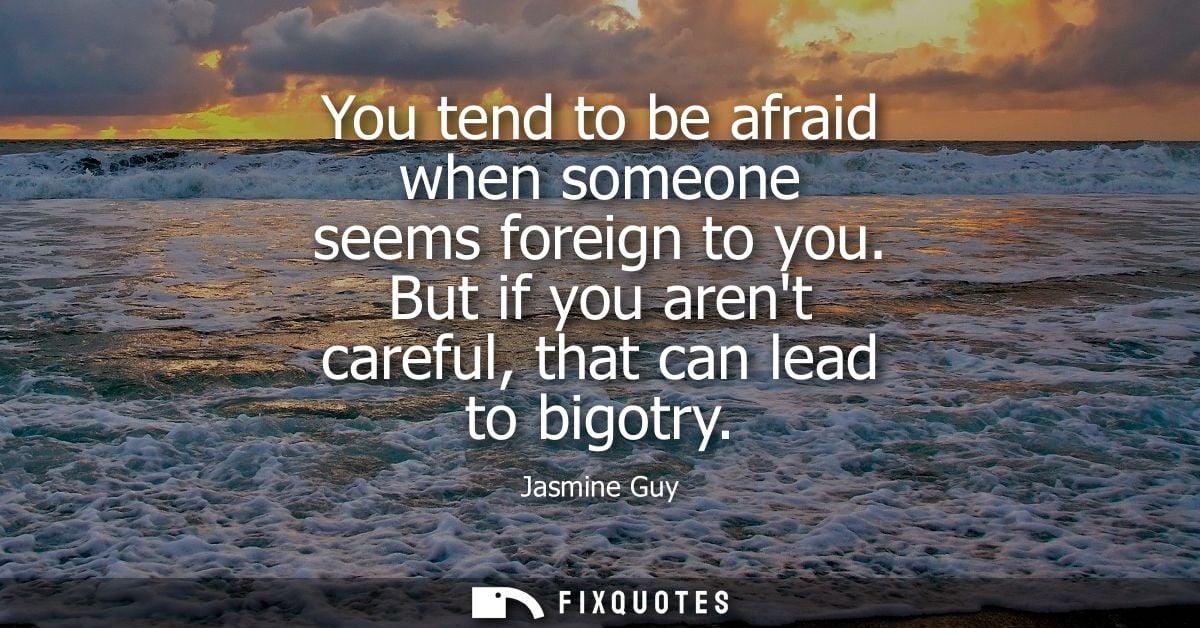
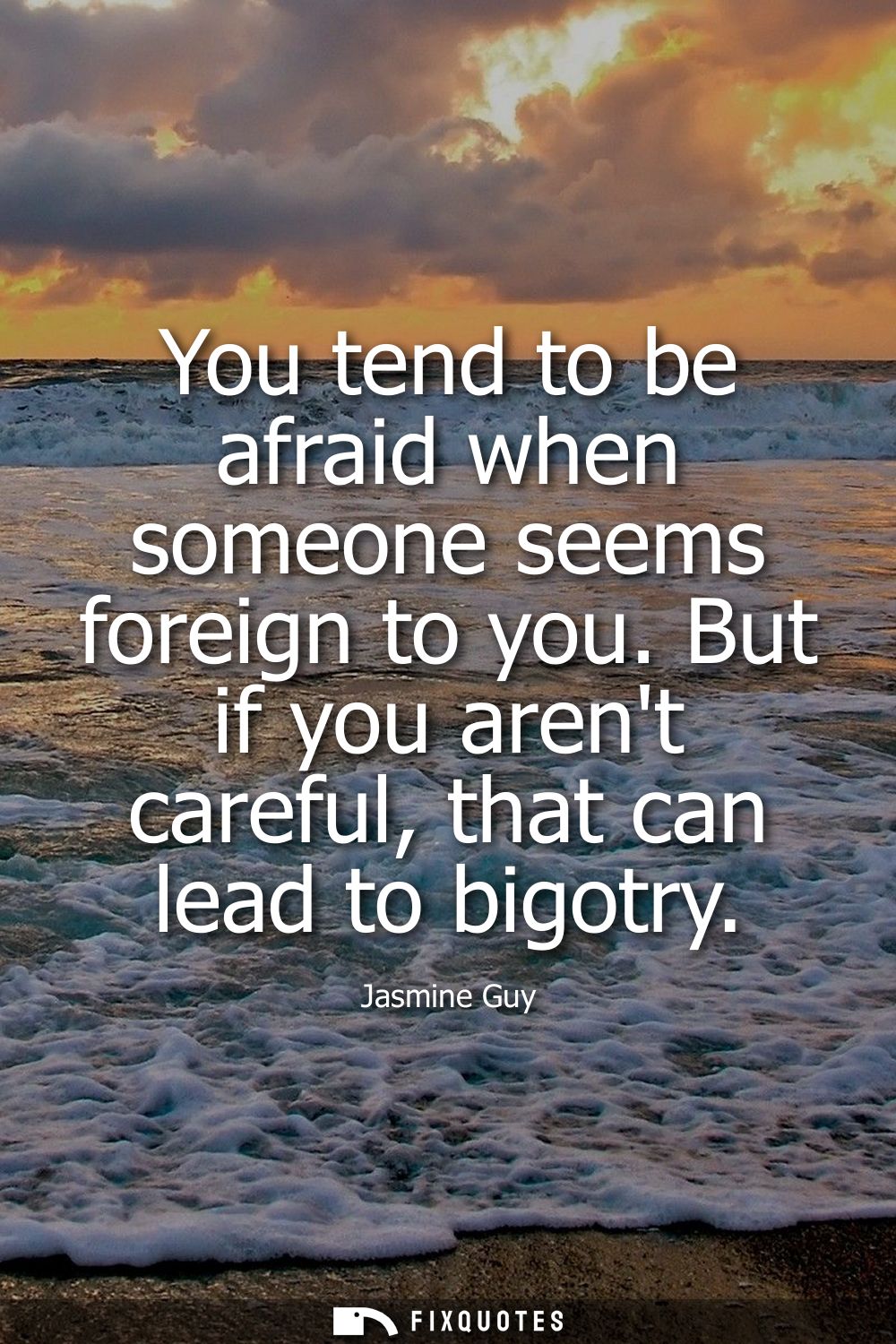
"You tend to be afraid when someone seems foreign to you. But if you aren't careful, that can lead to bigotry!"
About this Quote
The pivot is “But if you aren't careful.” She’s not describing bigotry as a thunderbolt; she’s describing it as neglect. The subtext is that prejudice often isn’t born from ideology but from inattention: letting discomfort harden into stories, letting a single unfamiliar accent or custom become a proxy for threat. “Careful” is doing ethical work here. It suggests vigilance, self-editing, an ongoing practice rather than a one-time declaration of tolerance.
Contextually, the quote reads like a response to a culture that sells “difference” as spectacle while punishing it in policy and daily interaction. Guy’s intent isn’t to shame fear; it’s to warn that fear, unexamined, becomes permission. Bigotry doesn’t arrive announcing itself. It arrives as a feeling you never bothered to question.
Quote Details
| Topic | Equality |
|---|---|
| Source | Help us find the source |
| Cite |
Citation Formats
APA Style (7th ed.)
Guy, Jasmine. (2026, February 19). You tend to be afraid when someone seems foreign to you. But if you aren't careful, that can lead to bigotry! FixQuotes. https://fixquotes.com/quotes/you-tend-to-be-afraid-when-someone-seems-foreign-50602/
Chicago Style
Guy, Jasmine. "You tend to be afraid when someone seems foreign to you. But if you aren't careful, that can lead to bigotry!" FixQuotes. February 19, 2026. https://fixquotes.com/quotes/you-tend-to-be-afraid-when-someone-seems-foreign-50602/.
MLA Style (9th ed.)
"You tend to be afraid when someone seems foreign to you. But if you aren't careful, that can lead to bigotry!" FixQuotes, 19 Feb. 2026, https://fixquotes.com/quotes/you-tend-to-be-afraid-when-someone-seems-foreign-50602/. Accessed 31 Mar. 2026.