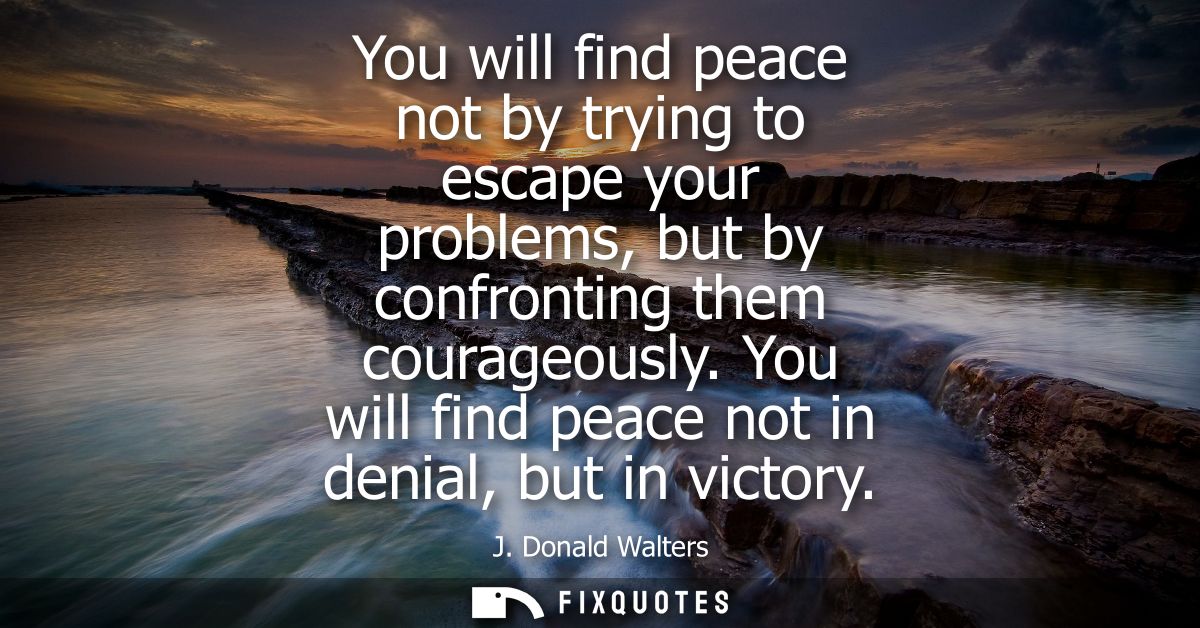
"You will find peace not by trying to escape your problems, but by confronting them courageously. You will find peace not in denial, but in victory"
About this Quote
The intent is plainly prescriptive, but the subtext is sharper: escape and denial are not just ineffective, they're spiritually corrosive. "Trying to escape your problems" nods to the endless evasions available in contemporary life (distraction, busyness, self-medication, even self-help as procrastination). Walters sets "confronting them courageously" as the only honest alternative, implying that courage is less a heroic trait than a daily practice of staying present with what you'd rather not feel.
Then comes the pivot: peace is found "in victory". That's a loaded word. It risks sounding triumphalist, as if inner life were a war to win. But in Walters's broader context as a spiritual teacher and prolific author (including his work with Kriya Yoga traditions), "victory" reads less like domination and more like mastery: overcoming the mind's evasive habits, not overpowering the world. It's also a subtle rebuke to therapeutic culture's softer language. Acceptance isn't the endpoint here; transformation is. Peace, he suggests, is what arrives when you stop negotiating with your own avoidance and finally take responsibility for the hard thing.
Quote Details
| Topic | Overcoming Obstacles |
|---|---|
| Source | Help us find the source |
| Cite |
Citation Formats
APA Style (7th ed.)
Walters, J. Donald. (2026, January 14). You will find peace not by trying to escape your problems, but by confronting them courageously. You will find peace not in denial, but in victory. FixQuotes. https://fixquotes.com/quotes/you-will-find-peace-not-by-trying-to-escape-your-167610/
Chicago Style
Walters, J. Donald. "You will find peace not by trying to escape your problems, but by confronting them courageously. You will find peace not in denial, but in victory." FixQuotes. January 14, 2026. https://fixquotes.com/quotes/you-will-find-peace-not-by-trying-to-escape-your-167610/.
MLA Style (9th ed.)
"You will find peace not by trying to escape your problems, but by confronting them courageously. You will find peace not in denial, but in victory." FixQuotes, 14 Jan. 2026, https://fixquotes.com/quotes/you-will-find-peace-not-by-trying-to-escape-your-167610/. Accessed 31 Mar. 2026.