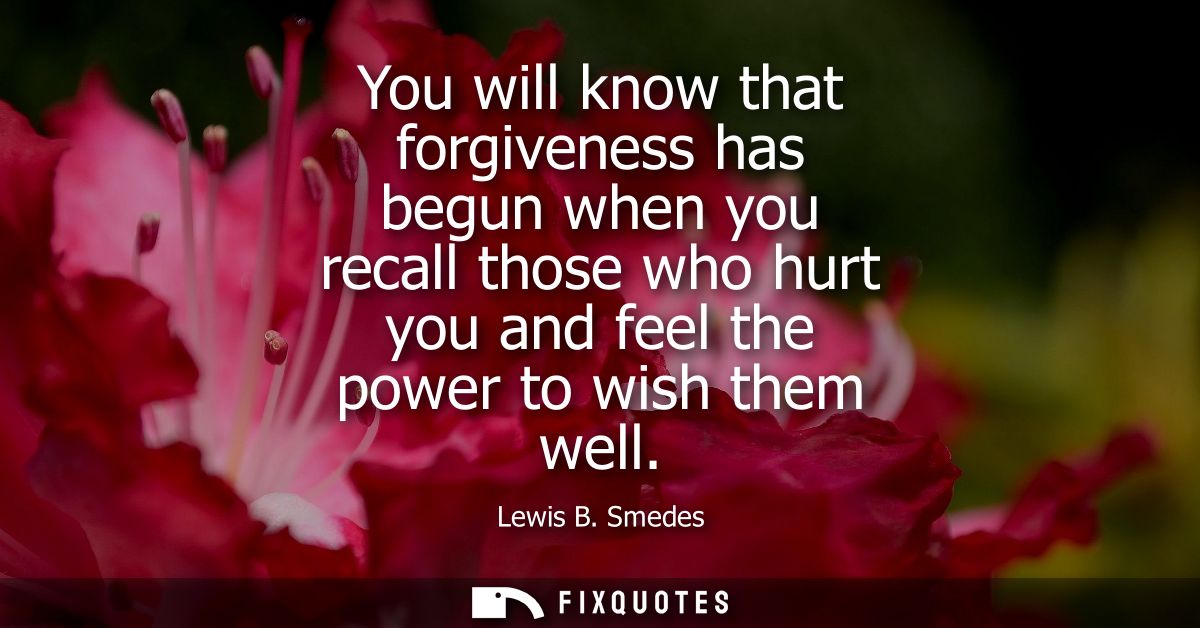
"You will know that forgiveness has begun when you recall those who hurt you and feel the power to wish them well"
About this Quote
Smedes’ key move is the phrase “feel the power.” Forgiveness becomes less about letting someone off the hook and more about reclaiming your own agency from the injury. Resentment can function like a long-term lease agreement: it keeps the offender living in your head, collecting rent. Wishing them well doesn’t mean denying harm or restoring trust; it means the wound stops dictating your emotional weather. The subtext is almost clinical: if you can generate goodwill, even reluctantly, you’ve loosened the grip of the past.
Context matters: Smedes wrote out of a Christian ethical tradition, where forgiveness is often preached as duty. He subtly reframes it as liberation, which makes it palatable to modern readers wary of pious coercion. “Has begun” is also doing work: forgiveness isn’t a switch flipped once; it’s a process with early indicators. The quote grants permission for imperfection while setting a hard standard for what real change feels like.
Quote Details
| Topic | Forgiveness |
|---|---|
| Source | Help us find the source |
| Cite |
Citation Formats
APA Style (7th ed.)
Smedes, Lewis B. (2026, January 15). You will know that forgiveness has begun when you recall those who hurt you and feel the power to wish them well. FixQuotes. https://fixquotes.com/quotes/you-will-know-that-forgiveness-has-begun-when-you-142727/
Chicago Style
Smedes, Lewis B. "You will know that forgiveness has begun when you recall those who hurt you and feel the power to wish them well." FixQuotes. January 15, 2026. https://fixquotes.com/quotes/you-will-know-that-forgiveness-has-begun-when-you-142727/.
MLA Style (9th ed.)
"You will know that forgiveness has begun when you recall those who hurt you and feel the power to wish them well." FixQuotes, 15 Jan. 2026, https://fixquotes.com/quotes/you-will-know-that-forgiveness-has-begun-when-you-142727/. Accessed 9 Mar. 2026.