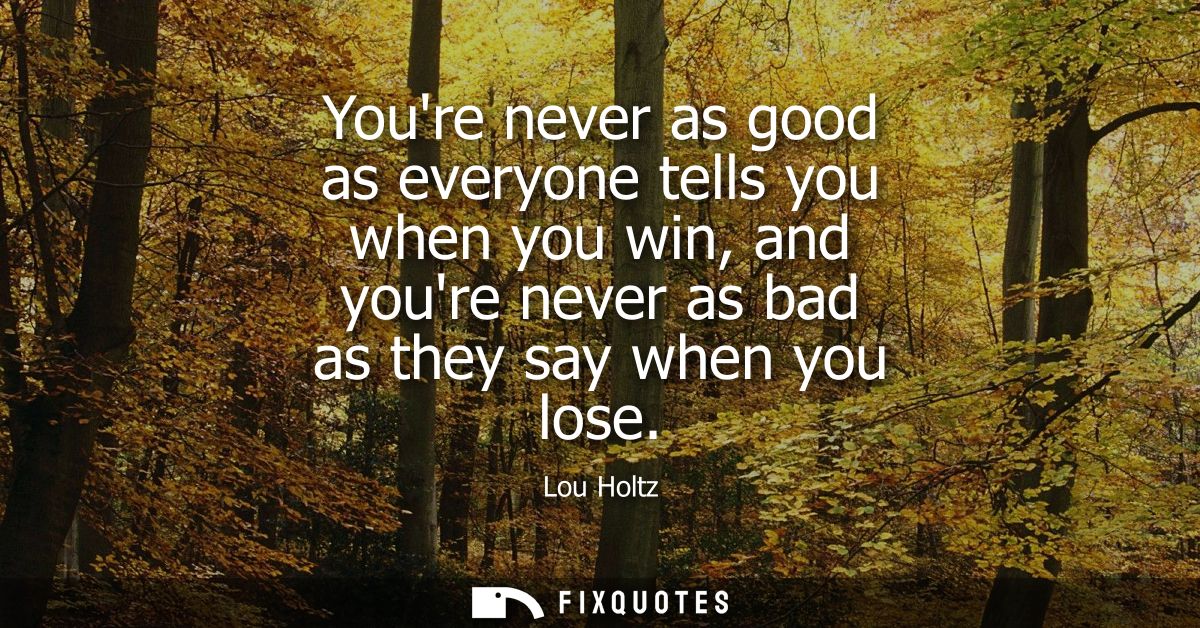
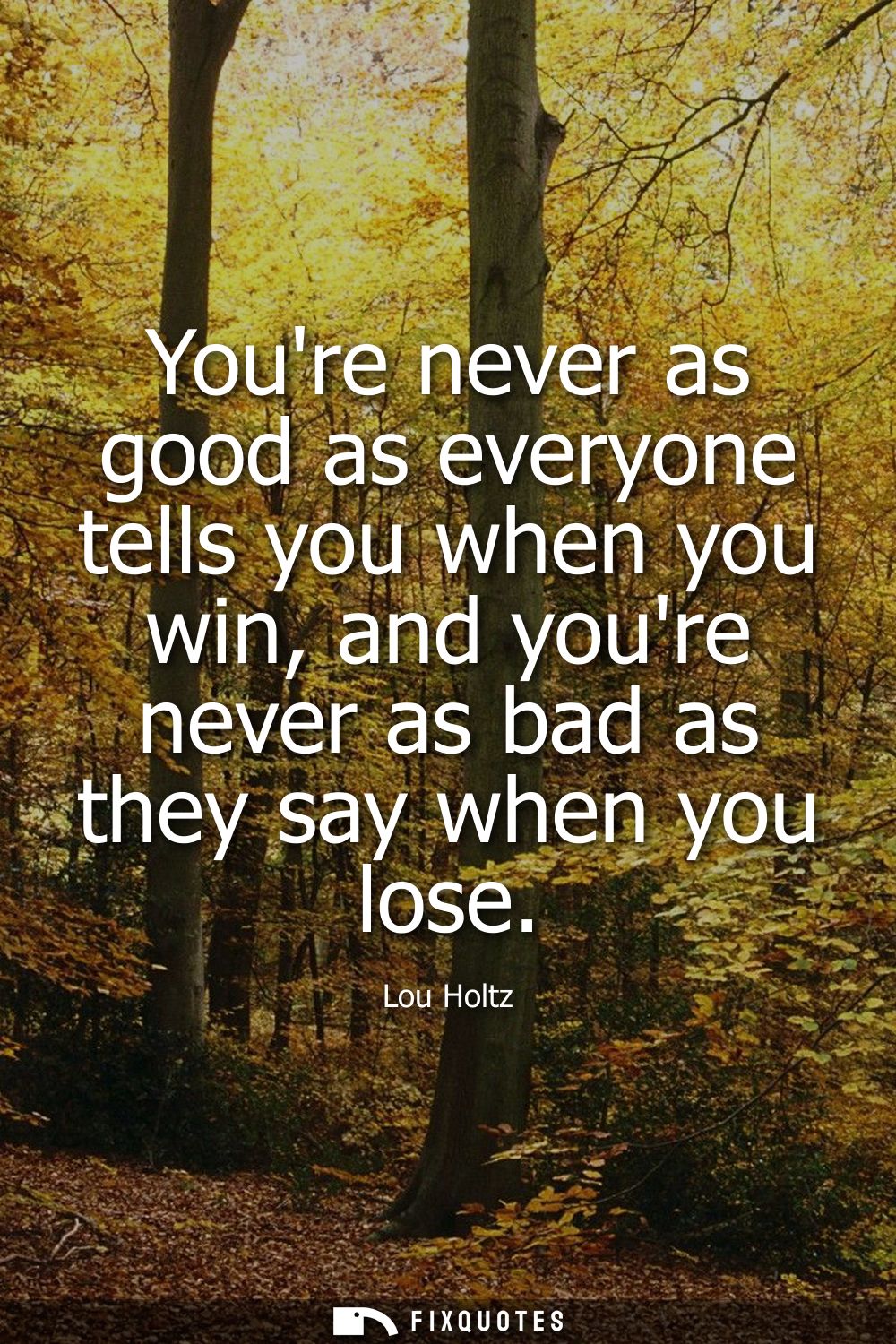
"You're never as good as everyone tells you when you win, and you're never as bad as they say when you lose"
About this Quote
The intent is behavioral, not philosophical. Holtz is coaching his players to resist two traps that sabotage consistency: complacency after applause and panic after boos. “Everyone tells you” and “they say” are doing key work here. He’s not debating your actual performance; he’s reminding you that crowds, media, boosters, and even teammates speak in extremes because extremes are entertaining. Sports culture rewards hot takes, not calibrated judgment.
Subtext: your identity can’t be outsourced to the scoreboard or the commentary around it. If you believe the hype, you’ll stop doing the unglamorous work that produced the win. If you absorb the venom, you’ll play tight, chase redemption, and abandon process. Holtz’s context as a coach matters: he’s managing not just talent but attention, protecting a locker room from the emotional whiplash of public opinion. It’s a compact argument for steadiness as a competitive advantage - and for humility as a form of discipline.
Quote Details
| Topic | Wisdom |
|---|---|
| Source | Help us find the source |
| Cite |
Citation Formats
APA Style (7th ed.)
Holtz, Lou. (2026, January 17). You're never as good as everyone tells you when you win, and you're never as bad as they say when you lose. FixQuotes. https://fixquotes.com/quotes/youre-never-as-good-as-everyone-tells-you-when-29466/
Chicago Style
Holtz, Lou. "You're never as good as everyone tells you when you win, and you're never as bad as they say when you lose." FixQuotes. January 17, 2026. https://fixquotes.com/quotes/youre-never-as-good-as-everyone-tells-you-when-29466/.
MLA Style (9th ed.)
"You're never as good as everyone tells you when you win, and you're never as bad as they say when you lose." FixQuotes, 17 Jan. 2026, https://fixquotes.com/quotes/youre-never-as-good-as-everyone-tells-you-when-29466/. Accessed 13 Feb. 2026.