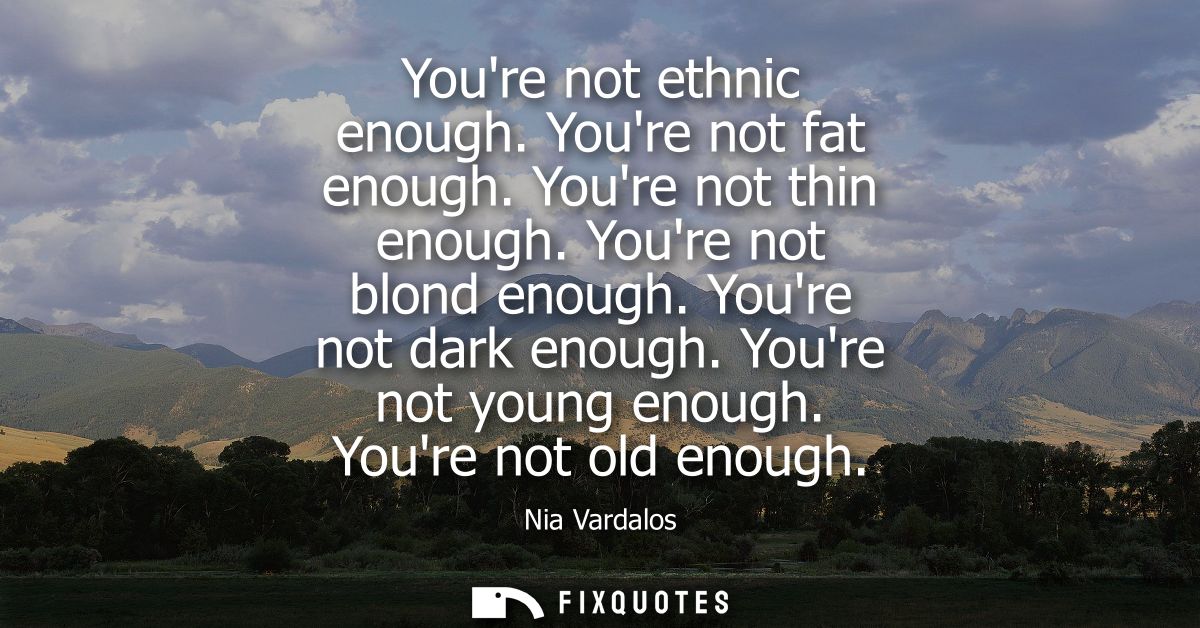
"You're not ethnic enough. You're not fat enough. You're not thin enough. You're not blond enough. You're not dark enough. You're not young enough. You're not old enough!"
About this Quote
The subtext is a sleight of hand we’re trained to accept: judgment disguised as “fit.” “Ethnic enough” and “blond enough” are especially telling because they reveal how identity gets treated like wardrobe. You can be asked to perform difference until it’s profitable, then punished for embodying it too fully. The body cues (“fat,” “thin,” “young,” “old”) widen the trap: even categories that should be opposites collapse into the same message, which is simply “be less yourself.”
Coming from an actress, the context carries extra sting. Entertainment has long sold “relatability” while policing what counts as relatable, demanding hyper-specific looks that supposedly appeal to “everyone.” Vardalos’s intent feels both personal and strategic: a refusal to internalize the notes, and a reminder that the problem isn’t your failure to meet the standard, it’s the standard’s need for your failure to keep the machine running.
Quote Details
| Topic | Equality |
|---|---|
| Source | Help us find the source |
| Cite |
Citation Formats
APA Style (7th ed.)
Vardalos, Nia. (2026, February 18). You're not ethnic enough. You're not fat enough. You're not thin enough. You're not blond enough. You're not dark enough. You're not young enough. You're not old enough! FixQuotes. https://fixquotes.com/quotes/youre-not-ethnic-enough-youre-not-fat-enough-82725/
Chicago Style
Vardalos, Nia. "You're not ethnic enough. You're not fat enough. You're not thin enough. You're not blond enough. You're not dark enough. You're not young enough. You're not old enough!" FixQuotes. February 18, 2026. https://fixquotes.com/quotes/youre-not-ethnic-enough-youre-not-fat-enough-82725/.
MLA Style (9th ed.)
"You're not ethnic enough. You're not fat enough. You're not thin enough. You're not blond enough. You're not dark enough. You're not young enough. You're not old enough!" FixQuotes, 18 Feb. 2026, https://fixquotes.com/quotes/youre-not-ethnic-enough-youre-not-fat-enough-82725/. Accessed 3 Apr. 2026.