
Novel: A Box of Matches
Summary
A Box of Matches follows Emmett, a solitary, middle-aged man who rises before dawn to perform a small, exacting ritual: he builds a fire in his hearth and lights it with a particular box of matches he keeps like a talisman. The simple, repeated act of starting the blaze provokes a running interior commentary. As the flames grow, Emmett's mind wanders through memories, regrets, and scraps of longing tied to a woman who once mattered to him and to the quieter facts of a life measured in routines and small domestic pleasures.
The narrative is intimate and tightly focused, moving between the tactile specifics of arranging kindling and the porous interior life of a man trying to hold some continuity against time's erosion. The physical act of striking a match becomes a hinge for recollection and reflection, and the novella's events are minimal; the drama lives in Emmett's mind as he unspools associations triggered by scent, heat, and the simple geometry of a burning flame.
Emmett and the Box
The titular box of matches functions as more than a tool: it is a repository of memory, a reminder of a past intimacy and an emblem of ritualized survival. Emmett treats the matches with a tenderness and almost superstitious care. He ascribes to them an ability to anchor a morning, to make the house hospitable to thought, and to mark the passage of days with a deliberate, almost devotional gesture.
That small object is also a stand-in for the life Emmett inhabits, the private, domestic sphere where loss and consolation coexist. Each match stroked open is a connective moment linking the present to the presence that once filled it. The box therefore becomes a private shrine to the fragile persistence of feeling and to the human need for small, repeatable acts that give shape to time.
Style and Voice
The prose is concentrated, observant, and often quietly playful, with attention lavished on the detail of everyday things. Sentences linger on sensory particulars: the smell of smoke, the way light unthreads across a floorboard, the exact maneuver of fingers striking a flint. That microscopic observation creates a strong sense of interiority, drawing readers close to Emmett's consciousness so that his recollections and ruminations feel immediate and consequential.
Despite its modest action, the book carries a surprising emotional intensity because it privileges thought over plot. The voice alternates between rueful humor and elegiac tenderness, and small digressions accumulate until they reveal the outline of a life. The effect is conversational but precise, the kind of prose that finds meaning in minutiae.
Themes
A Box of Matches meditates on memory, longing, and the ritualized habits that sustain identity. It explores how ordinary acts, lighting a fire, keeping a carefully chosen object, can become a form of communion with the past and a method of self-preservation. There is also a quiet inquiry into solitude: how a person negotiates desire, loss, and the slow adjustments of middle age within the domestic sphere.
Another recurring concern is the tension between transience and continuity. Matches burn quickly, yet the ritual of lighting them recurs; moments are ephemeral, but the habits that mark them can create a durable sense of meaning. The novella gently poses how much of life can be recovered in memory and how much must be carried forward in small, deliberate acts.
Conclusion
Concise and finely wrought, A Box of Matches treats a seemingly simple morning routine as a portal into a complex inner life. Its power lies less in plot than in the concentrated feeling of watching a man attend to the ordinary and, through that attentiveness, reckon with what remains of love, habit, and hope. The book is a quietly affecting study of how ritual and objects hold the shape of memory.
Citation Formats
APA Style (7th ed.)
A box of matches. (2025, September 13). FixQuotes. https://fixquotes.com/works/a-box-of-matches/
Chicago Style
"A Box of Matches." FixQuotes. September 13, 2025. https://fixquotes.com/works/a-box-of-matches/.
MLA Style (9th ed.)
"A Box of Matches." FixQuotes, 13 Sep. 2025, https://fixquotes.com/works/a-box-of-matches/. Accessed 3 Apr. 2026.
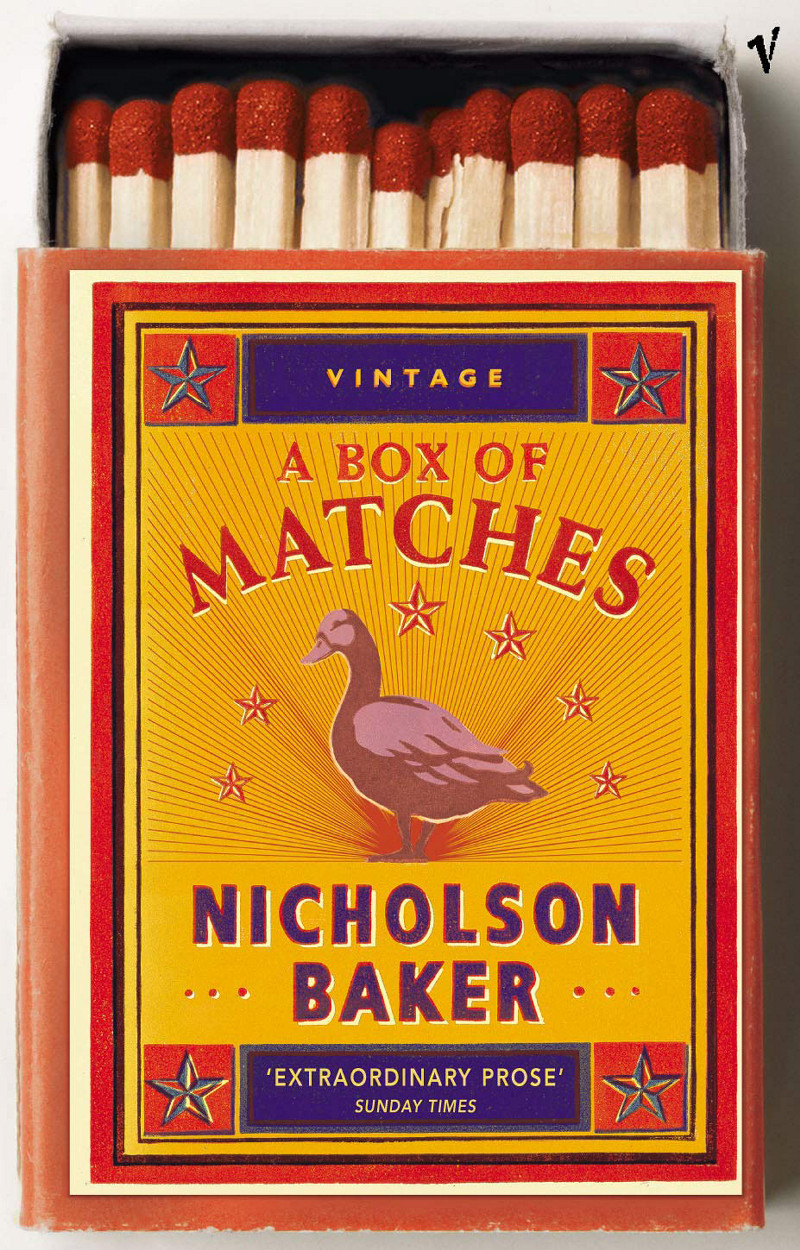
A Box of Matches
The story follows a middle-aged man named Emmett as he performs a daily ritual of waking up early to start a fire and reflect on his life.
- Published2003
- TypeNovel
- GenreDomestic fiction
- LanguageEnglish
- CharactersEmmett
About the Author

Nicholson Baker
Nicholson Baker, an acclaimed author known for his unique writing style and focus on preserving the printed word.
View Profile- OccupationNovelist
- FromUSA
-
Other Works
- The Mezzanine (1988)
- Room Temperature (1990)
- Vox (1992)
- The Fermata (1994)
- The Everlasting Story of Nory (1998)
- Checkpoint (2004)
- The Anthologist (2009)
- Traveling Sprinkler (2013)