
Novel: A Mortal Antipathy
Overview
Oliver Wendell Holmes Sr.'s A Mortal Antipathy blends case study, social comedy, and campus chronicle to explore an extreme psychological aversion that looks like pathology yet touches questions of education, gender, and the limits of medical understanding. Set in a New England college town and narrated by a genial physician who opens a "New Portfolio" of observations, the story traces how a man’s crippling recoil from feminine touch is tested by friendship, science, and an unforeseen crisis.
Setting and Frame
The tale unfolds among boarding houses, lecture rooms, and boating clubs clustered around a small college. The narrator, a doctor with a taste for anecdote and speculation, draws the reader into town gossip and dinner-table debate, then narrows the focus to a single, puzzling case. Holmes’s familiar talkative voice, half essayist and half storyteller, supplies digressions on heredity, nervous disorders, and cultural fashions while the plot advances in the background.
Maurice Kirkwood’s Condition
Maurice Kirkwood, wealthy, cultured, and widely traveled, settles into studious seclusion near the college. His habits are impeccable, his intellect impressive, yet he avoids women with painstaking vigilance. Rumor paints him as arrogant or cold, but the truth is a visceral "mortal antipathy": the mere touch of a woman provokes faintness, convulsion, and panic. The narrator and the town physician consider him not a misogynist but a sufferer from a rare nervous association, a reflex wired by shock in early life and reinforced by fear and secrecy. Holmes places the case among other well-attested antipathies, using it to probe the borderland where physiology and imagination meet.
Lurida Vincent and Euthymia
Two young women become central to the drama. Lurida Vincent, earnest, learned, and reform-minded, represents the push for women’s higher education and the new authority of science; she watches Maurice with curiosity sharpened by compassion and a desire to test hypotheses. Euthymia, her spirited friend, athletic, poised, and clear-sighted, responds to Maurice without theories, measuring him by conduct rather than talk. Their presence unsettles his careful routines, and their conversations with the physician-narrator stage the novel’s arguments about nerves, willpower, and the education of both sexes.
Crisis and Resolution
The long stalemate breaks not in a consulting room but on the water. A boating excursion turns perilous; in the instant when Euthymia’s life is in danger, Maurice’s trained avoidance gives way to instinctive rescue. He lifts and steadies the woman he has dreaded to touch, discovering in the shock of action that his body no longer betrays him. From that moment, his reactions soften; gratitude, repeated ordinary meetings, and the doctor’s quiet guidance loosen the old association. What fear had soldered together, female presence and physical collapse, gradually separates, until he can live among women as other men do. Affection blossoms between Maurice and Euthymia, and their union marks not a miracle cure so much as the end of a tyranny of nerves.
Themes and Significance
Holmes uses Maurice’s case to test popular theories of his day, mesmeric influence, maternal impressions, inherited taint, against clinical common sense. He mocks pedantry and credulity yet remains tender toward the afflicted, arguing for patience, rational inquiry, and humane interpretation. The novel also registers late, 19th-century debates about women’s education through Lurida’s aspirations and the town’s mixed reactions, suggesting that knowledge and character, not fashion, distinguish true cultivation. Stylistically, the book mingles polished talk with episodic action; its resolution affirms the therapeutic power of shock, habit, and sympathetic companionship. The "mortal antipathy" that once defined Maurice becomes a cautionary emblem of how a single early terror can govern a life, until love and circumstance provide a countervailing force.
Citation Formats
APA Style (7th ed.)
A mortal antipathy. (2025, August 21). FixQuotes. https://fixquotes.com/works/a-mortal-antipathy/
Chicago Style
"A Mortal Antipathy." FixQuotes. August 21, 2025. https://fixquotes.com/works/a-mortal-antipathy/.
MLA Style (9th ed.)
"A Mortal Antipathy." FixQuotes, 21 Aug. 2025, https://fixquotes.com/works/a-mortal-antipathy/. Accessed 12 Feb. 2026.
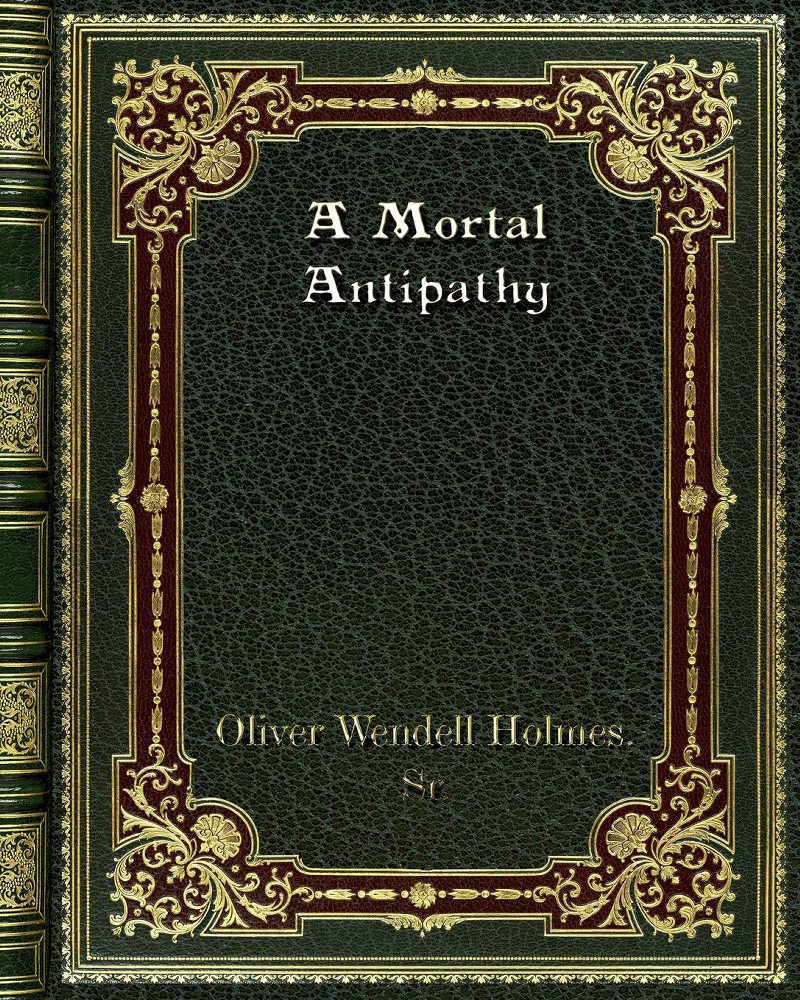
A Mortal Antipathy
A novel by Oliver Wendell Holmes that follows the story of Maurice Kirkwood, a young man with an unexplainable aversion to women, and his attempts to overcome his fears and prejudices.
- Published1885
- TypeNovel
- GenreFiction
- LanguageEnglish
- CharactersMaurice Kirkwood
About the Author

Oliver Wendell Holmes Sr.
Oliver Wendell Holmes Sr., renowned poet and physician, whose work shaped literature and medical science.
View Profile- OccupationPoet
- FromUSA
-
Other Works
- The Autocrat of the Breakfast-Table (1858)
- The Professor at the Breakfast-Table (1860)
- Elsie Venner (1861)
- The Guardian Angel (1867)
- The Poet at the Breakfast-Table (1872)