
Novel: And the Hippos Were Boiled in Their Tanks
Overview
"And the Hippos Were Boiled in Their Tanks" is a lean, hardboiled collaboration by William S. Burroughs and Jack Kerouac, written in 1945 and published in 2008. Told in alternating chapters by two narrators, Will Dennison (Burroughs) and Mike Ryko (Kerouac), the novel offers a thinly veiled account of the infamous 1944 killing of David Kammerer by Lucien Carr within the early Beat circle. Set against wartime New York’s hiring halls, cheap rooms, and after-hours bars, it tracks a young bohemian clique drifting through days of boredom, drink, and small hustles until desire, manipulation, and fatigue culminate in violence.
Setting and Characters
Will Dennison is an older, sardonic observer who watches the group with a cool, appraising eye, chronicling their aimlessness with clipped precision. Mike Ryko is younger, restless, and trying to ship out with the Merchant Marine, half in flight from the city and half seduced by its chaotic freedom. At the center is Phillip Tourian, a magnetic, mercurial youth who thrives on attention and provocation, and Ramsay Allen, an older man hopelessly fixated on him. Orbiting their tense dyad are friends and acquaintances who drift through rented rooms and waterfront bars, each looking for money, diversion, or a berth out of town.
Plot
The novel follows the group over several cramped weeks as Mike waits at the hiring hall for a ship and Will keeps his distance, assessing the petty scams and romantic entanglements that keep everyone in motion but nowhere. Phillip toys with Ramsay’s devotion, alternately accepting favors and recoiling from his persistence. Ramsay’s presence becomes inescapable, he turns up at parties, in hallways, outside doorways, while Phillip’s impatience hardens into contempt. The city’s mood is gray and provisional: blackout curtains, rationed cigarettes, omnipresent military uniforms, and the draft looming as an impersonal threat.
Tensions crest after a string of nights defined by drinking, arguments, and evasions. Phillip, increasingly convinced he must break free, meets Ramsay along the Hudson. Their confrontation, pared to its bone in the book’s flat, impassive prose, ends with Phillip stabbing Ramsay and disposing of the body in the river. The act is presented less as a sensational climax than as the bleak, logical endpoint of a circle that has been tightening from the first page.
In the aftermath, Phillip drifts through the city in a shock of clarity, visiting Will and then Mike. Will, guarded and practical, urges restraint and legal counsel. Mike is drawn into Phillip’s orbit of crisis, trailing him through errand-like episodes that feel both mundane and fatalistic. News spreads quickly; the police begin to stitch together the night’s movements. Phillip turns himself in, and the authorities reach the friends as material witnesses, their complicity measured not only in actions but in the passive tolerance that preceded the crime.
Style and Themes
The alternating voices sharpen the book’s portrait of a milieu: Burroughs’s Dennison is dry, clinical, and sardonic; Kerouac’s Ryko is impulsive, searching, and vulnerable to romantic illusions. Together they create a double exposure of the same streets and rooms, a cool noir surface overlaying private anxieties. Themes of obsession, youthful charisma, queer desire and denial, and the ethics of bystanders thread through the clipped dialogue and matter-of-fact narration. War-time transience, ships waiting to sail, rooms rented by the week, mirrors the characters’ moral provisionality.
Significance
Beyond its true-crime skeleton, the novel captures the Beat generation before it had a name, its future luminaries still anonymous figures in cafes and hallways. The title’s surreal broadcast fragment hints at the era’s ambient catastrophe, while the book’s restraint resists mythologizing. What remains is an unadorned snapshot of friendship, obsession, and consequence in a city where drift can feel like destiny until it isn’t.
Citation Formats
APA Style (7th ed.)
And the hippos were boiled in their tanks. (2026, February 9). FixQuotes. https://fixquotes.com/works/and-the-hippos-were-boiled-in-their-tanks/
Chicago Style
"And the Hippos Were Boiled in Their Tanks." FixQuotes. February 9, 2026. https://fixquotes.com/works/and-the-hippos-were-boiled-in-their-tanks/.
MLA Style (9th ed.)
"And the Hippos Were Boiled in Their Tanks." FixQuotes, 9 Feb. 2026, https://fixquotes.com/works/and-the-hippos-were-boiled-in-their-tanks/. Accessed 10 Feb. 2026.
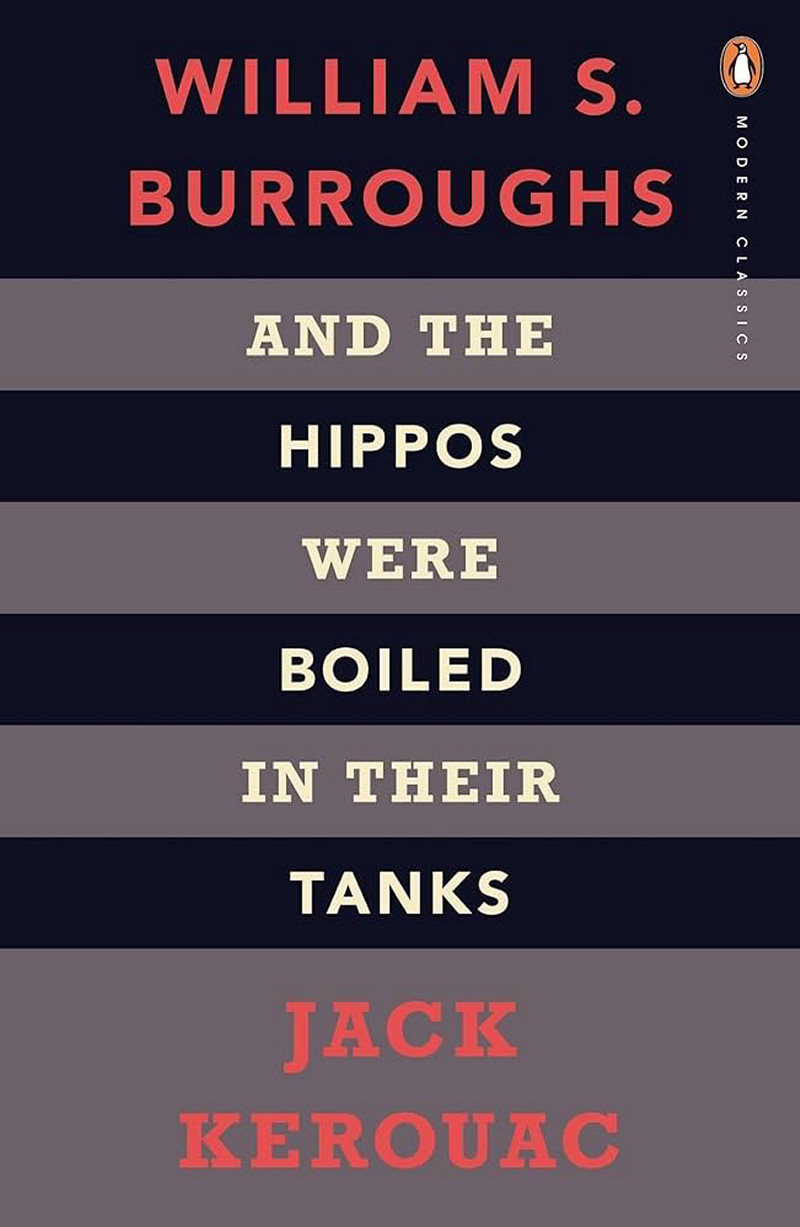
And the Hippos Were Boiled in Their Tanks
Early collaboration with Jack Kerouac, written in the 1940s but published decades later. A partly fictionalized account tied to a real-life killing among acquaintances, notable as an illustration of Burroughs's and Kerouac's formative styles.
- Published2008
- TypeNovel
- GenreCrime, Early work
- Languageen
- Links
About the Author

William S. Burroughs
William S. Burroughs covering life, major works, methods, influence, and selected quotes.
View Profile- OccupationWriter
- FromUSA
-
Other Works
- Junkie: Confessions of an Unredeemed Drug Addict (1953)
- Naked Lunch (1959)
- Exterminator! (1960)
- The Soft Machine (1961)
- The Ticket That Exploded (1962)
- The Yage Letters (1963)
- Dead Fingers Talk (1963)
- Nova Express (1964)
- Port of Saints (1973)
- The Third Mind (1978)
- Cities of the Red Night (1981)
- The Place of Dead Roads (1983)
- Queer (1985)
- The Western Lands (1987)
- Interzone (1989)
- My Education: A Book of Dreams (1995)
- Last Words: The Final Journals of William S. Burroughs (2000)