
Poetry: Bang-i-Dra
Overview
"Bang-i-Dra" (The Call of the Marching Bell), published in 1924, gathers Muhammad Iqbal’s Urdu poems written roughly between 1905 and 1923. The title image is the caravan bell that wakes travelers for departure; Iqbal casts poetry as a summons to rouse a slumbering people. The collection traces a clear arc: from early lyricism and Indian patriotism to a mature, prophetic voice urging self-reconstruction, moral courage, and civilizational renewal. Across its sweep, the book marries musical grace to intellectual argument, turning personal reflection into public exhortation.
Early Notes: Nature, Childhood, and Homeland
The first segment is intimate and accessible, celebrating landscape, innocence, and shared belonging. Poems on the Himalaya, dawn, birds, and gardens render a sensuous India while hinting at latent strength in nature’s vastness. Children’s verses such as "Bachche ki Dua" cultivate virtues of humility and aspiration through simple, memorable cadences. National songs and civic odes, including the famous hymn to Hindustan and the conciliatory "Naya Shivala", voice a capacious vision of unity that embraces India’s plural soul. Fables and dialogues with candles, moths, and roses turn classroom-like parables into moral instruction, praising character and integrity over status or wealth.
Selfhood and Awakening
As the collection progresses, the tone hardens from pastoral to programmatic. The centerpiece idea is khudi, selfhood as disciplined, God-oriented will. Iqbal contrasts lifeless imitation with creative striving, urging readers to shape destiny rather than drift in it. Love (ishq) appears as a force that outruns dry rationalism, igniting resolve and sacrifice; yet he values reason as guide when tethered to a higher purpose. The poems sift the promises and perils of modernity: the West’s science and organization are acknowledged, but its materialist idolatries are rebuked. Colonial servility, class complacency, and factionalism are portrayed as spiritual diseases that stunt both individual power and collective life.
Complaint, Answer, and a Wider Horizon
"Shikwa" and "Jawab-e-Shikwa" form the book’s dramatic fulcrum. In the first, a Muslim community laments its fall; in the second, a majestic response indicts forgetfulness of covenant, loss of sincerity, and neglect of action. These paired poems crystallize Iqbal’s method: he consoles by confronting, and he inspires by restoring accountability. Later pieces widen the frame from nation to ummah. The shift is not a retreat from civic concern, but a demand that identity rest on moral and spiritual foundations deeper than ethnicity or territory. Counsel to youth, meditations on history, and addresses cast in the voice of Khizr, the road-guide, teach vigilance, self-reliance, and hope. "Tulu-e-Islam" announces a dawn founded on truthfulness, courage, and service, projecting renewal as ethical rebirth rather than mere political return.
Voice, Craft, and Legacy
Iqbal blends nazm’s linear argument with ghazal’s lyric lift, using Qur’anic allusion, prophetic parable, and Indo-Persian imagery to fuse persuasion with song. Symbols recur with fresh angles, the candle that spends itself to give light, the sea that tests the swimmer, the desert that breeds resolve. The diction swings between colloquial warmth and oratorical grandeur, making the poems as fit for the classroom as for the rally. "Bang-i-Dra" became a touchstone for South Asian readers under empire, its verses sung by schoolchildren and debated by reformers. As a record of Iqbal’s evolution and a primer in his philosophy of empowered selfhood, the collection rings like its title: a call to awaken, walk, and remake the world by remaking the soul.
Citation Formats
APA Style (7th ed.)
Bang-i-dra. (2025, August 27). FixQuotes. https://fixquotes.com/works/bang-i-dra/
Chicago Style
"Bang-i-Dra." FixQuotes. August 27, 2025. https://fixquotes.com/works/bang-i-dra/.
MLA Style (9th ed.)
"Bang-i-Dra." FixQuotes, 27 Aug. 2025, https://fixquotes.com/works/bang-i-dra/. Accessed 11 Feb. 2026.
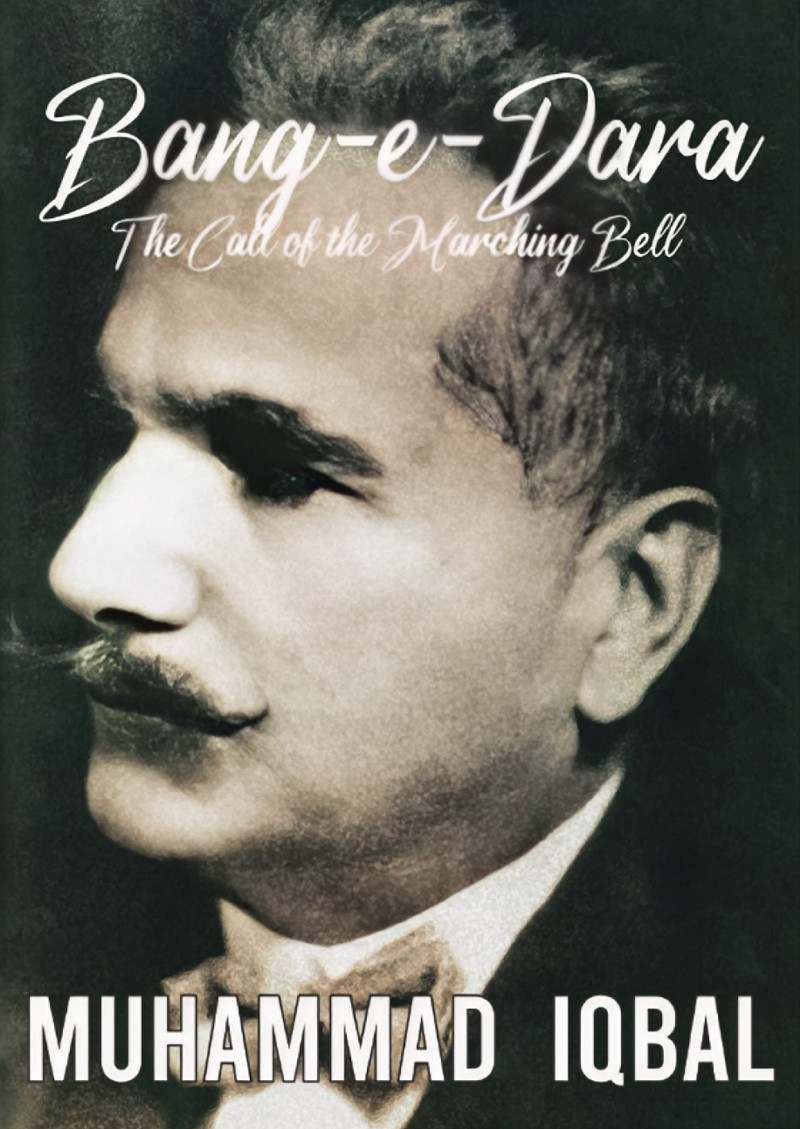
Bang-i-Dra
Original: بانگ درا
Bang-i-Dra is a collection of Urdu poems by Iqbal, reflecting his ideas on various subjects like patriotism, religion, and the integration of Eastern and Western traditions.
- Published1924
- TypePoetry
- GenrePhilosophy, Poetry
- LanguageUrdu
About the Author

Muhammad Iqbal
Muhammad Iqbal: poet, philosopher, and visionary who inspired Pakistan's conception. His works continue to influence millions globally.
View Profile- OccupationPoet
- FromPakistan
-
Other Works
- Asrar-e-Khudi (1915)
- Rumuz-i-Bekhudi (1917)
- The Secrets of the Self (1920)
- Javid Nama (1932)
- Zarb-i-Kalim (1936)