
Book: Beyond Culture
Overview
Edward T. Hall's Beyond Culture explores the invisible architecture that shapes human behavior across societies. The book articulates how culture operates as a set of largely unconscious rules governing perception, space, time, and communication, and argues that many conflicts and misunderstandings stem from mismatches between these deep patterns. Hall treats culture less as surface customs and more as organizing systems that define how people experience reality.
Hall frames culture as a set of "silent" codes that individuals internalize from infancy, then carry into adulthood. These codes influence how people use personal space, interpret silence, sequence activities, and value relationships. Recognizing and decoding these implicit rules is essential for anyone who moves between different cultural environments.
Key Concepts
Central to Hall's thought is the distinction between high-context and low-context cultures. High-context cultures rely heavily on shared background, nonverbal cues, and implicit understanding; meaning often resides in the context rather than the words. Low-context cultures place more weight on explicit verbal information and formalized rules, making communication more literal and less dependent on shared histories or situational cues.
Hall also extends his earlier work on proxemics, describing how spatial relationships carry cultural meaning. Patterns of personal and social space vary dramatically; what feels intimate or distant in one culture may be experienced as intrusive or aloof in another. Time orientation is another critical axis: monochronic cultures treat time as linear and segmentable, while polychronic cultures manage multiple tasks and relationships simultaneously, valuing human interaction over rigid schedules.
Structure and Approach
Beyond Culture is organized as a series of essays that blend anthropology, linguistics, psychology, and observations from Hall's fieldwork. The prose moves between theoretical reflection and vivid anecdote, using concrete examples, family interactions, business negotiations, diplomatic exchanges, to reveal how cultural scripts operate beneath conscious awareness. Hall writes with an emphasis on pattern recognition: he invites readers to observe recurring motifs in behavior and to map them onto cultural structures.
Throughout the essays, Hall emphasizes the limits of cultural conditioning while maintaining that individuals can cultivate awareness and adaptability. He rejects simplistic cultural relativism and also critiques ethnocentrism, calling for a pragmatic sensitivity that enables people to navigate cultural differences without abandoning their own frameworks. The aim is not assimilation but a nuanced competence that permits effective communication across boundaries.
Implications and Legacy
Beyond Culture had significant influence on intercultural studies, business communication, and diplomacy, providing tools for diagnosing cross-cultural misunderstandings. Hall's notions of context, proxemics, and temporal orientation became foundational for managers, educators, and policymakers dealing with international teams and multicultural populations. His insistence on nonverbal and contextual dimensions broadened the study of communication beyond language alone.
The book also prompts ethical and practical questions about adaptation and identity: how to remain authentic while flexible, how to negotiate power differences embedded in cultural norms, and how cultural awareness can be institutionalized without flattening diversity. Hall's call to "move beyond" ingrained patterns remains relevant for anyone confronting globalization, migration, or intercultural contact, offering a lens for perceiving those silent rules that shape everyday life and for developing the skills to bridge them.
Citation Formats
APA Style (7th ed.)
Beyond culture. (2026, February 4). FixQuotes. https://fixquotes.com/works/beyond-culture/
Chicago Style
"Beyond Culture." FixQuotes. February 4, 2026. https://fixquotes.com/works/beyond-culture/.
MLA Style (9th ed.)
"Beyond Culture." FixQuotes, 4 Feb. 2026, https://fixquotes.com/works/beyond-culture/. Accessed 28 Mar. 2026.
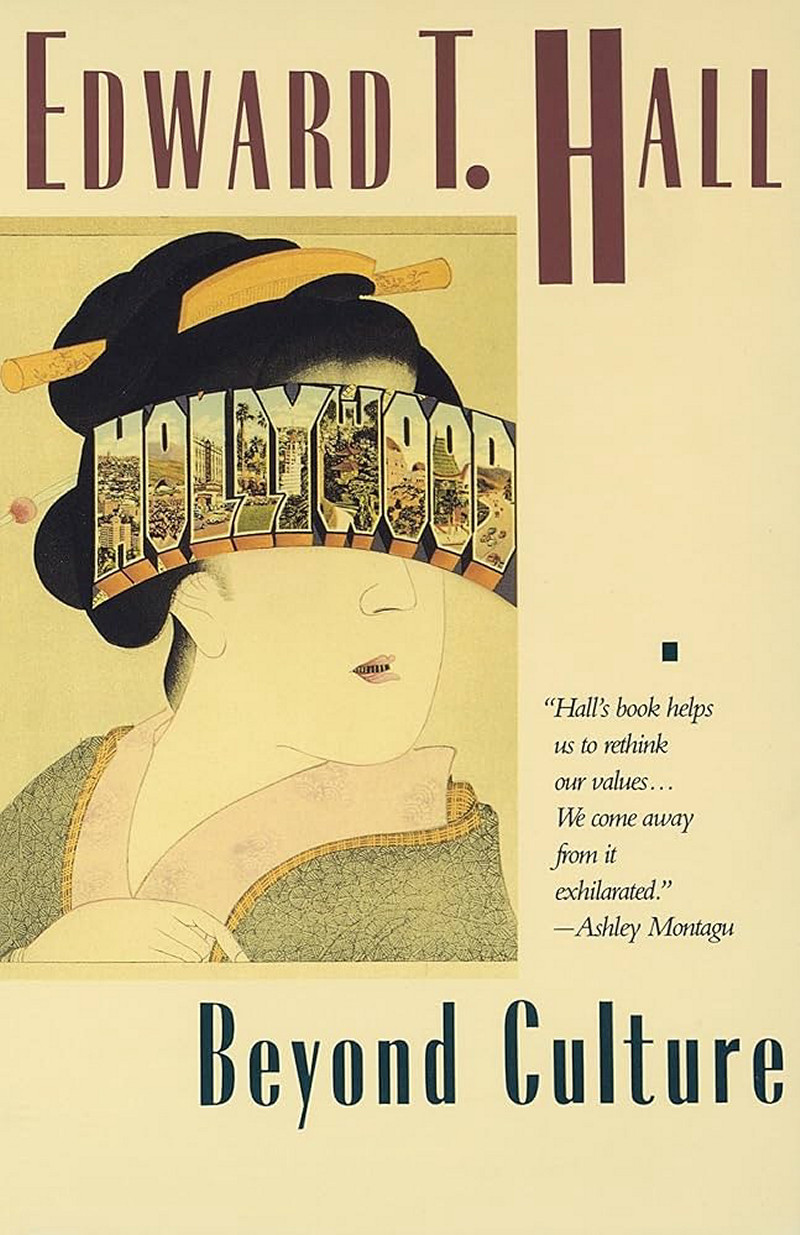
Beyond Culture
Collection of essays examining the deep structures of culture, the limits of cultural conditioning, and the ways individuals can move beyond ingrained cultural patterns to recognize and adapt to other cultural frameworks.
- Published1976
- TypeBook
- GenreAnthropology, Cultural Studies, Non-Fiction
- Languageen
About the Author

Edward T. Hall
Edward T. Hall, founder of proxemics, covering his work on space, context, and time, with notable quotes and publications.
View Profile