
David Frost Biography Quotes 8 Report mistakes
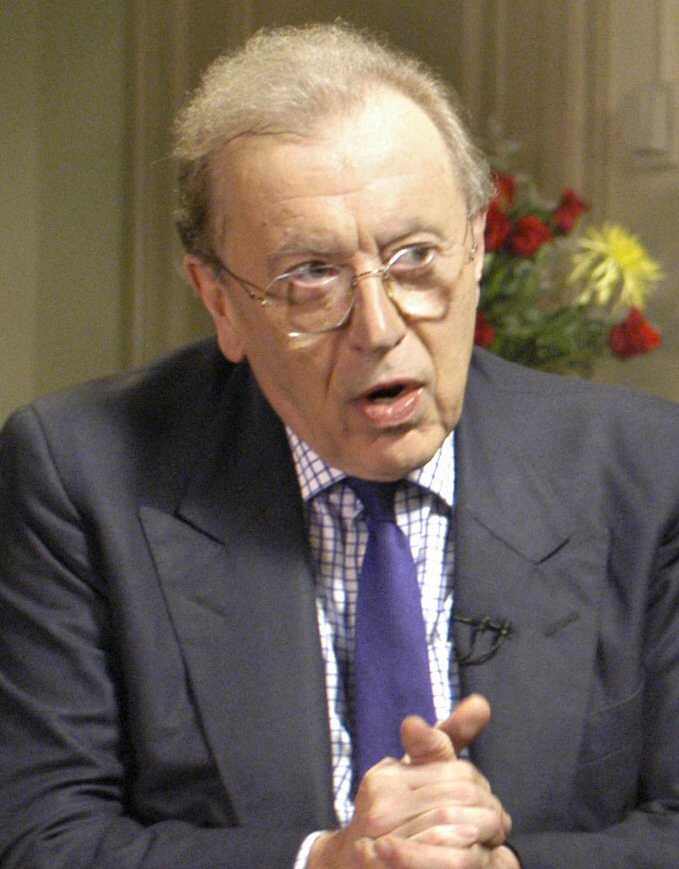
Attr: Attr.: Robert D. Ward
| 8 Quotes | |
| Occup. | Journalist |
| From | England |
| Born | April 7, 1939 |
| Died | August 31, 2013 |
| Aged | 74 years |
| Cite | |
Citation Formats
APA Style (7th ed.)
David frost biography, facts and quotes. (2026, February 11). FixQuotes. https://fixquotes.com/authors/david-frost/
Chicago Style
"David Frost biography, facts and quotes." FixQuotes. February 11, 2026. https://fixquotes.com/authors/david-frost/.
MLA Style (9th ed.)
"David Frost biography, facts and quotes." FixQuotes, 11 Feb. 2026, https://fixquotes.com/authors/david-frost/. Accessed 12 Feb. 2026.
Early Life and Background
David Paradine Frost was born on April 7, 1939, in Tenterden, Kent, as Britain edged toward war and then into an austere peace. He grew up in a household shaped by nonconformist discipline and the moral clarity of Methodism; his father, a minister, moved the family through parishes, and the boy learned early how tone, timing, and audience can change the same message. That upbringing gave him both an instinct for public performance and a private, watchful self-control that later made his on-air ease look effortless.Postwar England offered him a changing stage: deference still ruled public life, yet new media and new class mobility were cracking it open. Frost absorbed the cadences of pulpit speech and the emerging, sharper idiom of satire; he became alert to hypocrisy, but also to the social usefulness of tact. From the start he was fascinated by how power protects itself through language, and how humor can smuggle truth past defenses.
Education and Formative Influences
Frost was educated at Gillingham Grammar School and then studied English at Gonville and Caius College, Cambridge, where he rose in student journalism and performance, editing the university paper and becoming president of the Cambridge Union. Cambridge in the late 1950s and early 1960s was a hothouse of wit and argument, and Frost learned to treat interviews as a kind of live debate - researched, structured, but responsive to the psychology of the person opposite him.Career, Major Works, and Turning Points
He broke through with the BBC satire program That Was the Week That Was (1962-1963), a watershed in British broadcasting that punctured establishment self-seriousness and made Frost a national figure. In the following decade he moved restlessly between Britain and the United States, hosting The Frost Report (1966-1967) and later The David Frost Show, while producing and interviewing across networks with a salesman-producer's drive for access. His defining coup came after Watergate: in 1977 he financed and conducted the long-form Nixon interviews, extracting an admission of moral failure that many viewers experienced as a substitute for a courtroom verdict. He remained a transatlantic interviewer for decades, from Breakfast with Frost (BBC, 1993-2005) to later specials, cultivating presidents, prime ministers, and cultural celebrities with the same mix of cordiality and pressure until his death on August 31, 2013, while aboard the Queen Elizabeth.Philosophy, Style, and Themes
Frost's public persona blended affability with a litigator's persistence. He often appeared to grant comfort in order to lower defenses, then returned to the prepared question with incremental force - a method rooted in his sense that power rarely confesses under frontal assault. His own epigram about statecraft doubled as a map of his technique: "Diplomacy, n. is the art of letting somebody else have your way". In interviews, he practiced a media version of diplomacy, guiding guests toward conclusions they could still claim as their own.He was also a clear-eyed critic of television as social theater, aware that the medium invites intimacy while preserving distance. "Television enables you to be entertained in your home by people you wouldn't have in your home". That line captures his recurring theme: TV manufactures trust, and the interviewer must decide whether to exploit it or interrogate it. Frost chose both, and his best work lives in that tension - genial host versus moral cross-examiner. Even his career advice reads as autobiography, a justification for his relentless output and reinvention: "Don't aim for success if you want it; just do what you love and believe in, and it will come naturally". Behind the breezy confidence was an inward need to keep moving, to earn legitimacy in rooms still suspicious of a satirist who had become an institution.
Legacy and Influence
Frost helped modernize the Anglophone interview, bringing the satire era's skepticism into mainstream political conversation and proving that long-form television could achieve public accountability when formal institutions stalled. The Nixon interviews became a template for high-stakes, producer-driven journalism, and his cross-Atlantic career modeled a new kind of media cosmopolitanism in which an English broadcaster could shape American political memory. Later interviewers borrowed his strategic warmth, his respect for preparation, and his belief that television, for all its artifice, could still corner the truth - if the person asking questions understood both the room and the human being sitting across from him.Our collection contains 8 quotes written by David, under the main topics: Witty One-Liners - Love - Parenting - Success.
Other people related to David: Bernard Levin (Journalist), Michael Parkinson (Journalist), Sadie Frost (Actress), Mary Whitehouse (Activist), Millicent Martin (Actress), Ronnie Corbett (Comedian), Eric Idle (Comedian)
David Frost Famous Works
- 1973 I Could Have Kicked Myself: The Autobiography of David Frost (Book)
- 1968 The Presidential Debate 1968 (Book)
- 1968 To England with Love (Book)
Source / external links