
Book: Breaking the Sound Barrier
Overview
"Breaking the Sound Barrier" gathers Amy Goodman's impassioned columns into a sweeping portrait of grassroots-driven social and political change. The pieces move between frontline reporting and pointed commentary, honoring the voices of people who resist concentrated power and shine a light on injustices that mainstream outlets often ignore. Rather than offering detached analysis, the book places readers at the scene of protests, courtrooms, refugee camps, and community meetings, presenting a record of struggle and resilience across local and global contexts.
The collection frames a narrative of persistent activism. Goodman traces connections among issues that are too often treated separately, war and corporate power, environmental harm and economic inequality, civil liberties and media consolidation, showing how ordinary people and movements keep pushing for accountability and democratic renewal despite official narratives to the contrary.
Central Themes
At the heart of the book is a critique of media and political institutions that marginalize dissenting voices while normalizing abuses. Goodman repeatedly challenges the idea that journalism must be neutral in the face of wrongdoing, arguing instead for a reporting practice that amplifies those most affected and scrutinizes those in power. This insistence on accountability threads through accounts of war, detention, labor struggles, and environmental devastation.
Another persistent theme is the power of grassroots organizing. The columns celebrate local activists, community leaders, and everyday citizens who create change without waiting for permission. Goodman highlights how collective action, whether rebuilding after disaster, organizing against corporate land grabs, or demanding fair elections, creates pressure points that can reshape policy and public consciousness.
Reporting Style and Voice
Goodman's prose combines urgency with deep empathy. Her pieces are grounded in eyewitness detail and direct testimony, often privileging first-person accounts and the language of those whom history might otherwise render invisible. She balances on-the-ground narrative with clear analysis, connecting specific incidents to broader structures of power and policy.
The tone is moral and mobilizing rather than academic. Goodman writes as an advocate-journalist: observant, critical, and committed to democratic ideals. She uses concrete scenes and personal stories to humanize complex issues, making the stakes of political decisions immediate and intimate for readers who might otherwise encounter them only as abstract debates.
Impact and Relevance
As a collection, the book serves both as a chronicle of a historical moment and as a manual of civic attention. It documents struggles that contemporary readers can study for strategic lessons while reminding them that media narratives are shaped and contested. Goodman's work validates the role of independent journalism in sustaining democratic life and provides a model for reporters who seek to center marginalized perspectives.
The book's lasting value lies less in predicting policy outcomes than in insisting on the necessity of listening and solidarity. By cataloging acts of resistance and the structural obstacles they confront, "Breaking the Sound Barrier" invites readers to recognize their own capacity to participate in democratic change and to question the institutions that silence dissent.
Citation Formats
APA Style (7th ed.)
Breaking the sound barrier. (2025, September 13). FixQuotes. https://fixquotes.com/works/breaking-the-sound-barrier/
Chicago Style
"Breaking the Sound Barrier." FixQuotes. September 13, 2025. https://fixquotes.com/works/breaking-the-sound-barrier/.
MLA Style (9th ed.)
"Breaking the Sound Barrier." FixQuotes, 13 Sep. 2025, https://fixquotes.com/works/breaking-the-sound-barrier/. Accessed 12 Feb. 2026.
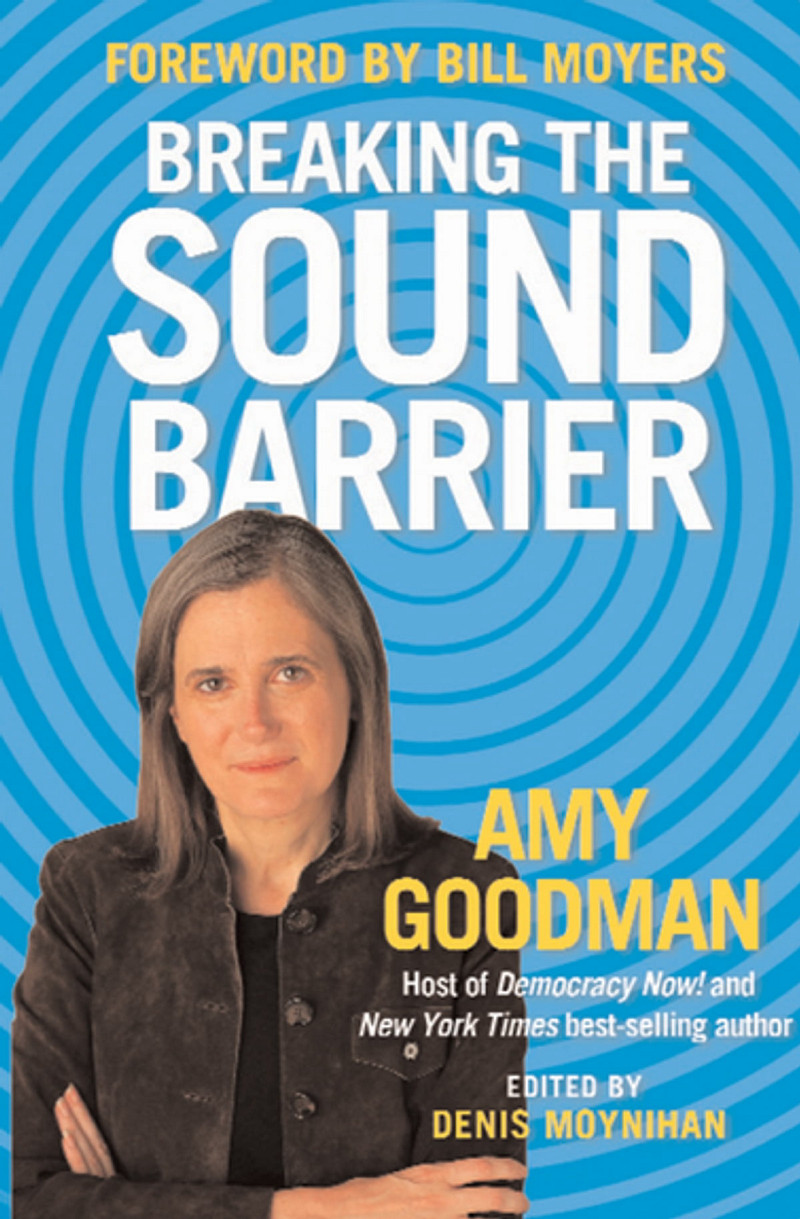
Breaking the Sound Barrier
An impassioned and wide-ranging collection of columns written by Goodman, giving voice to the grassroots-driven social and political change that she has witnessed throughout the years.
- Published2009
- TypeBook
- GenreNon-Fiction
- LanguageEnglish
About the Author

Amy Goodman
Amy Goodman, a pioneering journalist known for her brave reporting on social justice, human rights, and political issues.
View Profile- OccupationJournalist
- FromUSA
-
Other Works
- The Exception to the Rulers: Exposing Oily Politicians, War Profiteers, and the Media That Love Them (2004)
- Static: Government Liars, Media Cheerleaders, and the People Who Fight Back (2006)
- Standing Up to the Madness: Ordinary Heroes in Extraordinary Times (2008)
- Democracy Now!: Twenty Years Covering the Movements Changing America (2016)