
Novel: Bright Day
Overview
J.B. Priestley’s Bright Day (1946) is a reflective, first-person novel about memory, time, and the limits of nostalgia. Its narrator, Gregory Dawson, a successful yet weary screenwriter in the mid-1940s, is jolted by chance back into the summer world of his youth on the eve of the First World War. The book’s title points to both a literal burst of sunshine that once seemed to illuminate everything and to the illuminating, if unsettling, clarity that comes when the past is honestly re-examined.
Framing and Return to the Past
Staying in a seaside hotel while working on a film, Dawson overhears a scrap of conversation that names people from long ago and suddenly finds himself overwhelmed by continuity rather than rupture. He abandons his script and travels north to the industrial city of his beginnings, determined to test memory against the facts. Priestley moves between the hotel present and the remembered past, and between Dawson’s recollections and the information he solicits from surviving acquaintances, so that the narrative unfolds like a private investigation into one man’s vanished garden.
The Golden Household
As a young man before 1914, Dawson had been drawn into the orbit of a prosperous family whose vibrant home and easy sociability contrasted with his own modest background. Their house, perched above the smoke and clang of the mills, seemed a gateway to a wider, more gracious world. He was dazzled by the father’s gusto and generosity, amused and occasionally appalled by the mother’s social ambitions, and deeply moved by the daughters, to one of whom he gave the half-secret devotion of earnest youth. Summer visits, lively teas, picnics, small acts of kindness and petty vanities, the laughter and quarrels of a big household, these memories carry the glow of a “bright day, ” the last full illumination of an Edwardian season that would not return.
Shadows and Shattering
Into this radiance drifted a darker presence: a worldly, insinuating outsider who brought a note of clever cynicism and modern ease. He charmed and unsettled in equal measure, binding the household to him through flattery, business prospects, and flirtation. Dawson’s naïve idyll slowly frayed. Beneath the bright surfaces lay financial risks, social anxieties, and unspoken desire; loyalties bent under strain. A sequence of reversals, bitter revelations, a collapse of fortune, and sudden losses, unstitched the family’s fabric. The war’s approach turned private grief into part of a wider shattering. Dawson’s ideal world, which had seemed touched by destiny, proved fragile, contingent, and mortal.
Reckoning in the Present
Back in the 1940s, Dawson tracks down places and people, assembling testimonies that complicate his original picture. What once felt like betrayal becomes, in his clearer view, a tangle of motives, pride, fear, hope, fatigue, acted out by ordinary human beings in extraordinary times. He learns how much his own role was that of a worshipful observer, and how memory can harden into myth. Yet the inquiry does not merely strip away enchantment. It restores the bright day as a living reality rather than a mirage: a season of genuine kindness and possibility, flawed but meaningful, whose disappearance does not cancel its value.
Themes and Tone
Bright Day unites Priestley’s humane social observation with his abiding fascination with time. It contrasts the industrial North’s clamorous present with the hush of inland gardens and summer rooms, and it puts youthful rapture beside the fatigue and irony of middle age. Class mobility, the lure and danger of sophistication, the end of Edwardian certainties, and the ethics of remembering are interwoven. Dawson’s measured voice, wry, candid, and compassionate, guides the reader to a spacious acceptance: the past cannot be retrieved, but it can be seen truly; the future is uncertain, but it asks to be met without the distorting armor of nostalgia.
Citation Formats
APA Style (7th ed.)
Bright day. (2026, February 5). FixQuotes. https://fixquotes.com/works/bright-day/
Chicago Style
"Bright Day." FixQuotes. February 5, 2026. https://fixquotes.com/works/bright-day/.
MLA Style (9th ed.)
"Bright Day." FixQuotes, 5 Feb. 2026, https://fixquotes.com/works/bright-day/. Accessed 12 Feb. 2026.
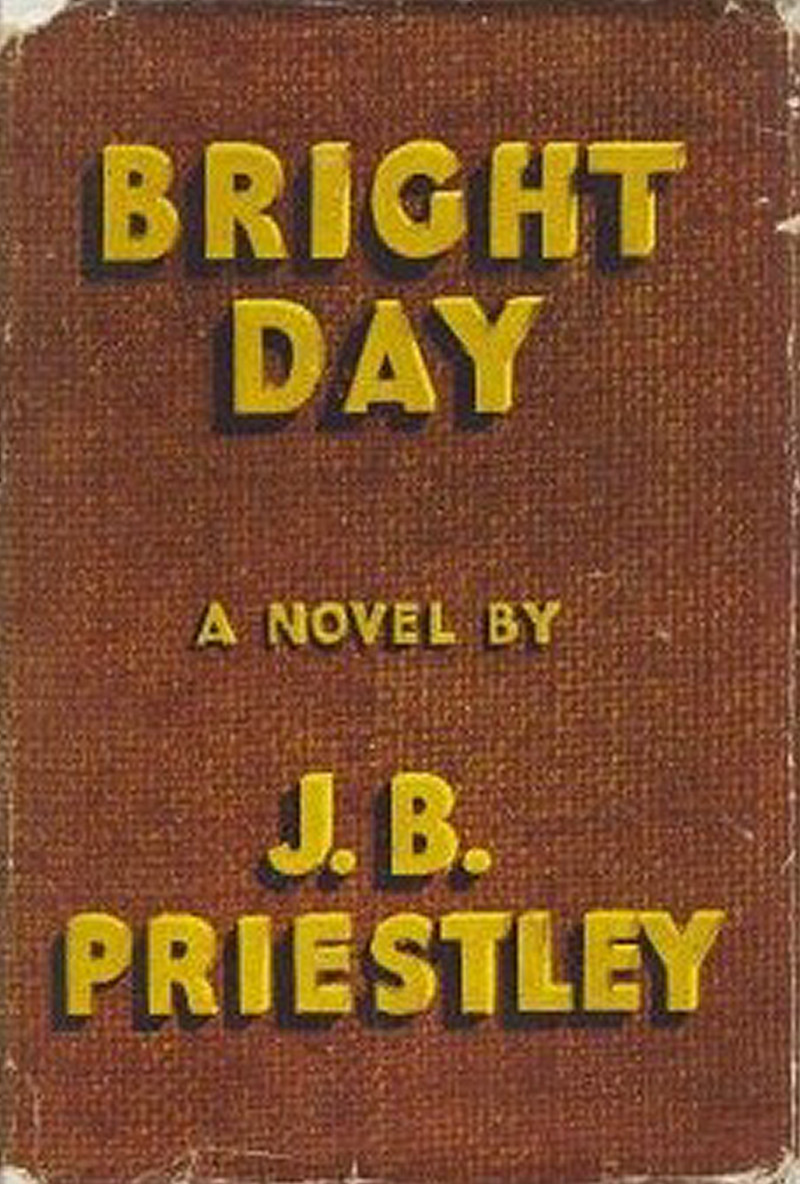
Bright Day
A novel exploring memory and personal renewal, following an older man revisiting his past and confronting choices that shaped his life. The book mixes social observation with reflective, humanist themes in the postwar context.
- Published1946
- TypeNovel
- GenreFiction, Psychological novel
- Languageen
About the Author

J.B. Priestley
J.B. Priestley, a prominent British writer and socialist, known for his plays and thought-provoking social commentary.
View Profile- OccupationWriter
- FromUnited Kingdom
-
Other Works
- Benighted (1927)
- The Good Companions (1929)
- Angel Pavement (1930)
- Dangerous Corner (1932)
- Eden End (1934)
- English Journey (1934)
- I Have Been Here Before (1937)
- Time and the Conways (1937)
- When We Are Married (1938)
- Johnson Over Jordan (1939)
- Let the People Sing (1939)
- An Inspector Calls (1945)
- The Linden Tree (1947)
- Lost Empires (1965)