
Poetry: Bustan
Overview
Composed in 1257 by Saadi of Shiraz, Bustan (The Orchard) is a didactic poem in rhymed couplets that cultivates ethical and spiritual insight through stories, parables, and reflections. Its title becomes a governing metaphor: a garden where virtues are planted, watered by wisdom, and harvested as conduct. Paired with Saadi’s later Gulistan, Bustan is more sustainedly poetic and explicitly moral, guiding readers from public ethics to interior transformation with a voice at once urbane, humane, and devotional.
Structure and Method
Bustan unfolds across ten chapters, each devoted to a cardinal virtue or sphere of life: just governance, beneficence, love, humility, contentment and detachment, education and discipline, gratitude, repentance, and reliance on God, culminating in prayerful intimacy. Saadi advances by example rather than abstract argument. He sets a scene, a court, caravan, market, monastery, or battlefield, and lets a brief anecdote expose the stakes of a decision. A maxim or couplet then distills the lesson. The sequencing traces a deliberate arc: from the outer responsibilities of rulers and citizens toward the inner purification of intention, until worldly measures give way to trust and remembrance.
Themes and Lessons
Justice anchors the garden’s order. Saadi insists that a realm thrives only when the powerful answer for the weak, and that oppression poisons prosperity at its root. Mercy and generosity are presented as both spiritual obligations and pragmatic wisdom: charity softens hearts, reconciles enemies, and turns transient wealth into lasting honor. Love appears as a force that remakes the self, sometimes romantic, often spiritual, testing pride, loosening attachment, and refining motive.
Humility and self-knowledge temper every other virtue. Saadi exposes the vanity that can attach even to piety and learning, preferring the quiet sincerity of one who serves unseen. Contentment is praised not as resignation but as freedom from greed, a way to move through the world lightly and gratefully. Education and counsel are framed as mutual obligations: teachers must be patient gardeners, pupils receptive soil; admonition must be timely, compassionate, and truthful. Gratitude keeps the heart awake to providence, while repentance renews the moral life when it falters. Throughout, reliance on God stabilizes the seeker amid fortune’s turnings, teaching that effort binds the camel and trust guides the journey.
Style and Voice
Saadi’s Persian is lucid and musical, his couplets compressing narrative into aphorism without losing warmth. Concrete images, water drawn from a well, a candle consumed to give light, a gardener pruning for future fruit, carry ethical meanings with immediate clarity. He shifts tone with deft control: a comic reversal punctures hypocrisy; a tender image softens a stern warning; a sudden prayer gathers the thread of a chapter into devotion. Quotable lines function as portable counsel, yet they are anchored in lived scenes that make the counsel plausible.
Social Vision
Bustan harmonizes legal duty with Sufi inwardness. Saadi’s ethics are civic and compassionate: he appeals to rulers to guard the poor, to merchants to weigh honestly, to ascetics to renounce ostentation, and to lovers of knowledge to temper disputation with mercy. Intention matters as much as outcome, and means must honor the ends they seek. Moderation, hospitality, and forgiveness are not signs of weakness but the conditions of durable community.
Legacy
For centuries Bustan served as a handbook of conduct across the Persianate world, memorized in schools, recited in courts, copied for princes and dervishes alike. Its blend of practical wisdom and spiritual aspiration ensured its appeal to readers of varied stations. Together with Gulistan, it established Saadi as a master of ethical storytelling whose orchard continues to yield fruit in new languages and times.
Citation Formats
APA Style (7th ed.)
Bustan. (2026, February 5). FixQuotes. https://fixquotes.com/works/bustan/
Chicago Style
"Bustan." FixQuotes. February 5, 2026. https://fixquotes.com/works/bustan/.
MLA Style (9th ed.)
"Bustan." FixQuotes, 5 Feb. 2026, https://fixquotes.com/works/bustan/. Accessed 27 Mar. 2026.
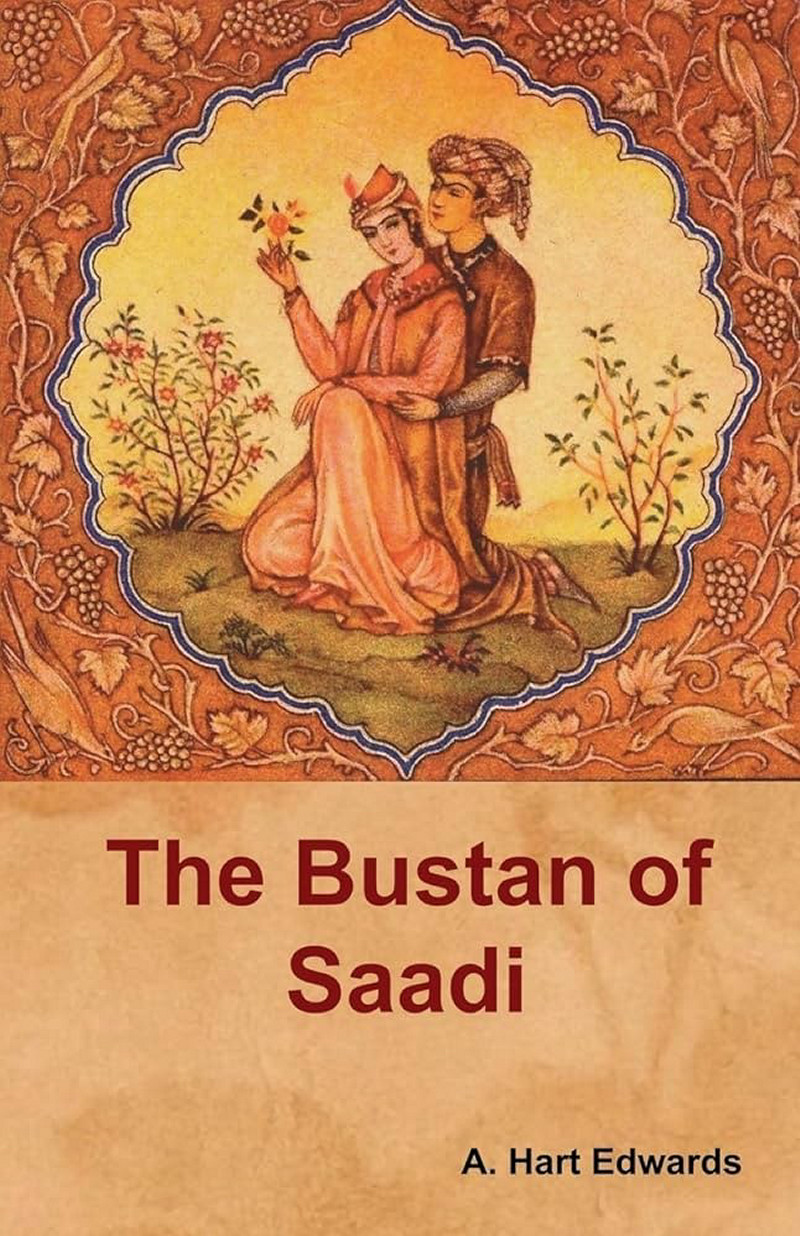
Bustan
Original: بوستان
Bustan, also known as The Orchard, is a poetry book containing moral stories, advice, and wisdom written in verse form. It is divided into ten chapters, each addressing a different subject, such as justice, love, humility, and knowledge. The Bustan is considered one of the masterpieces of Persian literature.
- Published1257
- TypePoetry
- GenrePersian literature, Poetry
- LanguagePersian
About the Author

Saadi
Saadi Shirazi, a prominent 13th-century Persian poet renowned for his timeless insights and moral teachings.
View Profile