
Book: Citadel
Overview
"Citadel" is a posthumously published collection of philosophical meditations and aphorisms by Antoine de Saint-Exupéry, assembled from notebooks and fragments left at his death and issued in 1948. Rather than a conventional narrative, it presents a series of parable-like reflections set against imagined landscapes of deserts, fortresses and small communities. The material reads like a spiritual testament, sketching the moral architecture of a society and the inner work required of leaders and citizens alike.
Written before and during the war years, the text carries the imprint of exile, aerial isolation and wartime loss. The author's experience as an aviator and as an engaged citizen informs an ethic of responsibility and humility: the human being is portrayed as simultaneously fragile and called to stewardship, confronted with the need to preserve dignity, foster solidarity and defend the spiritual foundations of communal life.
Main Themes
Leadership appears less as command and more as sacrament in "Citadel": the true leader is defined by service, fidelity and the capacity to carry others' burdens rather than by dominion. Authority is legitimate only when rooted in love, sacrifice and a profound respect for the human person. These meditations repeatedly reject tyranny and egoistic power, urging rulers to cultivate a moral inner citadel that protects both the governed and the common good.
Community and responsibility form a second central strand. The text insists that individuality finds its highest meaning within relational bonds: families, villages and informal networks of mutual care are depicted as the essential bulwarks against nihilism and atomization. Work, memory and the rites that bind generations are treated as sacred practices that sustain a people by linking past, present and future. Saint-Exupéry probes the tension between solitude and solidarity, proposing that authentic solitude deepens one's capacity for communion rather than reducing it.
Style and Structure
Fragmentary and aphoristic, the work resists linear exposition. Short, luminous paragraphs function as moral sparks or concise fables, each orbiting a central image, an empty fortress, a ruined town, the edge of the desert, that illuminates an ethical truth. The prose is at once ascetic and lyrical: unsentimental in its demands for responsibility, yet suffused with poetic flourishes and metaphysical longing.
Parable and allegory provide the book's rhetorical engine. Rather than drawing explicit political blueprints, the text meditates on formative virtues, courage, fidelity, humility, and on existential conditions such as exile, loss and belonging. The resulting mosaic invites readers to assemble meanings actively, to inhabit the questions the fragments pose rather than receive definitive answers.
Legacy and Reception
Published after the author's disappearance, "Citadel" has been read as his spiritual testament, a work that crystallizes themes present across his oeuvre but in a more austere, concentrated form. Critics and readers often place it beside his lyrical memoirs and fables as evidence of a consistent preoccupation with human solidarity, the dignity of labor and the metaphysics of responsibility. Its fragmentary form makes it less accessible than the famed children's allegory, yet many consider it his most uncompromising moral and political reflection.
The book's influence is subtle and enduring: it has become a reference for those exploring ethical leadership, community resilience and the spiritual dimensions of politics. Read as a collection of prompts rather than a program, it continues to challenge readers to imagine institutions and lives shaped by humility, service and an unflinching care for the vulnerable.
Citation Formats
APA Style (7th ed.)
Citadel. (2026, February 17). FixQuotes. https://fixquotes.com/works/citadel/
Chicago Style
"Citadel." FixQuotes. February 17, 2026. https://fixquotes.com/works/citadel/.
MLA Style (9th ed.)
"Citadel." FixQuotes, 17 Feb. 2026, https://fixquotes.com/works/citadel/. Accessed 30 Mar. 2026.
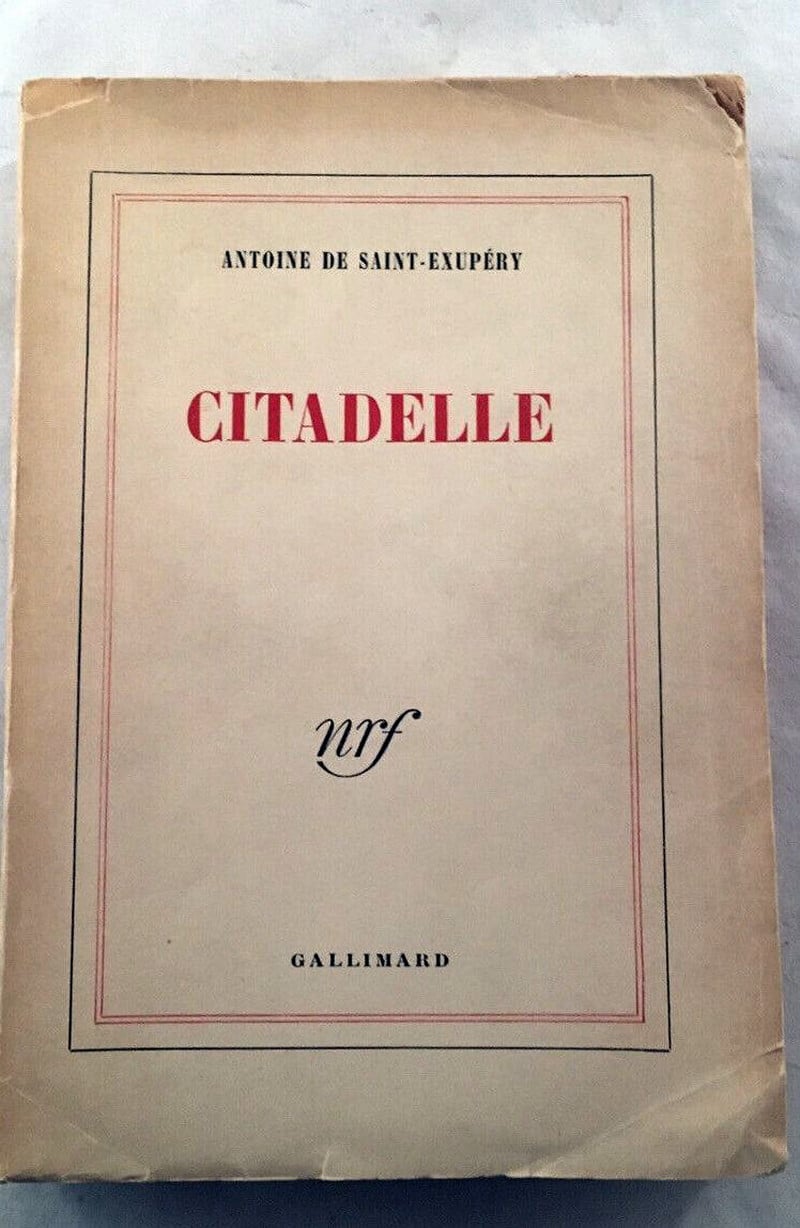
Citadel
Original: Citadelle
A posthumously published collection of philosophical meditations and aphorisms composed before and during the war. Presented as reflections on leadership, community, responsibility and the spiritual foundations of society, the work reads as fragmentary, profound prose often cast in parable-like form.
- Published1948
- TypeBook
- GenrePhilosophical prose, Meditation
- Languagefr
- Links
About the Author

Antoine de Saint-Exupery
Antoine de Saint-Exupery, French aviator and author of The Little Prince, covering his life, works, themes, and notable quotes.
View Profile- OccupationNovelist
- FromFrance
-
Other Works
- Southern Mail (1929)
- Night Flight (1931)
- Wind, Sand and Stars (1939)
- Flight to Arras (1942)
- Letter to a Hostage (1943)
- The Little Prince (1943)