
Book: Dictionary of Philosophy
Overview
Nicola Abbagnano's Dictionary of Philosophy, first issued in Italian as "Dizionario di filosofia" (1961), is a compact but wide-ranging reference that sets out definitions, historical sketches, and critical notes on the central terms, movements, and figures of philosophical thought. The volume aims to be both accessible to students and useful to scholars by combining clear, succinct entries with a broadly historical perspective that ranges from ancient debates to mid‑20th‑century concerns.
Entries vary from brief definitional statements to more developed expositions that situate a concept within intellectual debates. Cross-references and occasional bibliographical pointers help readers move from a single lemma to a wider cluster of issues, making the Dictionary useful for quick consultation and initial orientation in unfamiliar territories of the discipline.
Scope and Structure
The Dictionary organizes material alphabetically, presenting philosophy's technical vocabulary alongside summaries of doctrines, schools, and biographical sketches of key thinkers. Individual entries typically offer a precise terminological core followed by historical framing and critical observation, so that a reader learns not only what a term denotes but how it has been understood and contested across periods.
Both major philosophical topics such as metaphysics, epistemology, ethics, and logic and more specific, historically situated items appear. The coverage extends across Western traditions and into modern movements, with attention to the interplay between philosophical ideas and scientific, cultural, and political contexts that shaped them during the modern era.
Editorial and Methodological Tone
Abbagnano's judgmental stance is measured and pedagogically oriented. Definitions aim for clarity rather than polemic, and where controversies persist the Dictionary often outlines opposing positions without favoring doctrinaire hostility. Entries balance conceptual analysis with historical narrative, reflecting an approach that values both systematic clarification and awareness of developmental trajectories.
The tone is concise and didactic, calibrated for readers who need reliable summaries rather than exhaustive historiography. When issues require greater nuance, the entries indicate main lines of debate and point toward primary texts or influential interpreters, helping readers decide where deeper study is warranted.
Key Themes and Illustrative Entries
Recurring themes include the nature of existence, freedom and value, the limits and methods of reason, and the relationship between philosophy and empirical science. Abbagnano's own philosophical concerns, such as existential questions framed in a reflective, non‑nihilistic register, inform the way certain topics are presented, emphasizing problems of human choice, meaning, and responsibility alongside technical matters of logic and metaphysics.
Representative entries give historical snapshots that connect ancient and modern formulations: for example, treatments of "substance" or "causality" trace their classical origins and transformation through medieval scholasticism to modern analytic or continental reconstructions. Biographical notices on major figures pair life outlines with concise readings of their principal contributions and critical limitations.
Reception and Legacy
The Dictionary of Philosophy established itself as a standard reference in Italian academic life and beyond, valued for its concision and the evenhandedness of its explanations. It served as an introductory guide for generations of students and as a handy desk reference for teachers and general readers. Later editions and translations have updated and extended the original material to reflect subsequent developments, but the 1961 volume remains notable for capturing mid‑20th‑century philosophical concerns with clarity and intellectual balance.
As a pedagogical instrument, the Dictionary exemplifies a middle path between encyclopedic exhaustiveness and pocket‑handbook practicality. It continues to be consulted as a reliable map of philosophical vocabulary and as an entry point into the broader history of ideas.
Citation Formats
APA Style (7th ed.)
Dictionary of philosophy. (2025, September 13). FixQuotes. https://fixquotes.com/works/dictionary-of-philosophy/
Chicago Style
"Dictionary of Philosophy." FixQuotes. September 13, 2025. https://fixquotes.com/works/dictionary-of-philosophy/.
MLA Style (9th ed.)
"Dictionary of Philosophy." FixQuotes, 13 Sep. 2025, https://fixquotes.com/works/dictionary-of-philosophy/. Accessed 27 Mar. 2026.
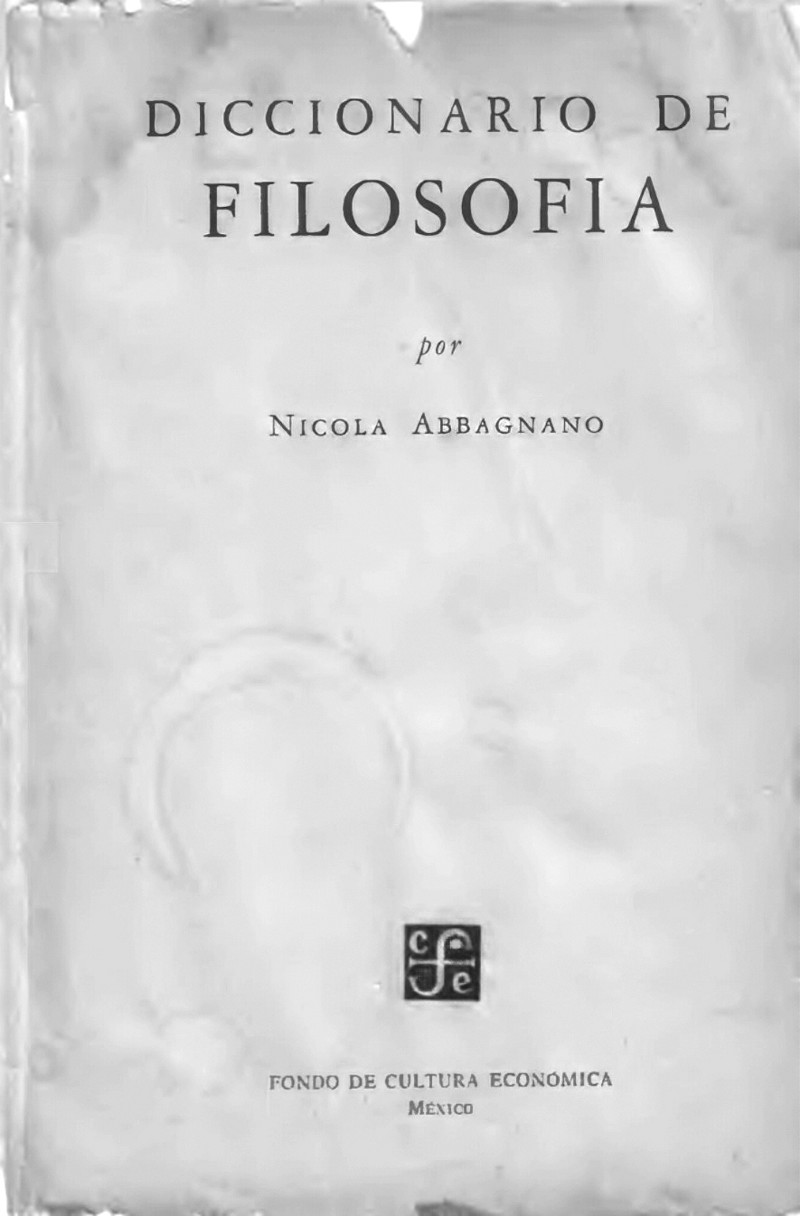
Dictionary of Philosophy
Original: Dizionario di Filosofia
A comprehensive encyclopedia of philosophical terms, concepts, theories, and philosophers from throughout history.
- Published1961
- TypeBook
- GenrePhilosophy
- LanguageItalian
About the Author

Nicola Abbagnano
Nicola Abbagnano's life and philosophy. Discover his contributions to existentialism and modern philosophical thought.
View Profile- OccupationPhilosopher
- FromItaly
-
Other Works
- The Problem of Art (1942)
- History of Philosophy (1946)