
Novel: Eating People is Wrong
Overview
Malcolm Bradbury’s first novel, Eating People Is Wrong, is a sharp, humane satire of British academic life at the end of the 1950s. Set in a provincial redbrick university in the English Midlands, it follows a year in the life of a well-meaning but irresolute English professor, Stuart Treece, whose liberal ideals are tested by a changing social world. Through faculty parties, seminars, literary soirées, and small crises of work and love, Bradbury portrays a community that wants to be modern and tolerant yet remains tangled in class, taste, and propriety. The title’s prim moral injunction becomes the book’s running joke, exposing how easy maxims and mild benevolence fail when people must actually choose, commit, and change.
Plot
Treece presides over an English department full of would-be poets, critics, and outsiders seeking entry to cultural life. He is a conscientious, liberal humanist, eager to be kind and fair, and prone to paralysis whenever clarity is needed. His quiet life is stirred by a gifted, independent-minded postgraduate whose intelligence and self-possession both attract and unsettle him. Around them circulates an ensemble of rivals and supplicants: a brash young writer of working-class origins who is lionized as authentic yet never fully accepted; an earnest foreign student whose social awkwardness exposes the university’s pieties; insecure junior lecturers competing for standing; and visiting literati who amplify the mood of anxious performance.
As the year unfolds, Treece tries to be a mentor, a lover, and a moral center, but every kind impulse becomes an entanglement. His diffidence breeds misunderstanding; his desire to maintain harmony creates hurt. The department lurches from party to party, committee to committee, and reading to reading, staging itself as a modern, open cultural space while quietly enforcing old hierarchies. Romantic confusions crest at a grand college event where alcohol, vanity, and the pressure to sparkle force hidden tensions into the open. By year’s end, no catastrophic scandal has occurred, but small defeats and missed chances accumulate. Treece’s affairs of the heart do not resolve into fulfillment, and his careful principles, tested by changing manners and expectations, reveal their limits.
Themes and Characters
Bradbury treats the campus as a social laboratory where class, sexuality, and taste are performed and policed. Treece embodies an older liberal humanism, grounded in civility, tolerance, and self-reflection. Around him gather figures who signal the oncoming cultural moment: meritocratic newcomers who insist on their place; confident women uninterested in being tutored into deference; colonial and foreign students whose presence turns abstract tolerance into practical difficulty; and stylistic moderns for whom irony trumps earnestness. The book’s comedy is built on the gap between the characters’ ideals and their habits. Kindness is repeatedly shown to be insufficient without decisiveness; tolerance becomes a mask for condescension; authenticity is both fetishized and distrusted. The title phrase functions as an emblem of liberal platitude, morality reduced to a truism that avoids the hard work of judgment.
Style and Significance
Bradbury writes in a poised, observant comic mode, gently skewering academic vanity without cruelty. Scenes of sherry-drinking, public readings, and departmental maneuvering are precise and buoyant, while the emotional stakes, loneliness, thwarted desire, fear of irrelevance, are treated with tact. The ensemble structure allows sympathy for nearly everyone, even as the narrative watches them fail to meet their own standards. As a campus novel, Eating People Is Wrong stands near the start of the postwar British tradition later developed by Bradbury and contemporaries, capturing the hinge between an older, courteous, class-bound university and a newer, mass, meritocratic culture. Its enduring interest lies in its portrait of liberalism under pressure: the comedy of good intentions, the melancholy of missed action, and the recognition that knowing what is right is not the same as doing it.
Citation Formats
APA Style (7th ed.)
Eating people is wrong. (2026, February 4). FixQuotes. https://fixquotes.com/works/eating-people-is-wrong/
Chicago Style
"Eating People is Wrong." FixQuotes. February 4, 2026. https://fixquotes.com/works/eating-people-is-wrong/.
MLA Style (9th ed.)
"Eating People is Wrong." FixQuotes, 4 Feb. 2026, https://fixquotes.com/works/eating-people-is-wrong/. Accessed 12 Feb. 2026.
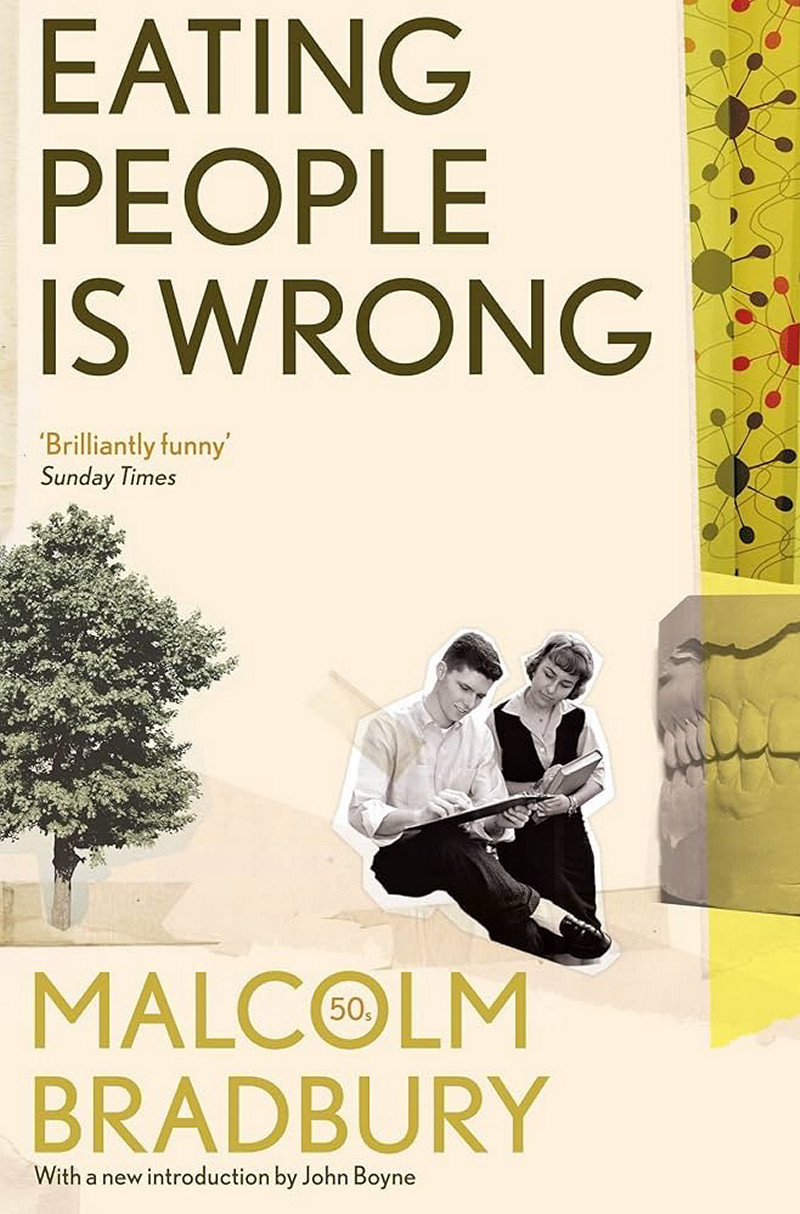
Eating People is Wrong
A satirical campus novel set at a provincial university, following the experiences of Professor Treece and his misadventures with colleagues and students.
- Published1959
- TypeNovel
- GenreSatire
- LanguageEnglish
- CharactersProfessor Treece
About the Author

Malcolm Bradbury
Malcolm Bradbury, a celebrated English author known for his sharp wit and satirical works on academia and society.
View Profile- OccupationNovelist
- FromUnited Kingdom
-
Other Works
- Stepping Westward (1965)
- The History Man (1975)
- Rates of Exchange (1983)
- Cuts (1987)
- Doctor Criminale (1992)
- To the Hermitage (2000)