
Poetry: Elemental Odes
Overview
Elemental Odes (Odas elementales), published in 1954 by Pablo Neruda, gathers short, approachable poems that celebrate ordinary objects and everyday experiences. Neruda turns humble subjects, onions, salt, socks, a bicycle, into sources of wonder and affection, treating material things with the gravity and tenderness usually reserved for grander themes. The collection's plainspoken diction and vivid imagery make the poems feel immediate and democratic, inviting readers to see beauty in the domestic and the commonplace.
Rather than sentimentalizing, the poems often mix playful surprise with deep gratitude. Simple descriptions accumulate into metaphors that link private life to broader human and natural rhythms. Neruda's voice feels both intimate and public: personal affection for a pair of socks becomes an affirmation of shared human dignity.
Themes
A central theme is the sacralization of the everyday. Objects are celebrated not as mere tools but as witnesses to human labor, sustenance, and companionship. Salt, for example, is treated as elemental to both flavor and survival, a crystalline emblem of earth and sea. The poems insist that the material world carries meaning and memory, that small things harbor history and worth.
Another persistent theme is democracy and inclusivity. By elevating objects associated with working lives, potatoes, onions, shoemakers' tools, Neruda aligns poetic attention with ordinary people rather than elite culture. Love and political empathy intertwine: affection for daily things becomes a form of solidarity with those whose lives they touch. Playfulness and moral warmth coexist, so celebration never feels detached from social conscience.
Style and Tone
The style is deceptively simple: short lines, conversational rhythms, clear images, and sudden metaphorical jumps. Neruda often uses direct address and cataloging, naming the object plainly before unfolding its hidden resonances. The language moves easily between concrete sensory detail and rapturous comparison, creating a tone both joyful and reverent.
Humor and surprise are essential to the poems' energy. An ode to an onion can shift from domestic description to an image of layered worlds; an ode to a bicycle can become a hymn to freedom and youthful mobility. The voice is generous rather than ironic, inviting readers to share in delight rather than being asked to look down on the subject.
Notable Odes and Techniques
Several odes have become especially memorable for their mix of simplicity and depth. "Ode to the Onion" celebrates the vegetable's translucent layers and humble grace, transforming culinary detail into an allegory of honesty and domestic light. "Ode to My Socks" turns an ordinary garment into a declaration of love and comfort, pairing tactile description with affectionate humor. Poems about salt and bicycles crystallize how ordinary materials connect to labor, travel, and community.
Technically, Neruda often employs anaphora, enjambment, and vivid sensory listing to build momentum. Concrete nouns anchor each poem while metaphoric leaps expand meaning, so objects serve as portals to memory, desire, and collective life.
Legacy and Resonance
Elemental Odes broadened Neruda's reach by making poetry accessible without sacrificing depth. The collection influenced later poets interested in democratic subject matter and in bridging lyric intensity with social concern. Its plainspoken celebration of the tangible remains appealing across languages and cultures, often serving as an entry point for readers encountering Neruda for the first time.
Beyond literary impact, the odes encourage a changed perception: a daily landscape of common things becomes a field of poetic possibility. The poems continue to invite attention and gratitude, reminding readers that dignity and wonder are often found in what is closest at hand.
Citation Formats
APA Style (7th ed.)
Elemental odes. (2026, March 8). FixQuotes. https://fixquotes.com/works/elemental-odes/
Chicago Style
"Elemental Odes." FixQuotes. March 8, 2026. https://fixquotes.com/works/elemental-odes/.
MLA Style (9th ed.)
"Elemental Odes." FixQuotes, 8 Mar. 2026, https://fixquotes.com/works/elemental-odes/. Accessed 27 Mar. 2026.
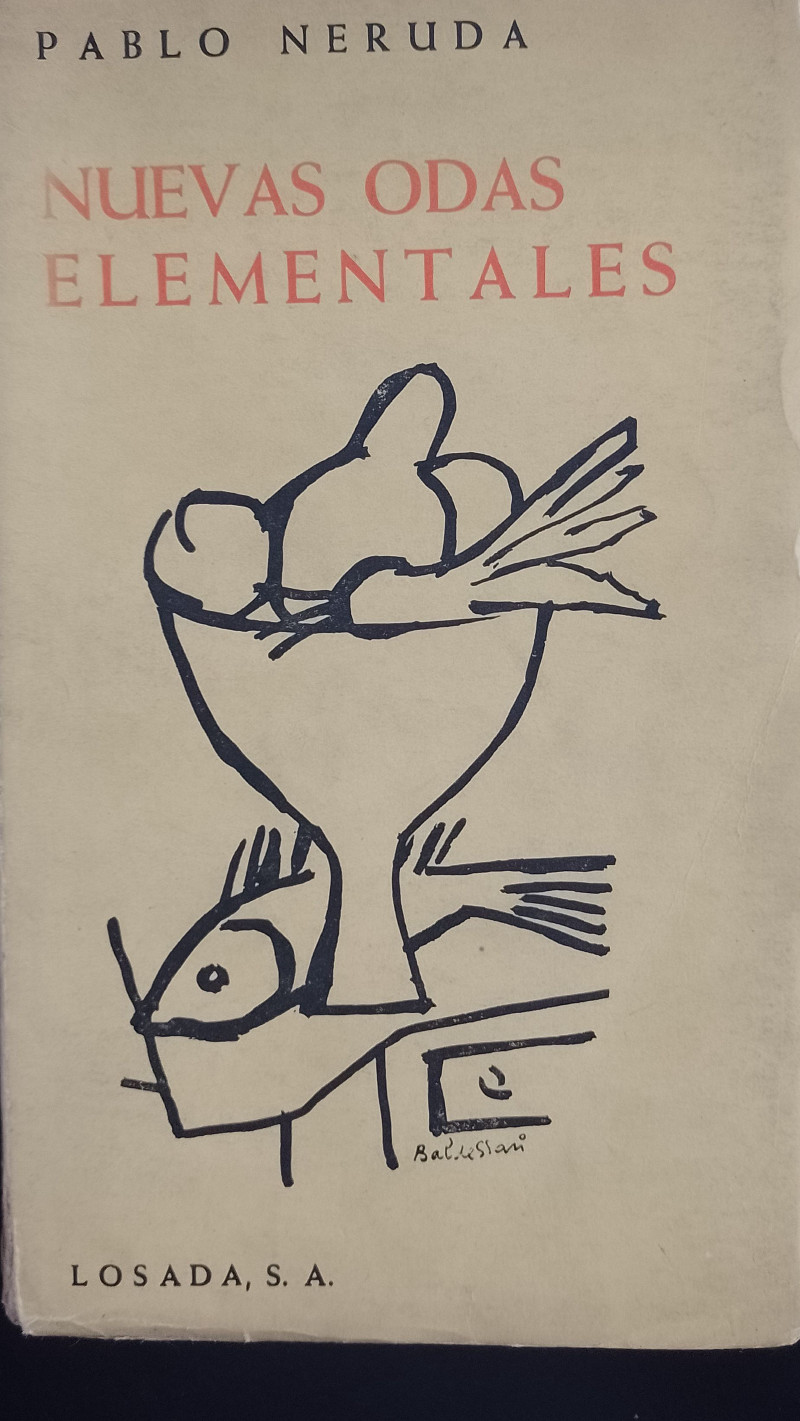
Elemental Odes
Original: Odas elementales
A celebration of everyday objects and elemental things, onions, socks, salt, the bicycle, written in accessible, joyful verse that combines democratic ethos with lyrical simplicity.
About the Author

Pablo Neruda
Pablo Neruda covering his life, literary work, political activity, and selected quotes for readers and researchers.
View Profile- OccupationWriter
- FromChile
-
Other Works
- Twenty Love Poems and a Song of Despair (1924)
- Residence on Earth (1933)
- The Heights of Macchu Picchu (standalone edition) (1945)
- Alturas of Machu Picchu (1945)
- Canto General (1950)
- The Captain's Verses (1952)
- Estravagario (1958)
- One Hundred Love Sonnets (1959)
- Memorial of Isla Negra (1964)
- The Splendor and Death of Joaquín Murieta (1967)
- The Book of Questions (1974)
- I Confess That I Have Lived (1974)