
Essays: Second Series
Overview
Ralph Waldo Emerson’s Essays: Second Series (1844) gathers a set of meditations that refine and complicate the transcendental vision he had announced earlier. The collection moves between metaphysics, ethics, aesthetics, and civic thought, presenting a philosophy of self-trust grounded in the intuition of spiritual law yet tempered by a new attention to flux, limitation, and the bafflements of everyday life. Its essays interlock: the figure of the poet interprets nature’s symbols; character radiates moral force into manners and gift-giving; politics is measured against the sovereignty of conscience; experience surveys the shifting sand on which all knowing stands.
The Poet and the Symbolic Order
Emerson’s portrait of the poet stands at the center. The poet is not merely a versifier but the representative person who perceives the world as a living language. Nature offers endless correspondences; each fact hints at a law, each object a symbol that points beyond itself. True poetry discloses this hidden grammar and returns readers to a sense of enchantment in the ordinary. Emerson calls for a home-grown American bard, capacious enough to translate the continent’s vastness and democratic energies into song, and bold enough to fuse thought and sensation, myth and measurement.
Experience and the Limits of Knowing
Experience registers the chastening side of Emerson’s thought. He confronts grief, accident, and the stubborn opacity of events, noting how temperament and perspective filter reality. The world arrives muffled; knowledge comes in fragments; effort often meets the resistance of circumstance. Yet the essay refuses despair. It counsels a disciplined openness, an ability to ride the waves of contingency without surrendering the will to act. Power lies in making, in renewing perception, and in converting loss into fresh attention. The ideal persists, but it must be earned against the drag of fact.
Self and Society: Character, Manners, Gifts
Character exalts moral being as the ultimate influence. More than talent or argument, a well-founded soul silently persuades, commanding trust by its integrity. Manners extends this ethic into social life. Courtesy is not ornament but the outward sign of inward respect, a style that harmonizes self-respect with regard for others. Gifts treats giving as a test of insight. The best gift recognizes the recipient’s nature and calls forth freedom; value resides less in price than in the spirit and timing of the offering.
Nature Revisited
The brief Nature revisits Emerson’s originating theme with greater dynamism. Nature is not a fixed stock of things but a process, a becoming that mirrors the mind’s creativity. Art continues nature by intention; every practical improvement is a moral experiment. The observer participates in what is observed, and the world’s forms answer to the soul’s demands for meaning and measure.
Public Life: Politics and Reform
Politics gauges institutions by the primacy of the person. The state exists to serve the moral growth of individuals, not to enthrone party or property. Laws deserve obedience only as they embody justice; majorities possess no authority over conscience. New England Reformers surveys the proliferating movements of the day, praising their moral impulse while warning against fanaticism and system-building. Durable change begins in character and radiates outward; reforms fail when they neglect the inward spring.
Nominalist and Realist
This philosophical diptych weighs the claims of universal ideas against the stubbornness of particulars. Emerson refuses a final choice. Our best thought alternates between the poles: we need the Realist’s grip on facts and the Nominalist’s suspicion of abstractions, yet also the Idealist’s intuition of unity. Wisdom uses each as a corrective to the others.
Style and Legacy
The collection speaks in oracular bursts, rich with metaphor, paradox, and sudden aphorism. Its pages helped set the terms for American literary ambition, preparing the way for Whitman’s democratic poetics and, later, a pragmatic turn that measures truths by their generative power. The result is a demanding but generative book: a charter for inward freedom tested against the weather of the world.
Citation Formats
APA Style (7th ed.)
Essays: Second series. (2026, February 4). FixQuotes. https://fixquotes.com/works/essays-second-series/
Chicago Style
"Essays: Second Series." FixQuotes. February 4, 2026. https://fixquotes.com/works/essays-second-series/.
MLA Style (9th ed.)
"Essays: Second Series." FixQuotes, 4 Feb. 2026, https://fixquotes.com/works/essays-second-series/. Accessed 1 Apr. 2026.
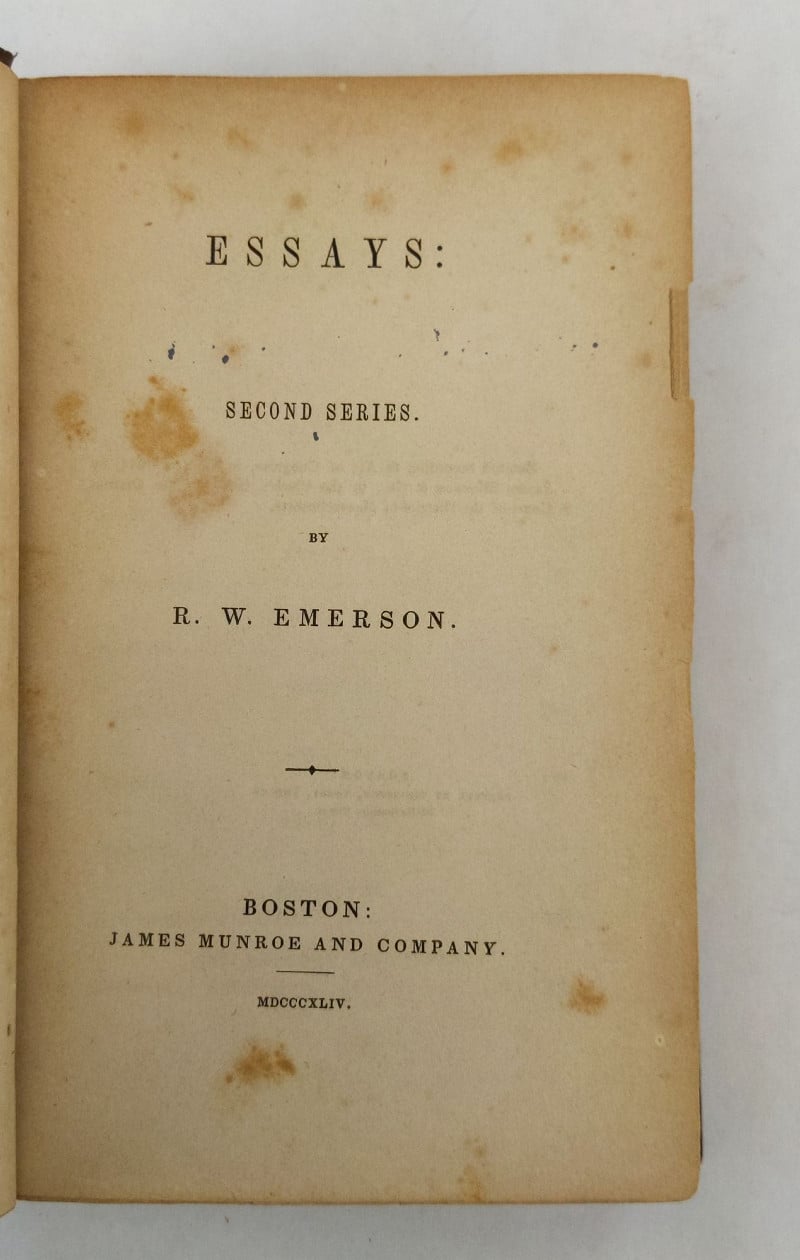
Essays: Second Series
A follow-up to the first series, containing essays on various topics such as experience, character, and manners.
- Published1844
- TypeBook
- GenrePhilosophy, Non-Fiction
- LanguageEnglish
About the Author

Ralph Waldo Emerson
Ralph Waldo Emerson, key figure in Transcendentalism and American literature, featuring his essays, quotes, and biography.
View Profile- OccupationPhilosopher
- FromUSA
-
Other Works
- Nature (1836)
- Essays: First Series (1841)
- The Poet (1844)
- Representative Men (1850)
- English Traits (1856)
- The Conduct of Life (1860)
- May-Day and Other Pieces (1867)
- Society and Solitude (1870)