
Euphues: The Anatomy of Wit
Overview
John Lyly's Euphues: The Anatomy of Wit (1578) is a landmark of Elizabethan prose that blends courtly romance, moral instruction and rhetorical display. Set in a cultivated, idealized Athens, it follows the young and urbane Euphues as he dispenses advice on love, manners and education. The book is both a fictional narrative and a collection of exempla and dialogues intended to model social behavior and intellectual refinement for a rising class of readers at the Tudor court.
Narrative and Structure
The plot advances less by dramatic action than by conversation and moral anecdote. Euphues interacts with friends and suitors, recounts stories, and reflects on his own experiences of affection and disappointment. Episodes are linked by the protagonist's efforts to reconcile passion with reason: he offers counsel drawn from classical and contemporary examples, then tests those maxims in encounters that expose the tension between ideal conduct and human frailty. The result is episodic and didactic rather than psychologically realist, with an emphasis on aphorism and exemplary tale over sustained character development.
Style and Rhetoric
Euphues is best known for giving its name to euphuism, an ornate prose manner characterized by balanced antitheses, strict parallelism, alliteration, and a profusion of classical and natural similes. Sentences are carefully mirrored and rhythmically patterned; arguments are reinforced by neat oppositions and mnemonic repetitions. Lyly mines myth, history and the natural world for illustrative comparison, creating a surface that is witty, elegant and highly artificial. The style aims to charm as much as to instruct, making eloquence itself a moral and social commodity.
Themes and Moral Purpose
At its core, the work explores the tensions between reason and desire, appearance and sincerity, and private feeling and public conduct. Education and self-fashioning are central concerns: Euphues models how a gentleman might cultivate wit, decorum and prudence. Love functions both as a private crisis and a lens for social advice, with courtship episodes staged to reveal larger lessons about moderation, reputation and the uses of rhetoric. The book insists that eloquence must be allied to moral judgment, turning stylistic refinement into a marker of ethical as well as social attainment.
Context and Reception
Arriving at the Elizabethan court amid a growing interest in humanist learning and courtly etiquette, the book quickly became fashionable. Its verbal virtuosity appealed to readers who prized quickness of mind and polish of speech, and its advice on manners suited an era defined by ceremonial display and social maneuvering. At the same time, euphuism proved easy to parody; its peculiar rhythms and mannerisms inspired both imitation and satire among contemporary dramatists and pamphleteers.
Influence and Legacy
Euphues had a broad and lasting impact on English prose, shaping expectations about style and the social role of wit for decades. Its balance of instruction and entertainment helped establish a model for didactic fiction and conduct literature, while its stylistic experiments expanded the expressive possibilities of English prose. Later writers reacted to euphuism with admiration, adaptation and critique, making Lyly's achievement a central reference point in the evolving rhetoric of the Elizabethan age. The book remains a valuable document of courtly culture and an instructive example of how style can be made to serve both art and instruction.
Citation Formats
APA Style (7th ed.)
Euphues: The anatomy of wit. (2026, January 2). FixQuotes. https://fixquotes.com/works/euphues-the-anatomy-of-wit/
Chicago Style
"Euphues: The Anatomy of Wit." FixQuotes. January 2, 2026. https://fixquotes.com/works/euphues-the-anatomy-of-wit/.
MLA Style (9th ed.)
"Euphues: The Anatomy of Wit." FixQuotes, 2 Jan. 2026, https://fixquotes.com/works/euphues-the-anatomy-of-wit/. Accessed 12 Feb. 2026.
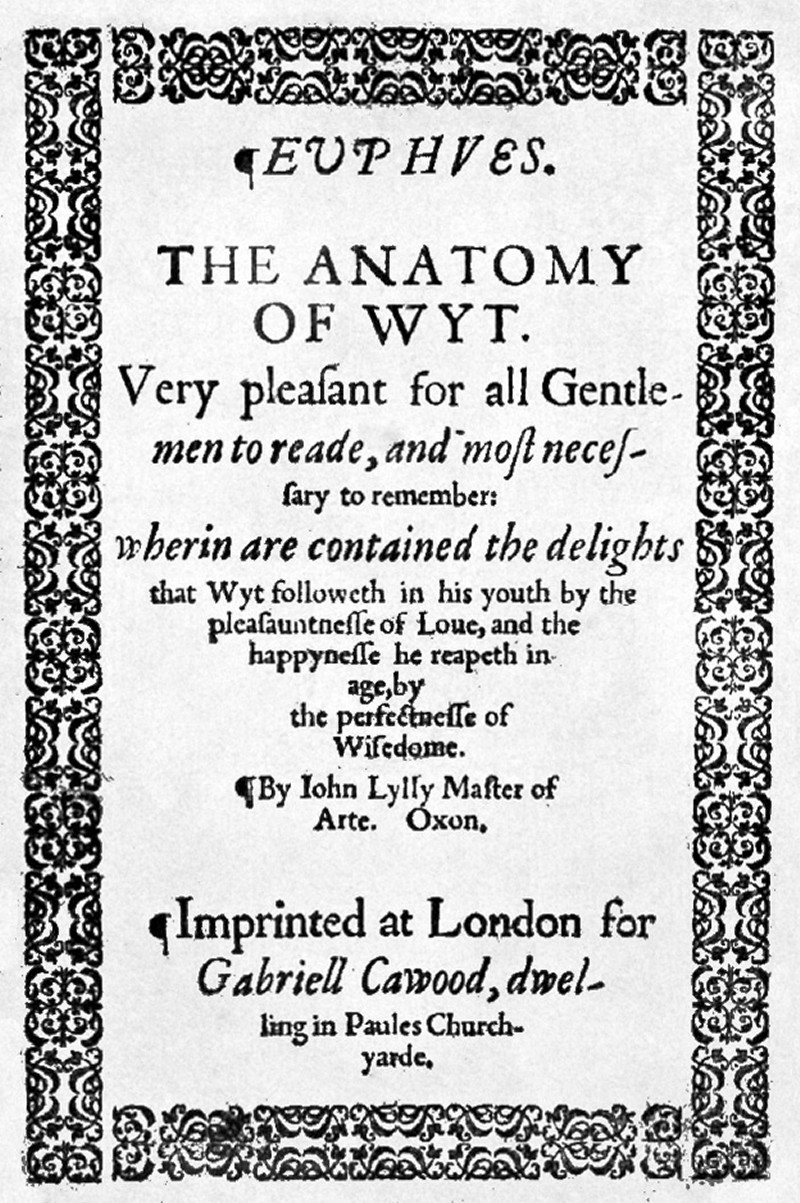
Euphues: The Anatomy of Wit
A highly influential prose romance notable for its ornate, antithesis-rich style known as 'euphuism.' It follows the young Athenian Euphues as he offers counsel on love, manners and education, illustrating moral lessons through dialogues and exempla.
- Published1578
- TypeBook
- GenreProse romance, Conduct literature
- Languageen
- CharactersEuphues, Philautus, Lucilla
About the Author

John Lyly
John Lyly, a key Elizabethan writer and dramatist known for courtly prose and drama.
View Profile- OccupationWriter
- FromEngland
-
Other Works
- Euphues and his England (1580)
- Sapho and Phao (1584)
- Campaspe (1584)
- Endymion, the Man in the Moon (1591)