
Novel: Exodus from the Long Sun
Overview
Exodus from the Long Sun concludes the Whorl saga with a blend of mystery, theology, and political upheaval as the people who have lived for generations inside a cylindrical generation ship confront the possibility of leaving it. The narrative follows Patera Silk, a priest whose storytelling voice is as wily as it is observant, through the unraveling of myths that have governed life on the Whorl and the wrenching choices that follow those revelations. The novel moves from cramped urban politics to the vast idea of what lies beyond the ship, transforming local intrigues into questions about identity, responsibility, and destiny.
Main characters and themes
Patera Silk remains the chief presence, an unreliable but compelling narrator who tries to make sense of events while often guarding his own motives. Surrounding him are the city factions, priests, and the quasi-divine intelligences whose status as "gods" has always been ambiguous. The book interrogates faith and authority, asking whether belief can survive exposure and whether a society shaped by ritual and habit can remake itself when the technology behind those rituals is revealed. Themes of memory, exile, and the moral costs of survival thread the story, as personal loyalties collide with collective necessity.
Plot arc and conflicts
The story accelerates as secrets about the Whorl's origins and governance come to light, forcing Silk and others to confront truths that undermine existing power structures. Political factions splinter between those who wish to preserve the old order and those who press for radical change, including the contentious proposal to open the ship and leave. Encounters with the nonhuman intelligences that once served the original mission deepen the moral complexity: these entities are both custodians and relics, and dealing with them raises questions of stewardship and culpability. Wolfe balances scenes of civic maneuvering with moments of intimate revelation, so that the fate of the whole vessel feels bound to individual choices.
Resolution and legacy
The novel does not offer tidy answers. Its climax centers on a fraught decision to attempt an exodus, and the consequences are messy, sorrowful, and ambiguously hopeful. Rather than neat closure, the ending functions as a pivot that clears space for the next phase of the characters' lives and for the subsequent narrative that follows those who leave the Whorl. The book leaves readers pondering whether escape from an enclosed world truly frees a people from the habits and histories that made them what they are. Exodus from the Long Sun is both an ending and a threshold, a richly layered finale that rewards attention to detail and invites reflection on the costs of revelation and the difficulty of remaking a civilization.
Citation Formats
APA Style (7th ed.)
Exodus from the long sun. (2026, February 7). FixQuotes. https://fixquotes.com/works/exodus-from-the-long-sun/
Chicago Style
"Exodus from the Long Sun." FixQuotes. February 7, 2026. https://fixquotes.com/works/exodus-from-the-long-sun/.
MLA Style (9th ed.)
"Exodus from the Long Sun." FixQuotes, 7 Feb. 2026, https://fixquotes.com/works/exodus-from-the-long-sun/. Accessed 27 Mar. 2026.
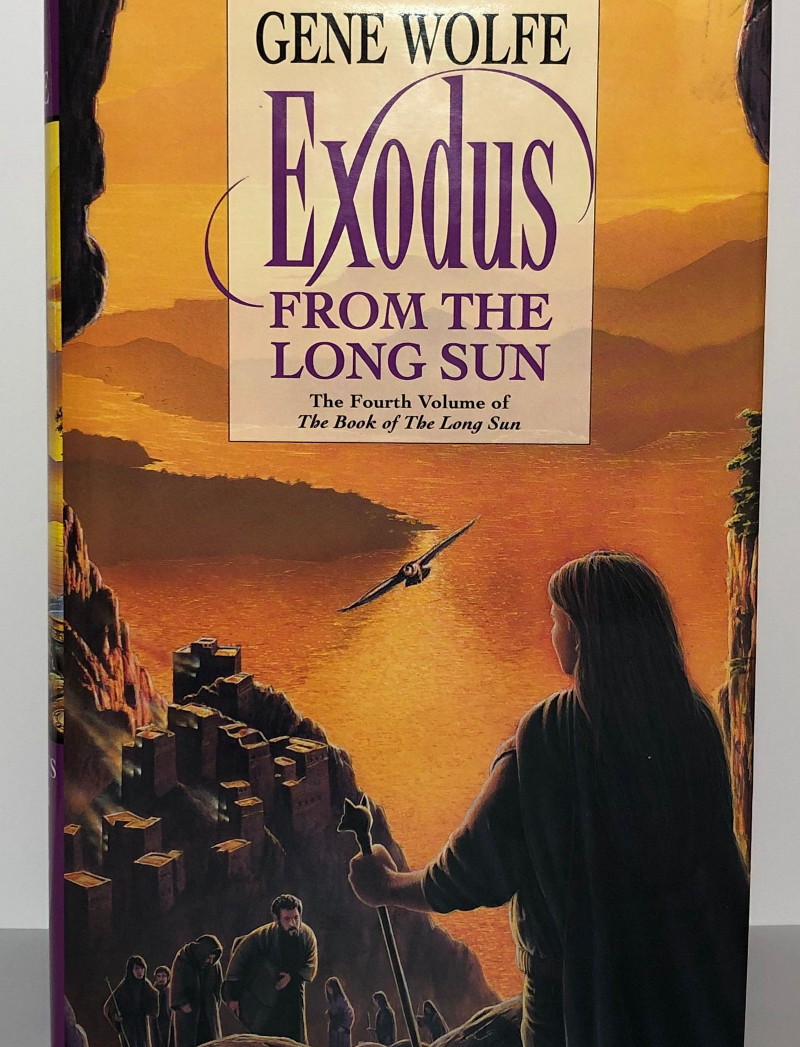
Exodus from the Long Sun
Final volume of The Book of the Long Sun. Concludes the Whorl saga as characters confront the possibility of leaving the generation-ship environment and face the broader consequences of their society's choices.
- Published1996
- TypeNovel
- GenreScience Fiction, Fantasy
- Languageen
- CharactersPatera Silk
About the Author

Gene Wolfe
Gene Wolfe quotes and biography, detailing his life, early years, military service, literary career and influence in science fiction and fantasy.
View Profile- OccupationWriter
- FromUSA
-
Other Works
- The Death of Doctor Island (1973)
- Peace (1975)
- The Shadow of the Torturer (1980)
- The Claw of the Conciliator (1981)
- The Sword of the Lictor (1982)
- The Citadel of the Autarch (1983)
- Free Live Free (1984)
- Soldier of the Mist (1986)
- The Urth of the New Sun (1987)
- There Are Doors (1988)
- Soldier of Arete (1989)
- Nightside the Long Sun (1993)
- Caldé of the Long Sun (1994)
- Lake of the Long Sun (1994)
- On Blue's Waters (1999)
- In Green's Jungles (2001)
- Return to the Whorl (2003)
- The Wizard (2004)
- The Knight (2004)
- Soldier of Sidon (2006)