
Mark Zuckerberg Biography Quotes 96 Report mistakes
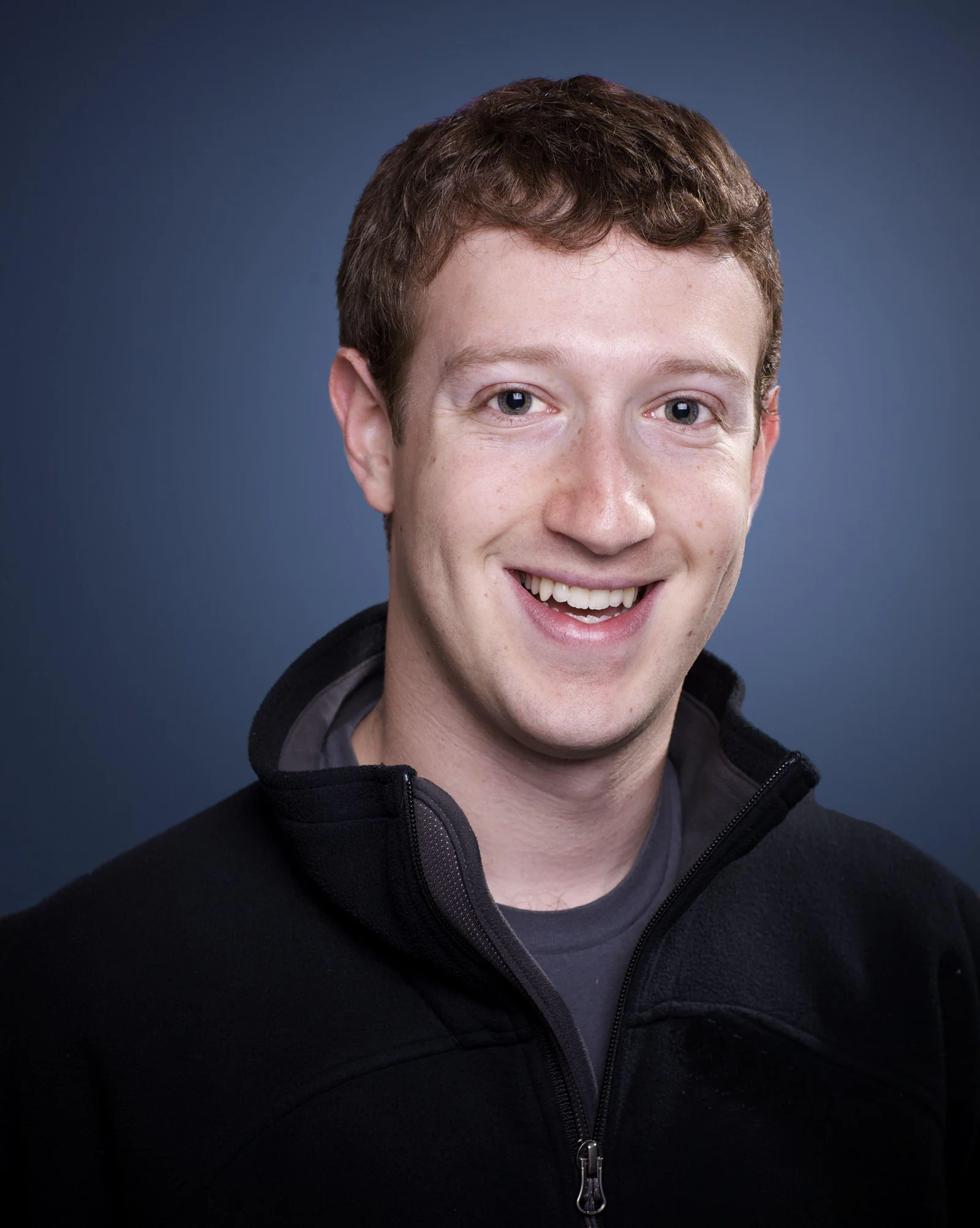
| 96 Quotes | |
| Born as | Mark Elliot Zuckerberg |
| Occup. | Businessman |
| From | USA |
| Spouse | Priscilla Chan |
| Born | May 14, 1984 White Plains, New York, USA |
| Age | 41 years |
| Cite | |
Citation Formats
APA Style (7th ed.)
Mark zuckerberg biography, facts and quotes. (2026, February 11). FixQuotes. https://fixquotes.com/authors/mark-zuckerberg/
Chicago Style
"Mark Zuckerberg biography, facts and quotes." FixQuotes. February 11, 2026. https://fixquotes.com/authors/mark-zuckerberg/.
MLA Style (9th ed.)
"Mark Zuckerberg biography, facts and quotes." FixQuotes, 11 Feb. 2026, https://fixquotes.com/authors/mark-zuckerberg/. Accessed 12 Feb. 2026.
Early Life and Background
Mark Elliot Zuckerberg was born May 14, 1984, in White Plains, New York, and grew up in nearby Dobbs Ferry in a professional, tightly structured household that prized achievement. His father, Edward Zuckerberg, ran a dental practice; his mother, Karen, trained as a psychiatrist. The setting was late-1990s suburban America, where dial-up internet, AOL chat, and early web culture trained a generation to socialize through screens before society had language for the tradeoffs.From childhood he showed the blend that would define him: social observation paired with systems thinking. Friends and family recalled an intense focus on puzzles, competitive games, and building tools that shaped group behavior rather than merely entertaining him. Even early tinkering carried a managerial instinct - not just to code, but to redesign how people communicated, what they noticed about each other, and how quickly information moved through a community.
Education and Formative Influences
Zuckerberg attended Ardsley High School briefly, then Phillips Exeter Academy in New Hampshire, where he studied classics, excelled in math, and developed software projects outside class; he also took private programming tutoring, reflecting both family support and his own single-minded pace. In 2002 he entered Harvard University, an era when campus social life was already entwined with online profiles, but before any universal platform existed. His early programs - including a music-recommendation project and the controversial FaceMash, which scraped student photos for comparison - revealed a recurring pattern: curiosity about ranking, identity, and attention, coupled with a willingness to test boundaries and accept backlash as data.Career, Major Works, and Turning Points
In February 2004 Zuckerberg launched TheFacebook from his Harvard dorm with classmates Eduardo Saverin, Dustin Moskovitz, and Chris Hughes, quickly spreading from Ivy League schools to broader universities, then the public. He moved the company to Palo Alto in 2004, accepted early backing from Peter Thiel, and soon confronted defining conflicts: the Winklevoss dispute over origins, Saverin's dilution and lawsuit, and the moral weight of building a platform that scaled faster than norms could catch up. Renamed Facebook, the company introduced the News Feed in 2006 - a turning point that provoked user revolt yet cemented algorithmic curation as the product's core. As CEO, Zuckerberg oversaw the shift to mobile, the 2012 IPO, and major acquisitions: Instagram (2012), WhatsApp (2014), and Oculus (2014). Later years were dominated by governance crises - misinformation, election interference, and the Cambridge Analytica scandal - pushing him from founder-hero to contested custodian of a global information utility. In 2021 he rebranded the parent company as Meta, betting on long-horizon virtual reality and "metaverse" infrastructure even as scrutiny of social media harms intensified.Philosophy, Style, and Themes
Zuckerberg's leadership style fused engineering culture with missionary certainty: set a direction, instrument everything, ship relentlessly, and let scale prove legitimacy. His early mantra - "Move fast and break things. Unless you are breaking stuff, you are not moving fast enough". - captures a psychology that treats friction as an obstacle to learning. The upside was extraordinary iteration speed; the downside was that "breaking" increasingly meant trust, privacy expectations, or civic calm. Over time, his public rhetoric shifted from disruption to stewardship, but the underlying habit remained: treat society as a system that can be optimized, even when the variables are human and the error bars moral.His worldview also exposes a hard-edged theory of relevance and a willingness to say the quiet part aloud. "A squirrel dying in front of your house may be more relevant to your interests right now than people dying in Africa". is not only provocation - it reveals a founder thinking in terms of personalized salience, the logic that later powered feeds and ads. At the same time, he framed connectivity as moral progress and pursued scale as a public good: "Connectivity is a human right". That triad - speed, relevance, and universal connection - explains much of Facebook's history: the product optimized for what captures attention, justified by the belief that connection itself is inherently beneficial, and advanced through a culture that prized building over deliberating.
Legacy and Influence
Zuckerberg became one of the defining architects of 21st-century social infrastructure, helping turn identity, friendship, and news consumption into data-driven products. His companies reshaped advertising, media economics, political campaigning, and the social norms of privacy and publicness; they also helped ignite global debates about content moderation, monopoly power, teen mental health, and platform responsibility. As a biographical figure, he embodies the era's paradox: a founder who made connection frictionless while intensifying disputes over what connection costs, and who continues to bet that new technical architectures - from encryption to VR - can solve problems that are as much cultural and political as they are computational.Our collection contains 96 quotes written by Mark, under the main topics: Witty One-Liners - Motivational - Friendship - Sarcastic - Leadership.
Other people related to Mark: Facebook (American), David Fincher (Director), Steven Levy (Journalist), Ken Auletta (Journalist), Joe Lockhart (Journalist)
Frequently Asked Questions
- Mark Zuckerberg height: About 5 ft 7 in (170 cm).
- Mark Zuckerberg movie: He is portrayed in the film "The Social Network" (2010).
- Mark Zuckerberg wife: Priscilla Chan (married in 2012).
- Mark Zuckerberg sister: He has three sisters: Randi Zuckerberg, Donna Zuckerberg, and Arielle Zuckerberg.
- Mark Zuckerberg religion: Raised Jewish; later said he identifies as Christian (around 2016).
- What is Mark Zuckerberg net worth? Roughly $170–$200+ billion (varies with Meta stock; Forbes/Bloomberg updates frequently).
- How old is Mark Zuckerberg? He is 41 years old
Mark Zuckerberg Famous Works
- 2019 A Privacy-Focused Vision for Social Networking (Essay)
- 2017 Building Global Community (Essay)
- 2013 Internet.org / Free Basics (Non-fiction)
- 2007 Facebook Platform (Non-fiction)
Source / external links