
Book: Far and Wide
Overview
"Far and Wide" records Douglas Reed's travels through the United States just after World War II, offering a British observer's eye on a nation reshaping itself. The book moves from city to city and region to region, combining detailed description with brisk commentary. Reed captures street scenes, industrial plants, political gatherings and private conversations, presenting America as both triumphant and restless in the early Cold War years.
The narrative balances reportage and reflection. Encounters with ordinary people sit alongside meetings with business leaders and politicians, and landscape passages range from urban bustle to open country. Reed's chronology of places visited gives the book a brisk forward motion, but his real interest lies in tracing cultural and economic currents beneath everyday life.
Themes and Observations
A central theme is the tension between material prosperity and social unease. Reed notes the swelling consumer abundance, cars, factories, advertising, and contrasts it with anxieties about political conformity, ideological polarization and the pressures of mass culture. He probes how wartime mobilization and postwar industry shaped new expectations, while institutions struggled to keep pace with rapid change.
Race, class and regional difference recur as subjects of sustained attention. Reed describes Southern segregation and Northern migration, the persistence of rural poverty beside urban wealth, and the varied local attitudes toward authority. He highlights the vigor of American enterprise and initiative, yet remains alert to the social costs that accompany unbridled growth: alienation, spectacle and a political climate sharpened by anti-communist fervor.
Style and Tone
Reed writes in a direct, occasionally aphoristic style that mixes journalistic detail with a polemic edge. Descriptive passages are vivid and punctuated by sharp evaluations; scenes of everyday life are used to draw broader conclusions about national character. His British sensibility gives him a comparative posture, allowing wry observations about manners, institutions and the scale of ambition.
The tone shifts between admiration and critique. Reed is impressed by technological achievement and civic energy, yet skeptical about mass conformity and the flattening effects of consumer culture. Personal anecdotes and dialogues lend immediacy, while the authorial voice remains assertive, frequently moving from concrete scene to general judgment.
Structure and Narrative
The book unfolds as a travel memoir rather than a strict sociological study, so episodic encounters drive the narrative. Reed arranges chapters around regions and cities, using extended set pieces, factory tours, political rallies, family homes, to illuminate broader issues. The pacing is lively, with the variety of settings preventing monotony and allowing recurring themes to reappear under different lights.
Interspersed with travelogue are moments of historical reflection, where Reed situates contemporary events within longer trends of American history and Anglo-American relations. Those reflective passages give the travel narrative a sense of purpose: to diagnose what the rising American order might mean for the postwar world.
Legacy and Relevance
As a snapshot of America at a pivotal moment, "Far and Wide" offers readers a textured, often provocative view from across the Atlantic. Its strengths lie in careful observation, vivid scene-setting and a restless curiosity about social change. The book serves as both a period piece and a meditation on modernization, useful to readers interested in cultural history and travel writing alike.
Readers today will find value in the immediacy of Reed's impressions and in his attempt to balance admiration with critique. The book stands as an example of mid-20th-century travel journalism that aims not only to describe but to interpret a society in the act of reinvention.
Citation Formats
APA Style (7th ed.)
Far and wide. (2026, February 5). FixQuotes. https://fixquotes.com/works/far-and-wide/
Chicago Style
"Far and Wide." FixQuotes. February 5, 2026. https://fixquotes.com/works/far-and-wide/.
MLA Style (9th ed.)
"Far and Wide." FixQuotes, 5 Feb. 2026, https://fixquotes.com/works/far-and-wide/. Accessed 1 Apr. 2026.
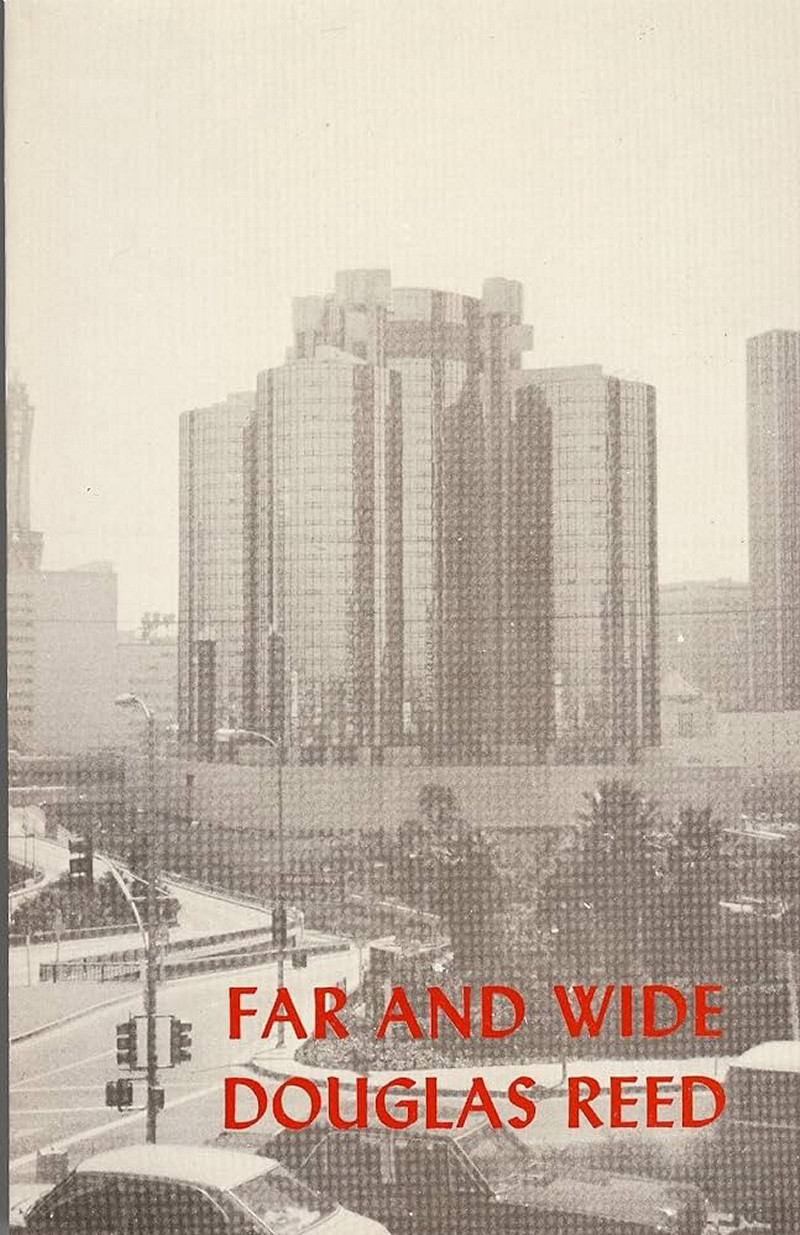
Far and Wide
Far and Wide is a travel book, detailing Douglas Reed's experiences as he travels across America, offering a British perspective on post-World War II American culture, economics, and politics.
- Published1951
- TypeBook
- GenreTravel, Non-Fiction
- LanguageEnglish
About the Author

Douglas Reed
Douglas Reed, a journalist and political writer known for his critiques of global politics and advocacy for national sovereignty.
View Profile- OccupationJournalist
- FromUnited Kingdom
-
Other Works
- Insanity Fair (1938)
- Disgrace Abounding (1939)
- The Controversy of Zion (1978)