
Cindy Sherman Biography Quotes 13 Report mistakes
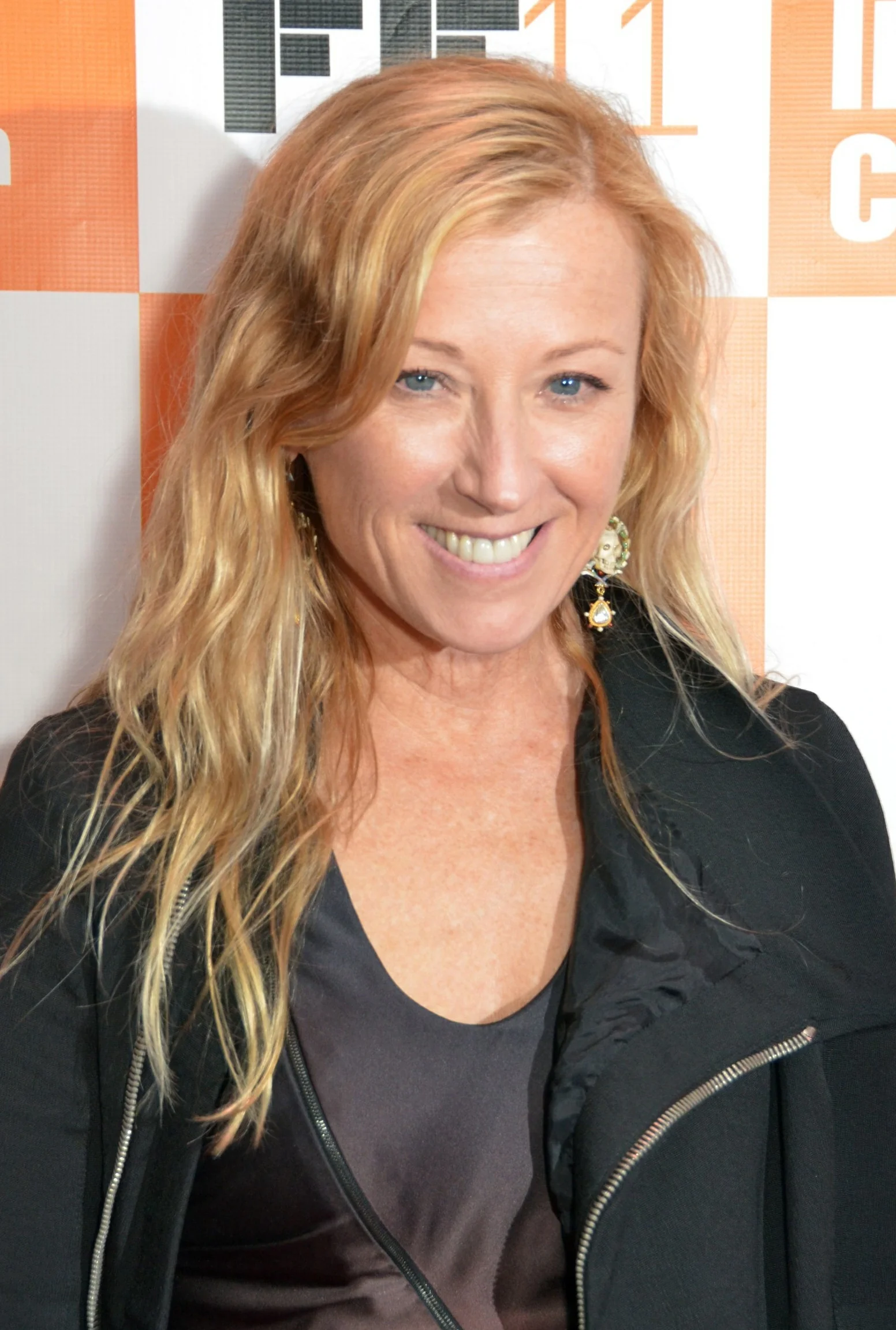
| 13 Quotes | |
| Occup. | Photographer |
| From | USA |
| Born | January 19, 1954 Glen Ridge, New Jersey |
| Age | 72 years |
| Cite | |
Citation Formats
APA Style (7th ed.)
Cindy sherman biography, facts and quotes. (2026, February 11). FixQuotes. https://fixquotes.com/authors/cindy-sherman/
Chicago Style
"Cindy Sherman biography, facts and quotes." FixQuotes. February 11, 2026. https://fixquotes.com/authors/cindy-sherman/.
MLA Style (9th ed.)
"Cindy Sherman biography, facts and quotes." FixQuotes, 11 Feb. 2026, https://fixquotes.com/authors/cindy-sherman/. Accessed 12 Feb. 2026.
Early Life and Background
Cindy Sherman was born on January 19, 1954, in Glen Ridge, New Jersey, and grew up largely on Long Island, New York, in the postwar suburban culture that sold identity as something you could buy, wear, and rehearse. The America of her childhood was saturated with television, department-store glamour, and a tightening script of femininity, with Catholic-school archetypes and Hollywood archetypes often blurring into the same set of poses.Her early sense of self was sharpened by friction at home and an alertness to social behavior. She later described her father in stark terms: "My dad was such a bigot. He was a horrible, self-centred person. He was really racist and he'd talk about the Jews and blacks and Catholics even". That kind of domestic atmosphere did not produce a manifesto so much as a survival skill: watching people, decoding power, and learning how quickly a face can become a mask to satisfy or repel an audience.
Education and Formative Influences
Sherman studied at the State University of New York at Buffalo (mid-1970s), arriving when conceptual art, performance, and postminimalism were reshaping what counted as an artwork. She began as a painting student but found the medium too tied to inherited notions of expression; photography offered speed, disguise, and the ability to stage meaning without claiming confession. Buffalo also placed her near a network of artists and writers who treated mass media as raw material, and the era's feminist debates around representation sharpened her focus on how women were posed, lit, and evaluated in pictures.Career, Major Works, and Turning Points
After moving to New York in 1977, Sherman quickly defined herself through the camera, not as a documentarian but as a constructor of images. Her breakthrough, "Untitled Film Stills" (1977-1980), presented her as a rotating cast of B-movie and European art-house heroines - the secretary, the runaway, the ingenue at the window - each frame a convincing fragment with the narrative withheld. The series became a cornerstone of late-20th-century art because it made spectators feel their own appetite for plot and stereotype. In the 1980s she pushed into harsher territory: the "Centerfolds" (1981) transformed the horizontal magazine format into scenes of anxious vulnerability; later "Fairy Tales", "Disasters", and other works introduced prosthetics and abjection, turning beauty into something unstable. By the late 1980s and early 1990s she escalated scale and grotesquerie in large color works; in 1995 she directed the feature film "Office Killer", a deadpan, unsettling extension of her interest in the violence of everyday roles. Through the 2000s and 2010s she returned to social performance with clown pictures, society portraits, and digitally manipulated figures, tracking how age, status, and glamour are fabricated.Philosophy, Style, and Themes
Sherman's art is often misread as autobiography because her body is the recurring instrument, but her psychological wager is the opposite: she uses herself to vanish into types, letting viewers confront the machinery of looking. "I feel I'm anonymous in my work. When I look at the pictures, I never see myself; they aren't self-portraits. Sometimes I disappear". That disappearance is not coyness; it is method. By refusing a stable "real Cindy", she exposes how photographs invite us to assign character, class, and morality from hairstyle, makeup, posture, and setting - and how quickly those assignments become judgments.Her sets are small, her gestures precise, and her stories incomplete by design. "The still must tease with the promise of a story the viewer of it itches to be told". The teased story is where her critique lives: the viewer supplies the missing plot, and in doing so reveals the cultural scripts they carry. Even her process is a kind of interior séance rather than acting in a theatrical sense: "I'm really just using the mirror to summon something I don't even know until I see it". In that summoning, femininity becomes a pressure system - comedy and horror, glamour and degradation, youth and decay - staged with enough plausibility to seduce, then enough wrongness to unsettle. The work is also about control: the artist as director, makeup artist, costume department, and model, reclaiming the apparatus that has historically framed women as images to be consumed.
Legacy and Influence
Sherman helped make staged photography central to contemporary art, proving it could compete with painting in conceptual weight and market value while also interrogating why it was dismissed in the first place. Her influence runs through appropriation and postmodern critique, feminist art history, fashion photography, film theory, and the later culture of self-imaging: long before selfies became a daily ritual, she demonstrated that the self in a picture is usually a role. Museums and scholars have treated "Untitled Film Stills" as a canonical map of late-20th-century visual culture, but her broader legacy is more bracing - a sustained investigation into how identity is manufactured, how desire edits perception, and how easily a society confuses a convincing image with a truthful one.Our collection contains 13 quotes written by Cindy, under the main topics: Art - Equality - Father.
Other people related to Cindy: Barbara Kruger (Artist), Carol Kane (Actress)
Cindy Sherman Famous Works
- 2008 Society Portraits (Collection)
- 2003 Clowns (Collection)
- 1997 Office Killer (Screenplay)
- 1992 Sex Pictures (Collection)
- 1989 History Portraits (Collection)
- 1981 Centerfolds (Collection)
- 1977 Untitled Film Stills (Collection)
Source / external links