
Allan Bloom Biography Quotes 19 Report mistakes
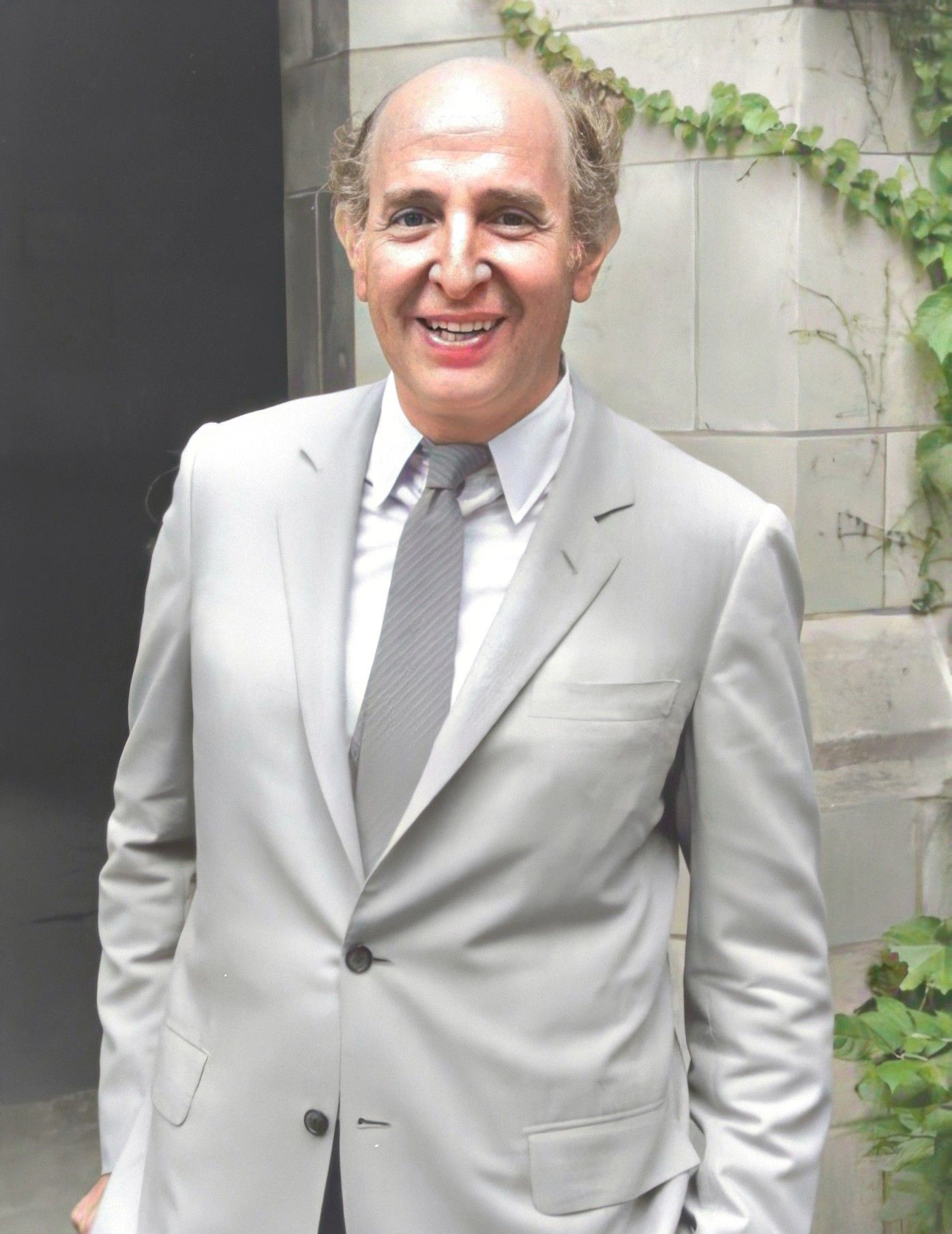
| 19 Quotes | |
| Born as | Allan David Bloom |
| Occup. | Philosopher |
| From | USA |
| Born | September 14, 1930 Indianapolis, Indiana, USA |
| Died | October 7, 1992 Chicago, Illinois, USA |
| Cause | Hepatic cirrhosis |
| Aged | 62 years |
| Cite | |
Citation Formats
APA Style (7th ed.)
Allan bloom biography, facts and quotes. (2026, February 11). FixQuotes. https://fixquotes.com/authors/allan-bloom/
Chicago Style
"Allan Bloom biography, facts and quotes." FixQuotes. February 11, 2026. https://fixquotes.com/authors/allan-bloom/.
MLA Style (9th ed.)
"Allan Bloom biography, facts and quotes." FixQuotes, 11 Feb. 2026, https://fixquotes.com/authors/allan-bloom/. Accessed 12 Feb. 2026.
Early Life and Background
Allan David Bloom was born on September 14, 1930, in Indianapolis, Indiana, and grew up in a Jewish, middle-class Midwestern milieu that prized learning as a route to dignity and self-command. The America of his boyhood was shaped by Depression memory, wartime mobilization, and the early Cold War - a society outwardly confident yet inwardly anxious about ideology, mass culture, and the meaning of citizenship. Bloom absorbed that tension early: the promise of democratic openness on one side, and the fear that openness could flatten standards, on the other.Even before he became a public figure, Bloom was a creature of the seminar room and the library rather than the lectern or the campaign trail. Friends and students later recalled a man simultaneously exacting and magnetic, drawn to the intimacy of conversation and to the lonely pleasures of reading. He carried a lifelong sense that the soul can be educated - or deformed - by what it loves, and that modern life too easily mistakes comfort and success for genuine fulfillment.
Education and Formative Influences
Bloom studied at the University of Chicago, entering young and coming under the decisive influence of the Great Books curriculum and the university's distinctive atmosphere of argument. He was shaped in particular by Leo Strauss, whose return to classical political philosophy and suspicion of modern relativism gave Bloom a methodological spine: read the great texts slowly, take their claims seriously, and treat philosophy as a lived quest rather than a set of opinions. Graduate study and early teaching deepened this Straussian orientation, while time in Paris strengthened his command of French thought and culture; he later became a notable translator and interpreter of Rousseau and Plato, and a vivid guide to how eros, education, and politics interlock.Career, Major Works, and Turning Points
Bloom taught primarily at Cornell University and then for many years at the University of Chicago, where he became a legendary teacher to students who wanted intellectual risk rather than credentialing. His scholarly reputation was anchored by meticulous work on classical and early modern political philosophy, including an influential translation of Plato's Republic (1968) with interpretive essay, and later writings on Rousseau and liberal education. His decisive public turning point came in 1987 with The Closing of the American Mind, a polemical yet learned diagnosis of the university's moral and intellectual drift, written amid the culture wars of the Reagan era and the aftershocks of the 1960s. The book made him briefly famous far beyond academia, casting him as both defender of the canon and critic of a higher education he believed had lost confidence in truth.Philosophy, Style, and Themes
Bloom's inner project was not nostalgia but the recovery of seriousness - an attempt to restore education as soulcraft. He framed learning as liberation from the prison of inherited, unexamined opinion: "Education is the movement from darkness to light". That sentence captures his psychology as much as his pedagogy: a man impatient with complacency, convinced that the deepest human dignity lies in becoming awake to what one thinks and why. For Bloom, the university was supposed to intensify that awakening by placing students in living contact with the best available arguments about justice, love, and the good life, rather than training them to manage their own indifference.He saw modern democratic culture as uniquely tempted by a soft nihilism: the belief that all values are equally arbitrary and all commitments are merely private. Against that, he insisted that genuine community forms around shared inquiry rather than shared identity or sentiment - "The real community of man is the community of those who seek the truth, of the potential knowers". In The Closing of the American Mind he described students arriving both sophisticated and hollowed out by cynicism about the American founding and its moral vocabulary: "Students now arrive at the university ignorant and cynical about our political heritage, lacking the wherewithal to be either inspired by it or seriously critical of it". His style fused close textual reading with cultural diagnosis, moving from Plato's cave to the modern campus, from Rousseau's account of desire to the contemporary student's hunger for belonging. At his best, the severity was animated by care: he attacked relativism not to police taste but to reopen the possibility that a young person might want wisdom more than status.
Legacy and Influence
Bloom died on October 7, 1992, in Chicago, leaving an influence disproportionate to his relatively small body of strictly academic writing. He helped set the terms of late-20th-century debates over liberal education, the canon, and the moral responsibilities of universities; admirers credit him with defending rigorous reading and the idea of philosophy as a way of life, while critics argue he idealized a narrow tradition and caricatured social change. Yet even disagreement often confirms his impact: he forced institutions and readers to ask whether higher education forms free minds or merely processes careers, and whether a culture that doubts truth can still teach anything worth loving.Our collection contains 19 quotes written by Allan, under the main topics: Ethics & Morality - Wisdom - Truth - Music - Freedom.
Other people related to Allan: Saul Bellow (Novelist), Paul Wolfowitz (Celebrity)
Allan Bloom Famous Works
- 1993 Love and Friendship (Book)
- 1991 The Republic of Plato (Book)
- 1987 The Closing of the American Mind (Book)
Source / external links