
Book: Glasow's Gloombusters
Overview
Published in 1951, Glasow's Gloombusters distills Arnold H. Glasow's trademark blend of humor, common sense, and practical optimism into a compact handbook for deflating sour moods and everyday discouragement. Rather than a narrative or argument-driven treatise, the book gathers hundreds of short pieces, punchy aphorisms, quick quips, and miniature anecdotes, each designed to flip a gloomy outlook into a more useful frame of mind. The title signals its purpose: to equip readers with ready-made “gloombusters, ” little bursts of wit that make burdens feel lighter and problems more workable.
Form and Style
The book reads like a well-stocked toolbox of morale-lifting lines. Most entries are one to three sentences, occasionally expanding into a brief paragraph that sets up a comic turn or a neat reversal. Glasow favors plain words, tight rhythms, and endings that land with a smile and a nudge. His humor lives in juxtaposition, taking familiar situations at home or in the office and twisting them just enough to reveal an unexpected angle. The tone is amiable and non-scolding; the wink replaces the wagging finger. Because the pieces are stand-alone, the book can be dipped into at random and still feel complete, which suits its purpose as a mood-adjuster more than a cover-to-cover read.
Core Themes
Across its pages Glasow returns to a handful of durable themes. Attitude under pressure sits at the center: the difference between a setback and a step forward is often the story we tell ourselves about it. Workplace life offers steady comic fuel, sales calls, meetings, deadlines, the gulf between plans and performance, but the jokes double as gentle instruction in initiative, punctuality, thrift, and follow-through. Self-improvement emerges as a practical discipline rather than a lofty ideal; Glasow treats procrastination, vanity, and fussiness as habits that can be laughed out of power. Friendship, marriage, and neighborliness get equal attention, with humor used to sand the edges off conflicts and to remind readers that kindness and patience usually pay.
Techniques and Effects
Glasow’s “gloombusters” often hinge on paradoxes, crisp definitions, and reversals that make a reader pause, grin, and reconsider a stance. He compresses advice into memorable turns that avoid preachiness by arriving as jokes first and counsel second. The effect is cumulative. After a few pages, the reader has not been argued into positivity so much as nudged into it, finding it harder to stay gloomy while spotting the small absurdities in everyday frustrations.
Audience and Use
Written by a businessman-humorist who supplied morale material to companies, the book targets the broad middle of postwar American life: office workers, salespeople, managers, club members, and householders looking for light but pointed encouragement. Its modular format invites clipping, sharing, and reposting on bulletin boards, an analog social feed of sorts. Readers can deploy a line to open a meeting, soften a reprimand, brighten a letter, or reframe a personal annoyance.
Place in Glasow’s Oeuvre and Legacy
Glasow’s Gloombusters helped cement the author’s reputation as a reliable source of quotable business wisdom wrapped in genial wit. Many lines circulated far beyond their first printing, later appearing in newsletters, speeches, and desk calendars. The book’s lasting appeal lies in its mix of humor and utility: it neither denies difficulty nor wallows in it, offering instead a compact, repeatable method for shrinking problems to a manageable size. By packaging perspective in laugh-sized portions, Glasow created a portable antidote to gloom that still feels serviceable whenever morale needs a quick lift.
Citation Formats
APA Style (7th ed.)
Glasow's gloombusters. (2025, August 21). FixQuotes. https://fixquotes.com/works/glasows-gloombusters/
Chicago Style
"Glasow's Gloombusters." FixQuotes. August 21, 2025. https://fixquotes.com/works/glasows-gloombusters/.
MLA Style (9th ed.)
"Glasow's Gloombusters." FixQuotes, 21 Aug. 2025, https://fixquotes.com/works/glasows-gloombusters/. Accessed 12 Feb. 2026.
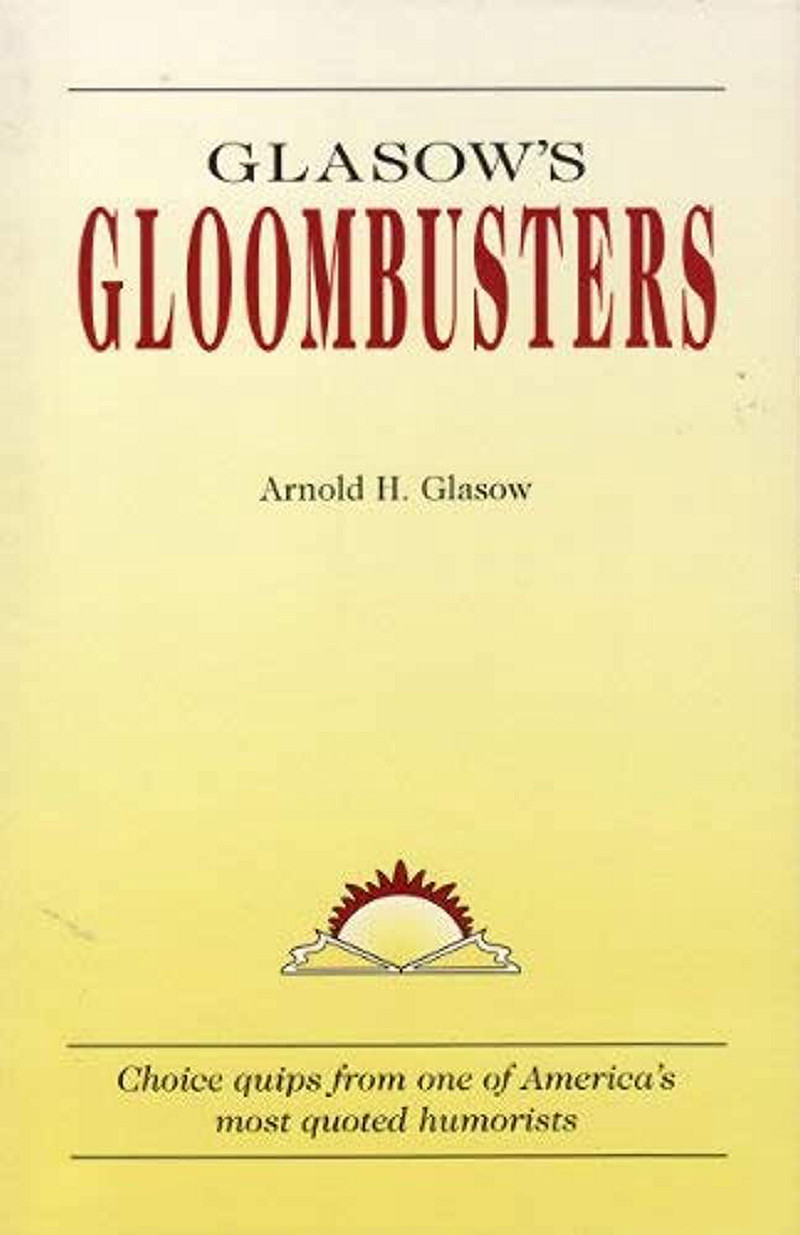
Glasow's Gloombusters
A collection of humorous quotes and quips by Arnold H. Glasow.
- Published1951
- TypeBook
- GenreHumor
- LanguageEnglish
About the Author

Arnold H. Glasow
Explore the life and witty insights of Arnold H Glasow, a celebrated satirist and businessman known for his impactful quotes and business acumen.
View Profile- OccupationBusinessman
- FromUSA
-
Other Works
- All in Fun (1970)
- Glasow's Gloomchasers (1981)