
High, Wide and Lonesome: Growing Up on the Colorado Frontier
Overview
Hal Borland’s High, Wide and Lonesome: Growing Up on the Colorado Frontier is a quietly luminous memoir of a boyhood spent on the high plains in the early twentieth century. Told in clear, steady prose, it follows a family’s move west under the promise of homesteading and the reality they find on the wind-scoured steppe east of the Rockies. The title signals the place itself: “high” for the thin-aired elevation, “wide” for the vast, unbroken horizon, and “lonesome” for the distance between neighbors, towns, and the old life left behind.
Setting and Family
Borland’s family arrives with hope, practical know-how, and the conviction that hard work will tame raw country. Their first shelter is a sod-walled dwelling dug into the land itself, an emblem of how survival requires fitting into the plains rather than imposing on them. Water is a daily problem until a windmill is raised; wind is a constant companion, reshaping snow, lifting dust, and singing through fence wire. The memoir keeps close to family rhythms: a father who believes the land can be made to yield, a mother whose steadiness holds the household together, and children learning the grammar of weather, soil, and stock as surely as any lesson in a school primer.
Work, Seasons, and School
Life on the claim is measured in chores and seasons. Breaking sod, planting dryland wheat, tending milk cows and a team, repairing harness, and hauling supplies are ordinary tasks, presented without romance and without complaint. A one-room schoolhouse offers instruction and community; the trip there, often on foot or horseback, can be an adventure in cold or dust. Saturday journeys to town bring mail, hardware, a sack of flour, and news from miles away. Hunters’ moon, calving season, a good stand of grass after a scarce rain, and the sight of pronghorn or hawks hang in memory as sharply as holidays.
Trials and the Measure of the Land
The plains teach by extremity. Drought steals harvests; a wet spring lures hope then withers into dust. Blizzards white-out the world and drift doorways shut. Prairie fires travel faster than wagons. Rattlesnakes and jackrabbits are part of the economy of survival, not curiosities. Borland writes these episodes as a series of lived tests, not melodrama. Hardship is not merely weather but arithmetic: the thin balance between seed, feed, and next year’s mortgage. Underneath runs the lesson young Hal absorbs, that the land is not an enemy to be conquered but an older power to be understood.
Neighbors, Solitude, and Character
Isolation deepens character and sharpens observation. A scattered handful of neighbors form a safety net and a society: the borrowed team for harvest, a dance or a church supper, a shared fence-mending day after a storm. Solitude, meanwhile, becomes apprenticeship for a writer. Birds, grasses, and cloudlines are named and remembered; the feel of a good horse’s movement and the sound of wind through wire become part of a personal vocabulary. The “lonesome” of the title is neither complaint nor pose; it is the honest measure of space and silence.
Arc and Aftermath
The memoir traces a curve from arrival through striving to the realization that grit cannot change rainfall. Economic pressures and ungovernable weather erode the dream, and the family eventually leaves the homestead. Loss is acknowledged but not bewailed. What remains, knowledge of place, respect for limits, and the habit of attention, becomes the ground of Borland’s later life and writing. High, Wide and Lonesome preserves a vanished world without varnish, affirming how a boy’s apprenticeship to land and weather can shape imagination, discipline, and an enduring sense of home.
Citation Formats
APA Style (7th ed.)
High, wide and lonesome: Growing up on the colorado frontier. (2025, August 25). FixQuotes. https://fixquotes.com/works/high-wide-and-lonesome-growing-up-on-the-colorado/
Chicago Style
"High, Wide and Lonesome: Growing Up on the Colorado Frontier." FixQuotes. August 25, 2025. https://fixquotes.com/works/high-wide-and-lonesome-growing-up-on-the-colorado/.
MLA Style (9th ed.)
"High, Wide and Lonesome: Growing Up on the Colorado Frontier." FixQuotes, 25 Aug. 2025, https://fixquotes.com/works/high-wide-and-lonesome-growing-up-on-the-colorado/. Accessed 10 Feb. 2026.
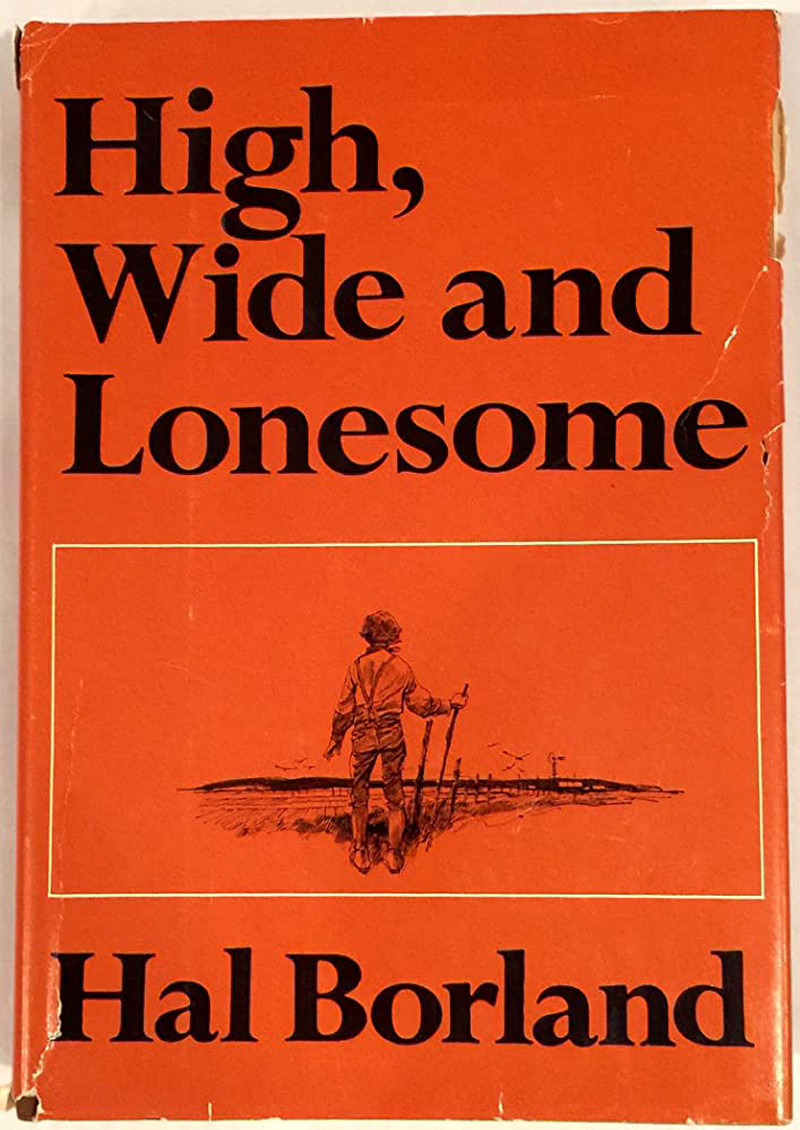
High, Wide and Lonesome: Growing Up on the Colorado Frontier
A memoir of the acclaimed nature writer who recounts his childhood years in eastern Colorado, where his pioneer parents settled during the homesteading movement.
- Published1956
- TypeBook
- GenreMemoir, Biography, Autobiography
- LanguageEnglish
About the Author

Hal Borland
Hal Borland's life, influential nature writings, and his legacy in American literature and environmental awareness.
View Profile- OccupationAuthor
- FromUSA
-
Other Works
- The Dog Who Came to Stay (1961)
- When the Legends Die (1963)
- Sundial of the Seasons (1964)