
Book: How to Avoid a Climate Disaster
Overview
Bill Gates frames the climate problem with a single target: drive annual global emissions from roughly 51 billion tons of greenhouse gases to zero. Not lower, zero, because small residual emissions continue to warm the planet. The book blends a quantitative, engineering-minded tour of where emissions come from with a practical playbook for cutting them, emphasizing scale, cost, reliability, and equity. Gates argues that avoiding a climate disaster requires simultaneous progress on technology innovation, policy design, market creation, and international cooperation, all aligned to make clean options as cheap and convenient as today’s emitting ones.
The Challenge
Emissions arise from five activities: making things (especially cement and steel), plugging in (electricity), growing things (agriculture and land use), getting around (transport), and keeping warm and cool (buildings). Some areas, like decarbonizing electric power, are advancing rapidly, while “hard-to-abate” sectors such as heavy industry, aviation, shipping, and fertilizer remain difficult because fossil fuels there are energy-dense, cheap, and embedded in global supply chains. Gates emphasizes that partial fixes or incremental efficiency gains are not enough if they do not change the carbon math at planetary scale.
Green Premiums
A central concept is the “green premium, ” the extra cost of choosing a zero-carbon option over a fossil alternative. The strategy is to push these premiums down via R&D, demonstrations, and deployment until clean choices win on price and performance. He surveys candidate solutions: zero-carbon electricity through wind, solar, advanced nuclear, and long-duration storage; electrification of vehicles and heat; clean hydrogen for steel, chemicals, and fuel; carbon capture and storage for industrial processes; synthetic fuels for planes and ships; low-carbon cement and steel processes; and agricultural innovations such as precision fertilization, methane-reducing feed additives, and alternatives to ruminant meat. He stresses that breakthroughs must be followed by massive scaling to matter.
Policy and Markets
Markets alone will not deliver the transition at the speed required. Governments must set standards that tighten over time, fund early-stage research and first-of-a-kind demonstrations, build enabling infrastructure like transmission and hydrogen pipelines, reform permitting to accelerate clean projects, and use public procurement to create demand for nascent clean materials and fuels. Carbon pricing can help, but Gates argues it should be paired with targeted support across the innovation pipeline to bridge the “valley of death” between lab success and commercial scale. Better measurement, consistent emissions accounting, methane monitoring, and lifecycle analysis, keeps efforts honest and directs capital where it does the most good.
Global Equity and Adaptation
Most future emissions growth will come from countries still building modern economies. The path to zero must therefore make clean development affordable, with richer countries underwriting innovation and deployment that lower global costs. While mitigation is the priority, adaptation is unavoidable: hardening infrastructure, developing drought- and heat-resilient crops, improving public health systems, and building early-warning networks. He cautions against overreliance on offsets and temporary fixes; durable carbon removal may play a role, but only after deep cuts.
What People and Institutions Can Do
Gates urges individuals to focus on high-leverage actions: support climate-smart policies and candidates, help create demand for early clean products when feasible, and push employers and universities to adopt serious decarbonization plans. Companies should set science-based targets, procure clean power and materials, invest in low-carbon innovation, and align capital with long-term net-zero pathways.
Outlook
The book’s tone is pragmatic and optimistic. With sustained innovation and smart policy, the green premiums can fall, clean options can scale, and the timeline to zero can be met. The imperative is to treat climate as a problem that yields to ingenuity and institution-building, and to organize economies accordingly.
Citation Formats
APA Style (7th ed.)
How to avoid a climate disaster. (2025, August 22). FixQuotes. https://fixquotes.com/works/how-to-avoid-a-climate-disaster/
Chicago Style
"How to Avoid a Climate Disaster." FixQuotes. August 22, 2025. https://fixquotes.com/works/how-to-avoid-a-climate-disaster/.
MLA Style (9th ed.)
"How to Avoid a Climate Disaster." FixQuotes, 22 Aug. 2025, https://fixquotes.com/works/how-to-avoid-a-climate-disaster/. Accessed 6 Mar. 2026.
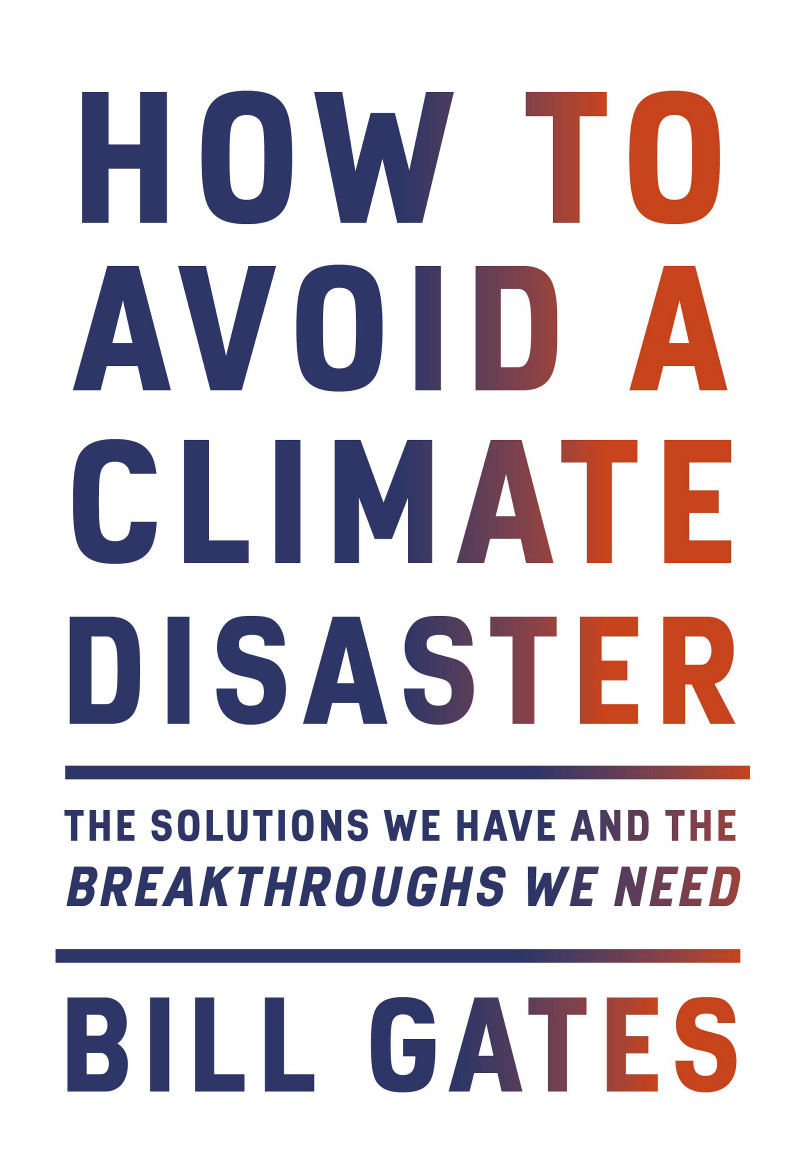
How to Avoid a Climate Disaster
How to Avoid a Climate Disaster is a book written by Bill Gates. In the book, Gates evaluates the climate crisis and the available solutions, advocating for innovations and multi-faceted approaches to reduce greenhouse gas emissions. Gates gives insights into the areas where reductions are necessary, as well as promising ideas for creating a pathway to a clean and sustainable future.
- Published2021
- TypeBook
- GenreNon-Fiction, Environment, Climate Change
- LanguageEnglish
About the Author

Bill Gates
Bill Gates: founder of Microsoft, renowned author, and philanthropist. Explore his insights on technology, business, and global literacy advocacy.
View Profile- OccupationBusinessman
- FromUSA
-
Other Works
- The Road Ahead (1995)
- Business @ the Speed of Thought (1999)