
Autobiography: If It Die
Overview
André Gide’s If It Die (Si le grain ne meurt) is a candid, carefully shaped autobiography tracing the author’s path from a sickly, anxiously pious boy in a rigid Protestant bourgeois milieu to a writer who claims his artistic and erotic truth. Written with a cool, lucid introspection and a keen sense of moral drama, it presents childhood and youth as a series of ordeals and awakenings whose meaning is condensed in the book’s biblical title: a seed must die for life to flourish.
Childhood and Family
Gide was born into a divided heritage: a stern, devout mother from Normandy and a more expansive, southern lineage on his father’s side. Early illness and the early death of his father intensified the mother’s vigilant authority, surrounding the boy with scruple, self-surveillance, and a climate of righteous severity. He evokes houses and landscapes, Parisian apartments, Norman estates, as moral atmospheres, each room instrumentally shaping the child’s conscience. The child learns to distrust spontaneity, to convert desire into duty, and to seek refuge in interior fantasy.
Schooling and Literary Formation
Adolescence brings schools, tutors, and the long apprenticeship of reading. Gide depicts his youthful notebooks and first forays into Symbolist circles as both attraction and resistance: he is fascinated by art’s promise of freedom yet constrained by inherited piety. The intellectual friendships he begins to cultivate offer models of sensibility different from the familial code, and literature becomes a laboratory where he tests alternative selves. Yet the old scruples, fear of sin, fear of disappointing his mother, continue to shadow every choice.
Madeleine and the Problem of Desire
At the center of his inner drama stands his cousin Madeleine, an object of exalted love from childhood. Gide’s devotion to her is absolute, lyrical, and chaste, and he erects a private religion around her purity. The more he idealizes her, the more he represses his own bodily impulses, converting desire into adoration and sacrifice. This idealization will eventually crystallize in marriage, but the union exposes a fatal mismatch between the sacred image he cherished and the complex reality of his own desires.
North Africa and Self-Discovery
Travel to North Africa interrupts this cycle of deferment. In the light and heat of Algeria and Tunisia, Gide experiences a loosening of moral strictures and an awakening to his homosexual desire. He writes of these episodes without prurience but with decisive clarity: the body reenters the narrative not as a temptation to be mastered but as a truth to be acknowledged. Encounters abroad, including contact with writers who embolden his candor, reorient his sense of honesty, forcing a reckoning with the life he had imagined for himself and the life he must live.
Art, Faith, and the Seed That Must Die
Gide links erotic candor to artistic integrity. The title’s scriptural image frames a conversion: the death of the obedient, falsely unified self so that a more truthful, fertile self can be born. He neither simply renounces his Protestant inheritance nor submits to it; rather, he transfigures it into an ethic of sincerity. Writing becomes the act by which he dismantles pious fictions and accepts the scandal of authenticity.
Scope and Legacy
The narrative carries him through childhood, youth, the North African turning point, and his marriage to Madeleine, where the unresolved conflict between ideal and inclination is laid bare. Its very frankness, about inner duplicity, about socially prohibited desire, shocked readers, yet the tone remains measured, analytic, and exact. If It Die stands as the record of a moral experiment: by telling the truth about himself, Gide seeks not absolution but coherence, allowing the buried seed to break and bear fruit.
Citation Formats
APA Style (7th ed.)
If it die. (2025, August 27). FixQuotes. https://fixquotes.com/works/if-it-die/
Chicago Style
"If It Die." FixQuotes. August 27, 2025. https://fixquotes.com/works/if-it-die/.
MLA Style (9th ed.)
"If It Die." FixQuotes, 27 Aug. 2025, https://fixquotes.com/works/if-it-die/. Accessed 13 Feb. 2026.
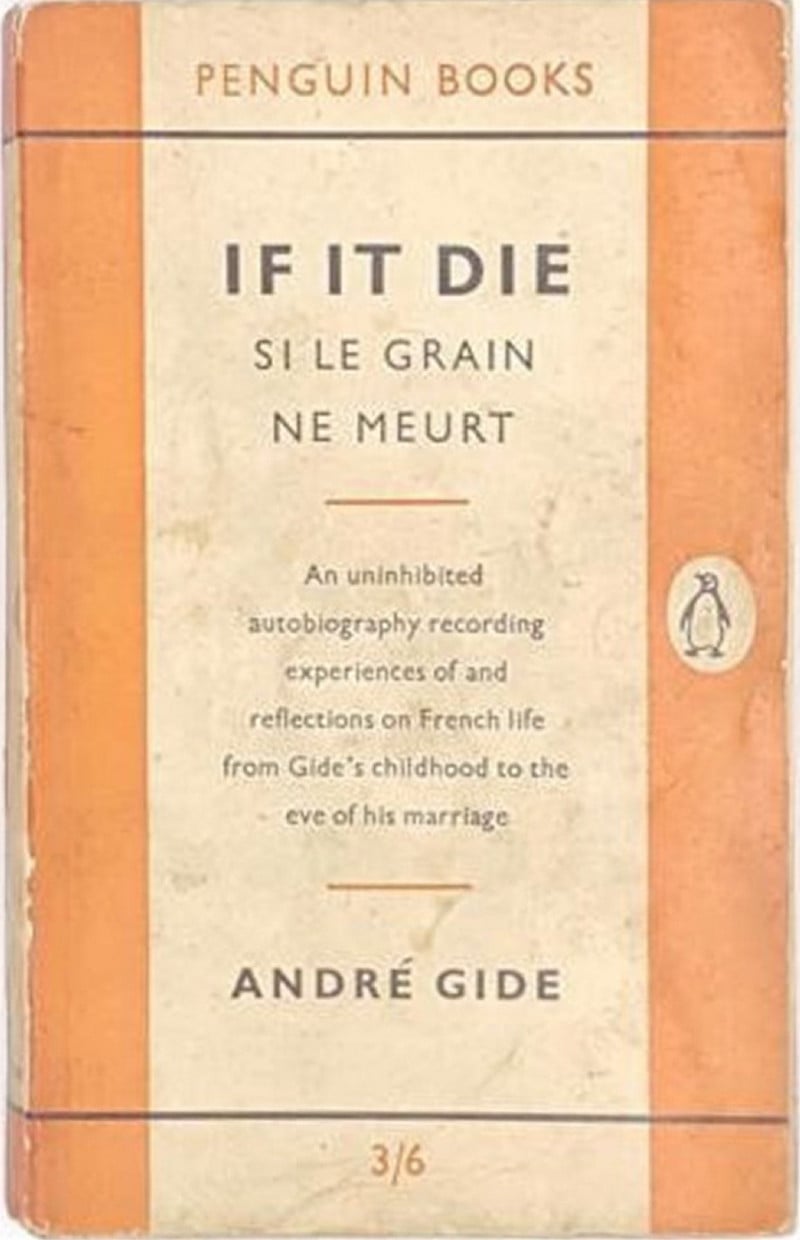
If It Die
Original: Si le grain ne meurt
In this work, Gide chronicles his upbringing, education, and experiences with love and sexuality. The book provides insight into Gide's developing thinking on topics such as personal freedom, morality, and societal norms.
- Published1926
- TypeAutobiography
- GenreAutobiography
- LanguageFrench
About the Author

Andre Gide
Andre Gide, influential French author, Nobel winner, exploring themes of personal freedom and pioneering literature.
View Profile- OccupationNovelist
- FromFrance
-
Other Works
- The Immoralist (1902)
- La Porte étroite (1909)
- Les Caves du Vatican (1914)
- The Counterfeiters (1925)