
Charles Jules Henry Nicolle Biography Quotes 13 Report mistakes
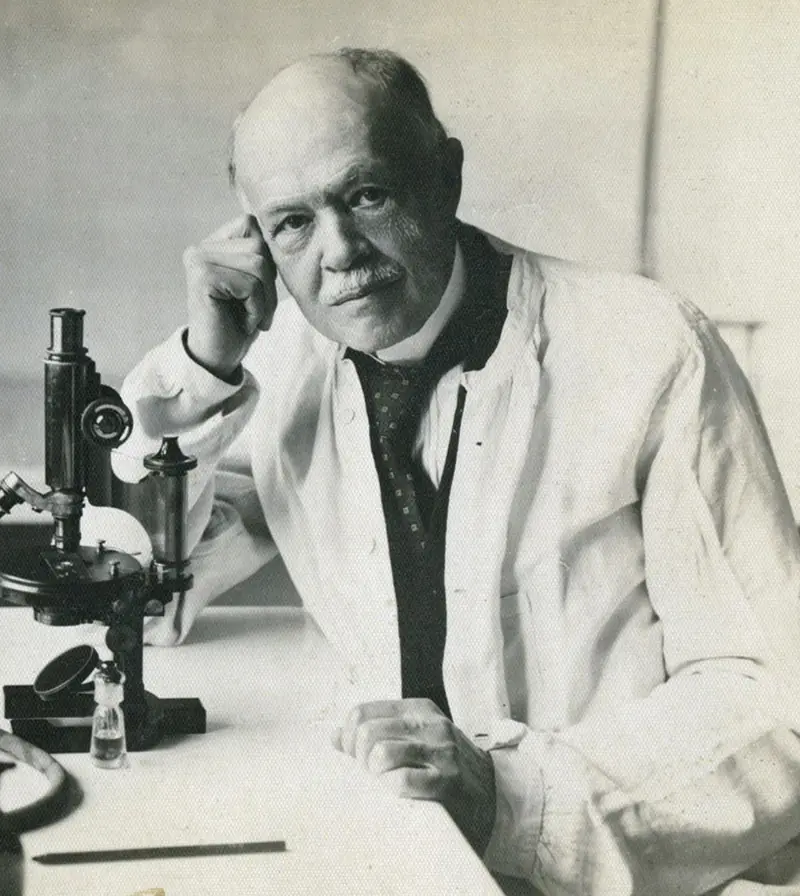
| 13 Quotes | |
| Occup. | Scientist |
| From | France |
| Born | September 21, 1866 |
| Died | February 28, 1936 |
| Aged | 69 years |
| Cite | |
Citation Formats
APA Style (7th ed.)
Charles jules henry nicolle biography, facts and quotes. (2026, February 2). FixQuotes. https://fixquotes.com/authors/charles-jules-henry-nicolle/
Chicago Style
"Charles Jules Henry Nicolle biography, facts and quotes." FixQuotes. February 2, 2026. https://fixquotes.com/authors/charles-jules-henry-nicolle/.
MLA Style (9th ed.)
"Charles Jules Henry Nicolle biography, facts and quotes." FixQuotes, 2 Feb. 2026, https://fixquotes.com/authors/charles-jules-henry-nicolle/. Accessed 10 Feb. 2026.
Early Life and Background
Charles Jules Henry Nicolle was born on September 21, 1866, in Rouen, Normandy, in a France still defining itself after the Franco-Prussian War and the upheavals of the early Third Republic. The era rewarded disciplined expertise: laboratories and municipal hygiene services were becoming instruments of national confidence, and the new bacteriology promised to turn invisible threats into measurable facts. Nicolle grew up amid this civic faith in science, but also amid the older French medical tradition of careful bedside observation, a dual inheritance that would shape his later habit of coupling experimental proof with public-health urgency.Family life was marked by the ordinary fragility of the period - recurrent infection, early death, and the constant background noise of epidemics that modern sanitation had not yet silenced. That atmosphere did not romanticize disease; it made it practical, administrative, and moral. In later years, when he confronted typhus in North Africa, he would respond not only as a laboratory investigator but as a physician aware that outbreaks were also social events, intensified by poverty, crowding, and war.
Education and Formative Influences
Nicolle trained in medicine during the ascendance of the Pasteurian worldview, when clinical medicine was being reorganized by microbiology, microscopy, and laboratory culture techniques; Paris and the provincial faculties fed talent into a national network of institutes and hospitals. He absorbed the logic that a disease must be traced to its mechanism, yet he never lost the clinician's sensitivity to patterns over time - incubation, relapse, contagion in families and wards. These formative influences prepared him for a career in which the decisive questions were as much epidemiological as bacteriological: not only what a pathogen was, but how it moved through human lives.Career, Major Works, and Turning Points
After early hospital and teaching work in France, Nicolle's turning point came with his leadership of the Institut Pasteur de Tunis, where colonial administration, port traffic, and seasonal poverty created a perfect ecology for epidemic typhus. In Tunisia, typhus was not an abstract textbook entity but an institutional crisis that struck physicians, nurses, and police as readily as the urban poor, and the hospital itself became a site where transmission could be studied. Nicolle identified the body louse as the essential vector of epidemic typhus and clarified the timing of infectivity after the insect's exposure, insights that transformed prevention into something concrete: delousing, quarantine procedures, and rethinking ward practice. His work earned him the 1928 Nobel Prize in Physiology or Medicine and secured his place among the central figures who converted infectious disease from fatalism into actionable public health.Philosophy, Style, and Themes
Nicolle's inner life, as it emerges from his scientific prose, is shaped by urgency and humility - a mind that sought certainty while acknowledging how often certainty arrives through failure. He framed typhus as a problem demanding attention because ignorance itself was lethal: "Of all the problems which were open to me for study, typhus was the most urgent and the most unexplored. We knew nothing of the way in which contagion spread". That sentence reveals his psychology: he was not drawn primarily by intellectual fashion but by the pressure of unaccounted deaths, the sense that a hidden pathway of transmission was an ethical affront. In Tunis, where epidemics could sweep through barracks, prisons, and hospitals, his science was inseparable from responsibility.His style was methodical, but never triumphalist. He wrote as someone who expected nature to resist the investigator and who learned by tracing the edge of what did not work: "My first attempts to transmit typhus to laboratory animals, including the smaller species of monkeys, had failed, as had those of my predecessors, for reasons which I can easily supply today". The quiet confidence of hindsight sits on top of remembered frustration, and it explains his preference for simple, reproducible observations over elaborate speculation. Once he found a reliable experimental host, he treated it as an enabling tool rather than a trophy: "From the practical point of view, the susceptibility to infection of the guinea pig proved to be the most useful step forward. Today, all laboratories use this animal for preserving the virus". The theme across his work is pragmatic clarity - the belief that the best theory is the one that makes prevention possible, and that the laboratory exists to serve the real-world ecology of disease.
Legacy and Influence
Nicolle died on February 28, 1936, having helped redefine epidemic typhus as a controllable phenomenon linked to a specific vector and a specific set of human conditions. His influence ran in two channels: scientific and administrative. Scientifically, his vector-centered reasoning strengthened the broader turn toward medical entomology and the study of transmission cycles, anticipating later successes against other insect-borne diseases. Administratively, his findings changed how hospitals, militaries, and colonial health services approached outbreaks - less as mysterious visitations and more as problems of surveillance, delousing, and disciplined hygiene. In biographies of public health, Nicolle endures as a figure who joined the Pasteurian laboratory to the street-level realities of epidemic life, insisting that understanding contagion is a form of mercy grounded in method.Our collection contains 13 quotes written by Charles, under the main topics: Science - Health - Doctor.
Source / external links