
Novel: La Porte étroite
Overview
André Gide’s 1909 novel La Porte étroite (Strait is the Gate) is a spare, poignant exploration of spiritual rigorism and renunciation, set within a Protestant bourgeois milieu in Normandy. Told chiefly through the recollections of Jérôme, who loves his cousin Alissa with unwavering devotion, the book traces how a quest for moral purity can deform love into sacrifice, delay, and finally loss. The title evokes the verse from Matthew, “Strait is the gate, and narrow the way”, which becomes Alissa’s guiding principle as she chooses an austere path that denies earthly happiness in pursuit of a perfection she believes God demands.
Plot Summary
Jérôme grows up closely bound to his cousins Alissa and Juliette, visiting their family home and absorbing its atmosphere of piety tinged with tension. The girls’ mother is frivolous and coquettish in a way that unsettles Alissa, who recoils from any hint of moral laxity and turns her energy toward an exacting spirituality. As the children mature, Jérôme’s affection crystallizes around Alissa. A tacit understanding to marry takes shape, and he resolves to make himself worthy, investing their future with patient hope.
From the first, Alissa complicates this hope. Sensitive to her sister Juliette’s feelings for Jérôme, she persuades herself that her own happiness would wound others. More deeply, she becomes convinced that the highest love is one purified of desire, an offering sustained by sacrifice rather than consummation. Letters grow cooler, meetings are deferred, Jérôme is encouraged to travel and to sublimate his longing into work and prayer. When Juliette marries elsewhere, the obstacle that seemed decisive vanishes, yet Alissa does not relent. She has entwined renunciation with holiness, and any step toward marriage now appears a fall from grace. Withdrawing into solitude and ascetic habits, she breaks the bond by degrees until only the ideal remains. Her health declines, and she dies young. After her death, Jérôme receives her private journal; in it he discovers that altruism and pride were inseparable in her sacrifice. Alissa feared not only sin and scandal but the inevitable imperfections of ordinary love, and she preferred to preserve an absolute by refusing its realization.
Principal Figures
Jérôme, the narrator, is steadfast, sincere, and spiritually impressionable; his fidelity becomes both his dignity and his prison. Alissa, luminous and severe, channels a revulsion at worldliness, shaped by her mother’s behavior, into a demanding ideal that gradually turns against her own vitality. Juliette, less exacting, embodies a warmer and more accommodating sensibility; her eventual marriage exposes that Alissa’s renunciation cannot be explained solely by sisterly self-denial. Around them stands a Protestant household whose decorum highlights the tension between visible respectability and inner scruple.
Themes and Symbolism
The narrow gate symbolizes a path of sanctity defined by refusal, of self, of desire, of the ordinary compromises of life. Gide probes the ambiguity of such refusal: it can be generous or subtly narcissistic, humble or marked by spiritual pride. Love, in the novel, is tested not by passion’s intensity but by its ability to inhabit the imperfect, to accept time, body, and contingency. Alissa’s failure is tragic not because she abandons pleasure, but because she rejects incarnation; she seeks a love that remains untouched and therefore unreal. The Protestant context sharpens the drama, turning inner motives into the true arena of salvation and judgment.
Form and Perspective
The narrative blends Jérôme’s retrospective account with letters and, crucially, Alissa’s diary, which reframes earlier events and complicates all certainties. This shift from outward narrative to interior document enacts the novel’s moral inquiry: only by entering the private text can one discern the alloy of charity, fear, and pride within a seemingly pure renunciation.
Citation Formats
APA Style (7th ed.)
La porte étroite. (2025, August 27). FixQuotes. https://fixquotes.com/works/la-porte-etroite/
Chicago Style
"La Porte étroite." FixQuotes. August 27, 2025. https://fixquotes.com/works/la-porte-etroite/.
MLA Style (9th ed.)
"La Porte étroite." FixQuotes, 27 Aug. 2025, https://fixquotes.com/works/la-porte-etroite/. Accessed 12 Feb. 2026.
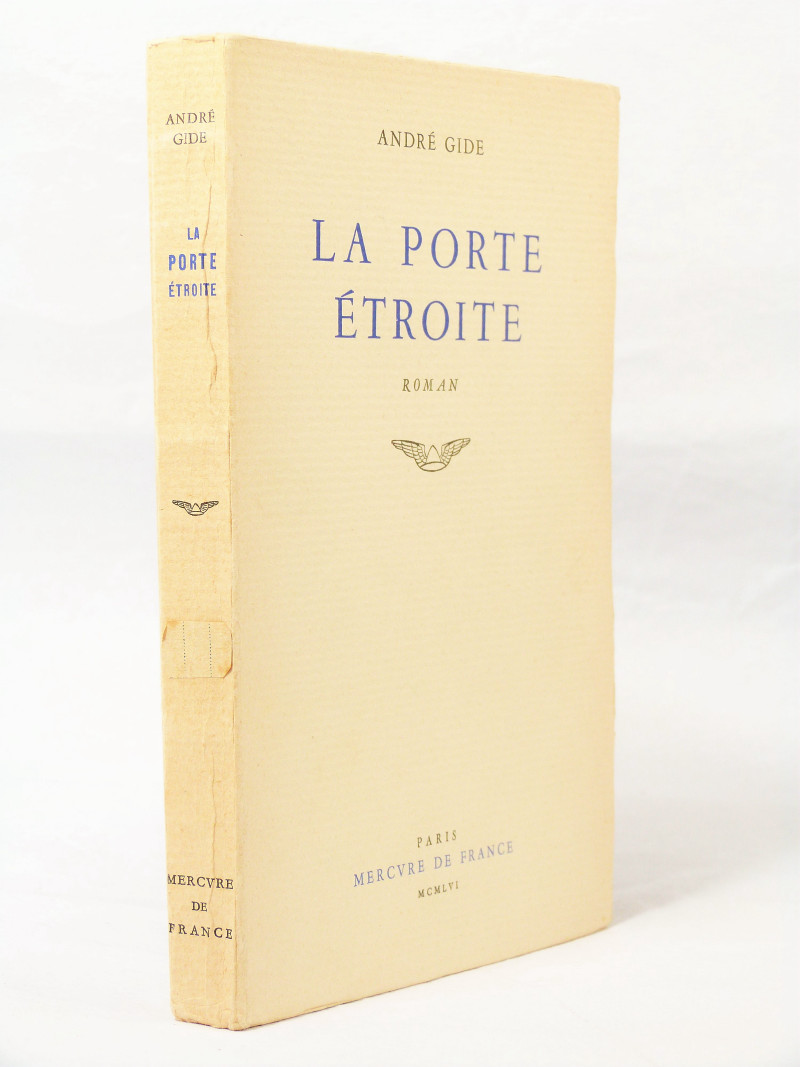
La Porte étroite
The story revolves around the relationship between Jerome and Alissa, who must decide whether to follow a stifling path of asceticism or give in to the temptations of worldly desires. It is a tale of love, sacrifice, and self-discovery.
- Published1909
- TypeNovel
- GenrePhilosophical Fiction, Romantic fiction
- LanguageFrench
- CharactersJerome, Alissa
About the Author

Andre Gide
Andre Gide, influential French author, Nobel winner, exploring themes of personal freedom and pioneering literature.
View Profile- OccupationNovelist
- FromFrance
-
Other Works
- The Immoralist (1902)
- Les Caves du Vatican (1914)
- The Counterfeiters (1925)
- If It Die (1926)