
Memoir: Memoir on Lactic Fermentation
Context and purpose
Louis Pasteur's 1857 "Memoir on Lactic Fermentation" addressed a heated mid-19th century debate about the nature of fermentation. At the time, many chemists argued that fermentations were purely chemical decompositions of organic matter, while Pasteur proposed they were intimately linked to living agents. The memoir focused on the souring of milk and related processes, aiming to identify the agents and mechanisms behind lactic acid production and to establish whether life processes were responsible for that chemical transformation.
Pasteur framed the problem with practical stakes: souring and spoilage affected food, wine and industrial processes. Demonstrating a biological cause promised both explanatory power and routes to control and improvement, connecting laboratory observation to public and economic concerns.
Methods and observations
Pasteur combined careful microscopic observation with controlled experiments on fluids undergoing souring. He examined sour milk, musts and other media, documenting the consistent presence of microscopic organisms where lactic acid accumulated. By comparing fresh and sour samples and by subjecting materials to treatments intended to remove or introduce microorganisms, he showed a strong correlation between the presence of specific minute living bodies and lactic fermentation.
He distinguished morphologies and behaviors of the organisms associated with lactic acid production, noting rod-shaped bacteria that proliferated where sugar was converted to lactic acid. Pasteur observed that when these organisms were absent or prevented from accessing the medium, lactic fermentation did not proceed, whereas introducing them into sterile substrates initiated acidification. Those empirical contrasts formed the backbone of his argument that the fermentative change was a product of living activity rather than mere chemical decomposition.
Conclusions and argument
Pasteur concluded that lactic fermentation is a biological process carried out by living organisms, later known as lactic acid bacteria, and that these microbes are specifically adapted to convert sugars into lactic acid. He argued for the specificity of ferments: different microorganisms produce different chemical outcomes under suitable conditions. This specificity undermined the idea of a single, undifferentiated chemical ferment and supported a view of fermentation as a consequence of the life processes of particular microscopic agents.
He further proposed that the conditions governing microbial growth, exposure to air, temperature, and contamination, explain the occurrence and prevention of fermentation. By linking observable microbial growth to chemical change, Pasteur provided a mechanistic bridge between biology and chemistry: the metabolic activity of microbes produces the chemical products historically labeled as fermentations.
Immediate reception and implications
The memoir challenged the dominant chemical explanations advanced by respected chemists and stimulated intense scientific debate. Pasteur's experimental style, combining microscopy with manipulation of biological agents, offered a template for investigating microbial processes and encouraged others to isolate, culture and characterize organisms associated with industrial and pathological phenomena. His findings resonated quickly with practical problems in brewing, winemaking and dairy production, where controlling undesirable fermentations became a pressing goal.
Although the memoir did not alone settle all disputes about fermentation, it decisively shifted the burden of proof toward chemical theorists and set the stage for broader acceptance of biological explanations. Pasteur's insistence on experimental controls and the demonstrable link between organism and product helped transform fermentation from an abstract chemical mystery into an accessible field of applied microbiology.
Legacy and significance
The 1857 memoir stands as a foundational contribution to microbiology and the emerging germ theory of disease. By establishing that specific microorganisms carry out distinct chemical transformations, Pasteur created conceptual underpinnings for later developments in industrial microbiology, food safety and medicine. The identification of lactic acid bacteria and the demonstration of biological causation influenced methods for preserving food, preventing spoilage and harnessing beneficial fermentations.
Beyond immediate applications, the memoir exemplified a scientific approach that emphasized observation, isolation and causal inference from manipulative experiments. That methodological legacy shaped Pasteur's subsequent work and the trajectory of biology, helping to replace speculative chemistry with empirically grounded microbiology.
Citation Formats
APA Style (7th ed.)
Memoir on lactic fermentation. (2026, February 5). FixQuotes. https://fixquotes.com/works/memoir-on-lactic-fermentation/
Chicago Style
"Memoir on Lactic Fermentation." FixQuotes. February 5, 2026. https://fixquotes.com/works/memoir-on-lactic-fermentation/.
MLA Style (9th ed.)
"Memoir on Lactic Fermentation." FixQuotes, 5 Feb. 2026, https://fixquotes.com/works/memoir-on-lactic-fermentation/. Accessed 12 Feb. 2026.
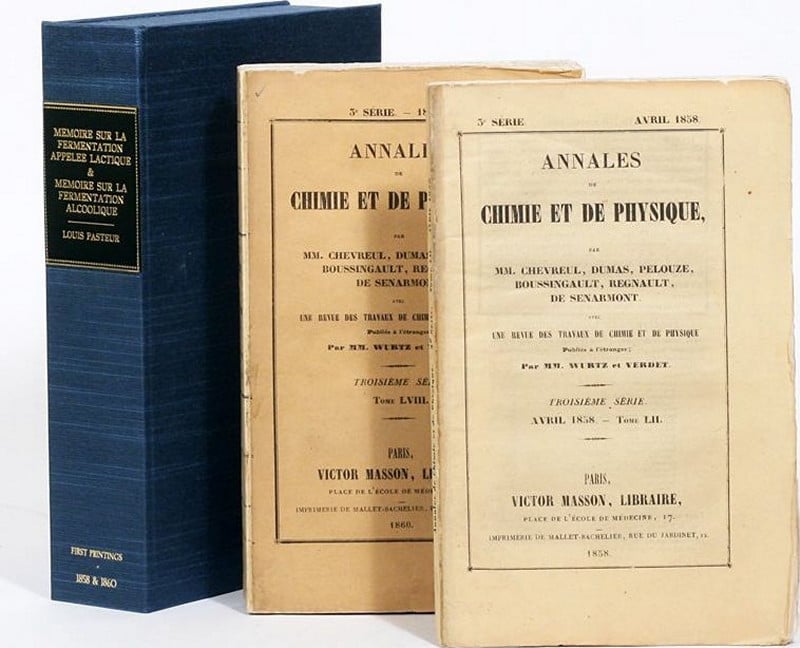
Memoir on Lactic Fermentation
Original: Mémoire sur la fermentation appelée lactique
Experimental study demonstrating that lactic fermentation is a biological process carried out by living organisms (lactic acid bacteria), advancing the biological understanding of fermentation.
- Published1857
- TypeMemoir
- Languagefr
About the Author

Louis Pasteur
Louis Pasteur, tracing his early life in Jura to breakthroughs in microbiology, germ theory, vaccines and chemistry.
View Profile- OccupationScientist
- FromFrance
-
Other Works
- Research on the Relations between Crystalline Form and Chemical Composition (1848)
- Memoir on Alcoholic Fermentation (1857)
- Memoir on the Organized Particles in the Atmosphere (1861)
- Studies on the Disease of the Silkworm (1865)
- Studies on Wine (1866)
- Studies on Beer (1876)
- Memoir on Chicken Cholera (1880)
- Memoir on Anthrax and Its Vaccination (1881)