
Poetry: Night and Day
Overview
Night and Day, issued as Isaac Rosenberg's early volume, collects lyrical pieces written before and around the outbreak of the First World War. The poems move between the cramped streets and workshops of London and moments of inward reflection, so that city scenes and spiritual questions are braided together. A lean, concentrated temper gives many pieces an immediacy that hints at the harsher voice to come.
Themes and Tone
Urban life and the laboring body occupy the poems, with an eye for dirt, noise, and the small dignities of work. Jewish heritage and scriptural echoes surface without sentimentality, shaping ethical anxieties and a restless sense of belonging. Tonal shifts range from quiet wonder and rueful humor to sudden, almost prophetic intensity, producing a voice both humane and alert.
Rosenberg treats nature and the city as companion scenes of loss and renewal, so that skylines, trenches of muck, and fleeting skies share moral weight. Questions of mortality and spiritual hunger recur, not as abstract doctrine but as lived response to hardship and the precariousness of ordinary lives.
Imagery and Style
Imagery is tactile and often startling: the clatter of a street, the smell of oil in a workshop, a migrant's hand, a child's sudden laugh. Language moves between plain speech and unexpected metaphor, with biblical cadences and modern dislocations colliding to form compact, crystalline stanzas. Formal play is evident without ostentation; rhyme and meter are used economically, and free, compressed lines allow sudden shifts of focus.
A distinctive musicality, part psalmic, part slang, gives many poems a chant-like drive, while sensory detail yields moral clarity. The modernist impulse appears in jagged associative leaps and in the willingness to let images stand for ethical judgment rather than explicit sermonizing.
Significance and Legacy
Night and Day marks the emergence of a voice that would become central to British poetry of the Great War, even though its tone here is less ravaged than the later battlefield lyric. The collection demonstrates Rosenberg's gifts for observation, irony, and compassionate witness, showing that his shame and outrage at social injustice were present before the trenches hardened them. Readers and critics have seen in these early poems the seeds of his later mastery: compressed rhetoric, moral focus, and an ear for the city's claustrophobic music.
The volume remains valued for its blend of lyric tenderness and critical sharpness, offering a portrait of a poet alert to both the mundane and the numinous. As an early statement, it clarifies why Rosenberg's later war poems struck such a singular note: the moral imagination, the sensory precision, and the spare musical language were already at work, quietly redefining what modern English poetry might hold.
Sources
Citation Formats
APA Style (7th ed.)
Night and day. (2026, February 5). FixQuotes. https://fixquotes.com/works/night-and-day/
Chicago Style
"Night and Day." FixQuotes. February 5, 2026. https://fixquotes.com/works/night-and-day/.
MLA Style (9th ed.)
"Night and Day." FixQuotes, 5 Feb. 2026, https://fixquotes.com/works/night-and-day/. Accessed 26 Mar. 2026.
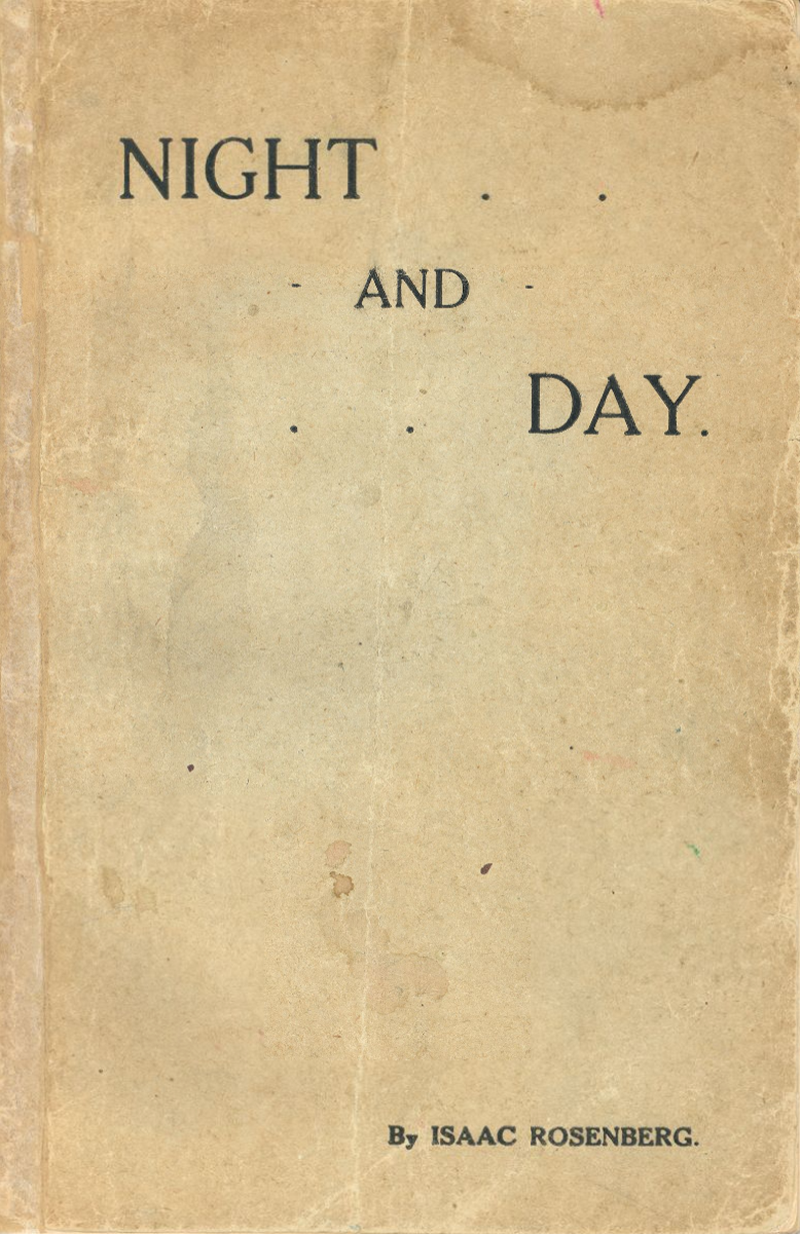
Night and Day
Rosenberg's first poetry collection, showcasing early lyrical work before his most famous war poems. It includes poems reflecting urban life, spirituality, and emerging modernist imagery.
- Published1912
- TypePoetry
- GenrePoetry
- Languageen
About the Author

Isaac Rosenberg
Isaac Rosenberg, the English World War I poet whose life from Bristol to London shaped his stark, influential poetry.
View Profile- OccupationPoet
- FromEngland
-
Other Works
- On Receiving News of the War (1914)
- Youth (1915)
- Break of Day in the Trenches (1916)
- Returning, We Hear the Larks (1917)
- Dead Man's Dump (1917)
- A Worm (1917)
- Marching (1917)
- Louse Hunting (1917)
- The Immortals (1917)
- Daughters of War (1918)
- Poems (1922)