
Book: On Free Will
Overview
Desiderius Erasmus’s "On Free Will" (1524), the Diatribe on Free Choice, intervenes in early Reformation disputes by defending a modest, cooperative account of human freedom under grace. A humanist philologist and theologian, Erasmus addresses how divine grace and human volition relate to salvation, arguing against deterministic necessity while rejecting Pelagian self-sufficiency. He seeks a middle path: affirm some genuine human responsiveness without diminishing the primacy of grace.
Aim and Method
Modeled as a classical diatribe, the treatise favors inquiry over dogmatic assertion. Erasmus collects scriptural passages, weighs interpretations, and proposes what he calls “probable” positions on a difficult subject. He stresses that many biblical texts are obscurer than polemicists admit and that pastoral prudence requires caution where Scripture does not speak with uniform clarity. Exhortations, warnings, and promises in Scripture, he argues, are practical guides for life and should shape doctrine, whereas speculative claims about necessity risk pastoral harm.
Definition of Free Will
He defines free will as “a power of the human will by which a person can apply himself to the things that lead to eternal salvation, or turn away from them.” This power is not autonomous or uninjured; original sin has weakened it, and divine grace precedes and accompanies any good movement. Yet without some capacity to consent or resist, moral accountability collapses and God’s justice becomes unintelligible.
Scriptural and Patristic Grounds
Erasmus gathers biblical commands to repent, choose, and obey, arguing that such imperatives presume some freedom. Prophetic appeals, Christ’s invitations, apostolic exhortations, and the ubiquitous language of reward and punishment imply that humans are addressed as agents. He supplements this with patristic testimony, especially from Greek and Latin Fathers who speak of cooperation with grace, including Augustine’s later insistence on grace’s priority. The accent falls on God’s initiative and human consent, a synergy that preserves both divine sovereignty and meaningful human response.
Grace and Cooperation
Grace is the beginning, progress, and completion of any good. Erasmus likens the relation to a physician and a patient: the cure originates in the physician, yet the patient’s consent and compliance matter. He rejects merit understood as self-caused righteousness, but maintains that God’s gifts do not abolish the will’s activity; rather, grace heals, assists, and moves the will so that human cooperation becomes possible. Prayer, preaching, sacraments, and discipline are not stage props but instruments through which God elicits willing obedience.
Against Necessity
Erasmus opposes the thesis that human acts occur by absolute necessity under God’s foreknowledge and will. Foreknowledge does not impose necessity; knowing an event does not cause it. If everything were necessary, exhortation would be pointless, vice and virtue indistinguishable, and God the author of sin. He worries that rigid predestinarian teaching breeds despair in the scrupulous and carelessness in the presumptuous. Better to adhere to the clear biblical calls to repentance and charity and leave the arcana of providence to divine wisdom.
Humility and Pastoral Prudence
Throughout, Erasmus urges restraint. Where Scripture is ambiguous, the church should not bind consciences with uncompromising theses. The safer course is to preach repentance, faith, and love, to encourage the sluggish, and to comfort the timid, trusting that God’s grace both commands and enables. Curiosity about unrevealed decrees, he warns, distracts from the moral renovation the gospel seeks.
Legacy
"On Free Will" set the terms for a defining Reformation exchange, provoking Martin Luther’s "On the Bondage of the Will". Erasmus’s contribution endures for its learned moderation, its insistence that doctrine serve edification, and its nuanced account of grace-enabled freedom that preserves responsibility without encroaching on God’s primacy.
Citation Formats
APA Style (7th ed.)
On free will. (2026, February 4). FixQuotes. https://fixquotes.com/works/on-free-will/
Chicago Style
"On Free Will." FixQuotes. February 4, 2026. https://fixquotes.com/works/on-free-will/.
MLA Style (9th ed.)
"On Free Will." FixQuotes, 4 Feb. 2026, https://fixquotes.com/works/on-free-will/. Accessed 5 Mar. 2026.
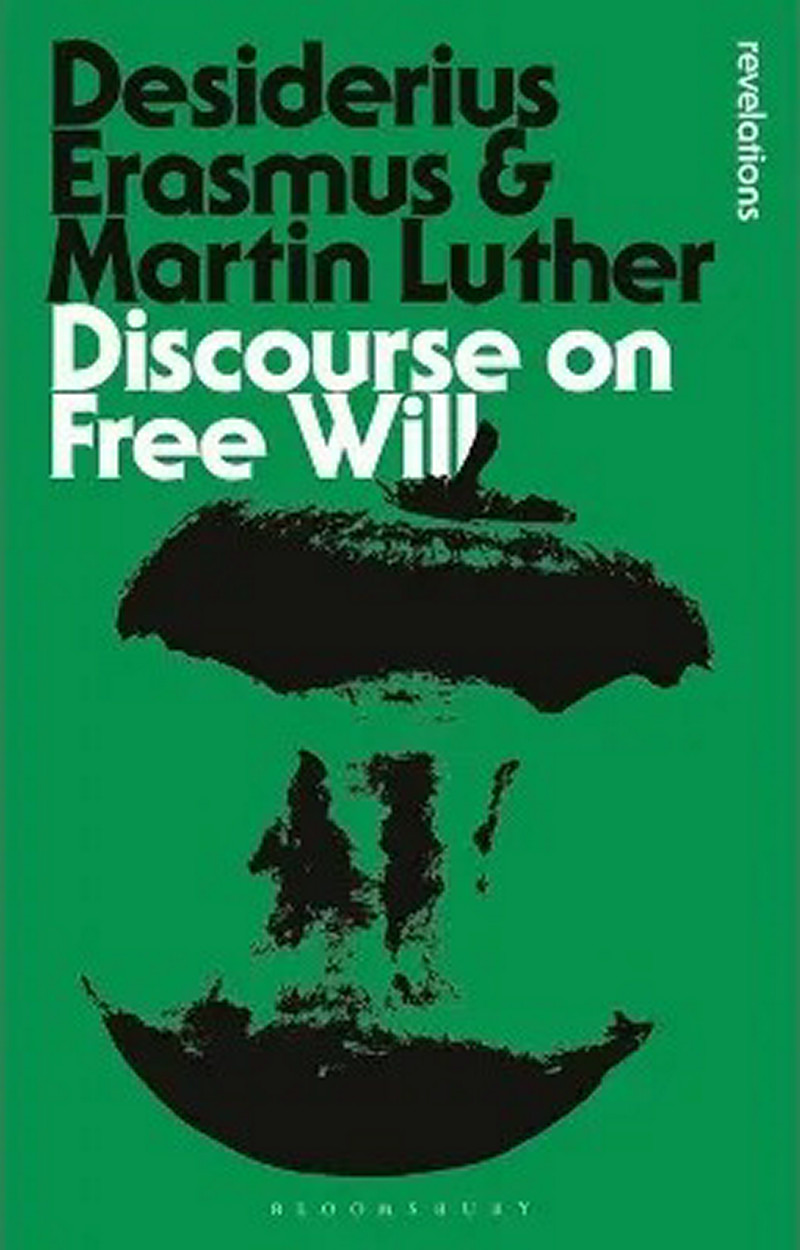
On Free Will
Original: De Libero Arbitrio
A philosophical and theological discourse advocating for the concept of free will against determinism, particularly in response to Martin Luther.
- Published1524
- TypeBook
- GenreTheology, Philosophy
- LanguageLatin
About the Author

Desiderius Erasmus
Desiderius Erasmus, a key figure in the northern Renaissance and a pioneer of humanist thought.
View Profile- OccupationPhilosopher
- FromNetherland
-
Other Works
- Adagia (1500)
- Handbook of a Christian Knight (1503)
- The Praise of Folly (1511)
- The Education of a Christian Prince (1516)
- On Civility in Children (1530)