
Essay: On Solitude
Overview
Montaigne’s “On Solitude” argues that the highest freedom is to learn how to belong to oneself. He distinguishes between external retirement from public life and the deeper, more necessary withdrawal of the mind from its own restless desires. Court, commerce, lawsuits, honors, and fame ensnare us in concerns that do not properly belong to us. Solitude is therefore not chiefly a change of place but a change of possession: we must reclaim our time, attention, and judgment from the world’s demands and make ourselves our principal study.
Retiring from Affairs
Montaigne advises stepping back from public offices and ambitions, especially as age advances, not out of misanthropy but from a sober appraisal of their costs. Public life consumes our peace with hopes and fears, binding our happiness to the opinions and caprices of others. He urges us to reduce our dealings, unclutter our responsibilities, and hold our estates and reputations as things to be used, not things that use us. Possessions, family, and friendships remain good and natural, but he warns against fastening our entire being to them. We may have them; we must not let them have us.
The “back shop” of the soul
True solitude, for Montaigne, is inward. One can flee to deserts and yet carry turmoil within; one can remain in a city and yet be free if the mind keeps a private retreat. He calls this inner refuge a “back shop” where the soul keeps itself, converses with itself, and is sovereign. Only there can we taste a liberty that does not depend on fortune. He counsels cultivating an independence of judgment, training our desires to be modest, and loosening the threads that tie us to outcomes. The point is not to grow hard or indifferent, but to be prepared to let things go without being unmade by their loss. The less we stake our felicity on externals, the less the world can wound us.
Habits for a quiet life
Montaigne favors a retreat furnished with simple, steady pleasures, gardens, walks, conversation, and books, distractions that calm rather than inflame. Books, especially, are companions that neither importune nor betray; they offer a measured refuge from the crowd and a training ground for judgment. Yet he refuses monastic severity. He recommends a gentle regimen that suits one’s nature: cheerful moderation over austere renunciation, pastime over pomp. Solitude should sweeten life, not sour it; it is a retreat from vanity, not from humanity.
Limits and intention
Withdrawal is not a license for idleness or self-absorption. Montaigne holds that we owe what is due to our role, service, affection, care, but after discharging these duties, we must reserve time and space that are entirely our own. He is wary of those who change their dwelling but not their disquiet; without reforming the seat of desire, we merely transport our chains. The mastery he proposes is ethical and interior: to moderate hope and fear, to accept the course of nature, and to make our pleasure depend chiefly on what lies within our command.
Essence
“On Solitude” presents a humane Epicureanism tempered by practical wisdom. It teaches a way of loosening the world’s grip while keeping one’s heart open, a life in which public ties are honored but not enthroning, pleasures are savored but not clung to, and the mind preserves a calm reserve. The greatest security, he suggests, is the quiet possession of oneself.
Citation Formats
APA Style (7th ed.)
On solitude. (2026, February 4). FixQuotes. https://fixquotes.com/works/on-solitude/
Chicago Style
"On Solitude." FixQuotes. February 4, 2026. https://fixquotes.com/works/on-solitude/.
MLA Style (9th ed.)
"On Solitude." FixQuotes, 4 Feb. 2026, https://fixquotes.com/works/on-solitude/. Accessed 31 Mar. 2026.
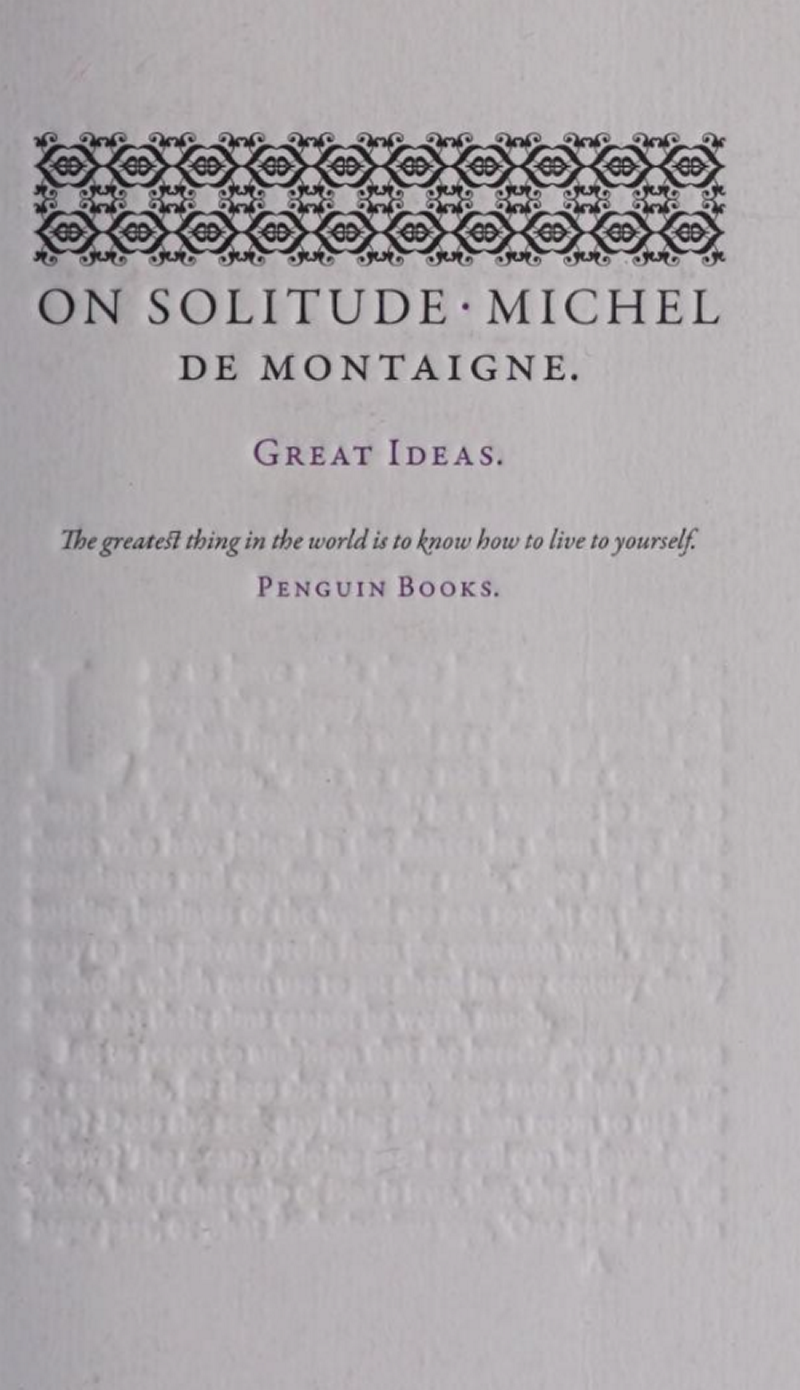
On Solitude
Original: De la solitude
On Solitude is an essay that explores Montaigne's thoughts on the importance of solitude for achieving personal happiness and intellectual development, and the role of privacy in achieving a more intimate relationship with oneself.
- Published1580
- TypeEssay
- GenrePhilosophy, Non-Fiction
- LanguageFrench
About the Author

Michel de Montaigne
Michel de Montaigne, the influential French Renaissance writer, philosopher, and father of the essay form.
View Profile- OccupationPhilosopher
- FromFrance
-
Other Works
- That to Study Philosophy is to Learn to Die (1580)
- Of Cannibals (1580)
- Of the Education of Children (1580)
- Essays (1580)