
Paradigms: The Business of Discovering the Future
Overview
Joel A. Barker’s 1992 book reframes strategy and innovation through the lens of paradigms, shared mental models that guide what organizations see as possible, valuable, and true. Drawing on Thomas Kuhn’s idea of scientific revolutions, Barker translates it for managers, entrepreneurs, and policy makers, arguing that competitive advantage depends less on prediction and more on recognizing when the rules of a game are about to change. He positions paradigm literacy as the discipline of “discovering the future”: the skill of identifying emerging frames early enough to act decisively.
What a Paradigm Is
A paradigm, Barker writes, is a set of assumptions and rules that define boundaries and prescribe how to succeed within them. These rules streamline decision-making and drive efficiency, but they also narrow vision. The “paradigm effect” blinds insiders to alternatives that don’t fit existing criteria, while “paradigm paralysis” locks organizations into defending the status quo even as evidence mounts that it no longer works. Experts, who have the most invested in the prevailing frame, are often the last to switch.
How Shifts Happen
Paradigms shift when incremental improvement runs out of runway and anomalies accumulate, new needs, technologies, or business models that the dominant frame can’t accommodate. Barker emphasizes that the pioneers of a new paradigm frequently come from outside the established hierarchy. They ask different questions, use different metrics, and are willing to trade old performance dimensions for new ones. Early in a shift, the new approach looks inferior by the old yardstick; it only becomes superior when judged by a new set of success criteria aligned with unmet needs.
Examples and Signals
Barker illustrates the dynamics with business cases that became management lore. Swiss mechanical watchmakers missed the quartz revolution they themselves helped invent because their paradigm equated quality with gears and craftsmanship, not electronic accuracy and affordability. In computing, firms optimized for mainframes struggled to see the legitimacy of personal computers until new markets and measures took hold. Overnight delivery, once dismissed as extravagant, became foundational as FedEx reframed value around reliability and time certainty. Across such cases, early signals include customers hacking together workarounds, small entrants thriving at the fringes, and performance tradeoffs that incumbents deem irrational.
Responding to Emerging Paradigms
Barker argues for deliberate practices that reduce blindness and increase optionality. Name and map the rules of your current paradigm so unexamined assumptions become visible. Scan the periphery for weak signals and anomalies, not just core metrics. Sponsor small experiments that test incompatible assumptions without forcing them to compete on the old scorecard. Cultivate “paradigm pioneers” inside the organization and partner with outsiders who see differently. Resource commitments should be staged and reversible, aimed at learning speed rather than maximizing short-term efficiency.
Leadership and Culture
Leadership, in Barker’s view, is the art of guiding people from one paradigm to another through credible vision. Vision paints a compelling picture of the future and aligns people around new measures of success; management then optimizes within that new frame. He underscores the importance of language, stories, and symbols to make the new rules tangible, and he cautions leaders to separate the evaluation of new paradigms from defenders of the old, who will unconsciously apply misfit criteria.
Impact and Caveats
The book’s lasting contribution is a vocabulary and a practical stance for treating discontinuous change as navigable. Barker neither romanticizes disruption nor suggests that every novelty warrants a pivot; the discipline lies in recognizing when a rule change is underway and preparing options before performance collapses. The core message remains timely: competitive advantage accrues to those who see the shift, shift the measures, and mobilize before consensus forms.
Citation Formats
APA Style (7th ed.)
Paradigms: The business of discovering the future. (2025, August 26). FixQuotes. https://fixquotes.com/works/paradigms-the-business-of-discovering-the-future/
Chicago Style
"Paradigms: The Business of Discovering the Future." FixQuotes. August 26, 2025. https://fixquotes.com/works/paradigms-the-business-of-discovering-the-future/.
MLA Style (9th ed.)
"Paradigms: The Business of Discovering the Future." FixQuotes, 26 Aug. 2025, https://fixquotes.com/works/paradigms-the-business-of-discovering-the-future/. Accessed 21 Mar. 2026.
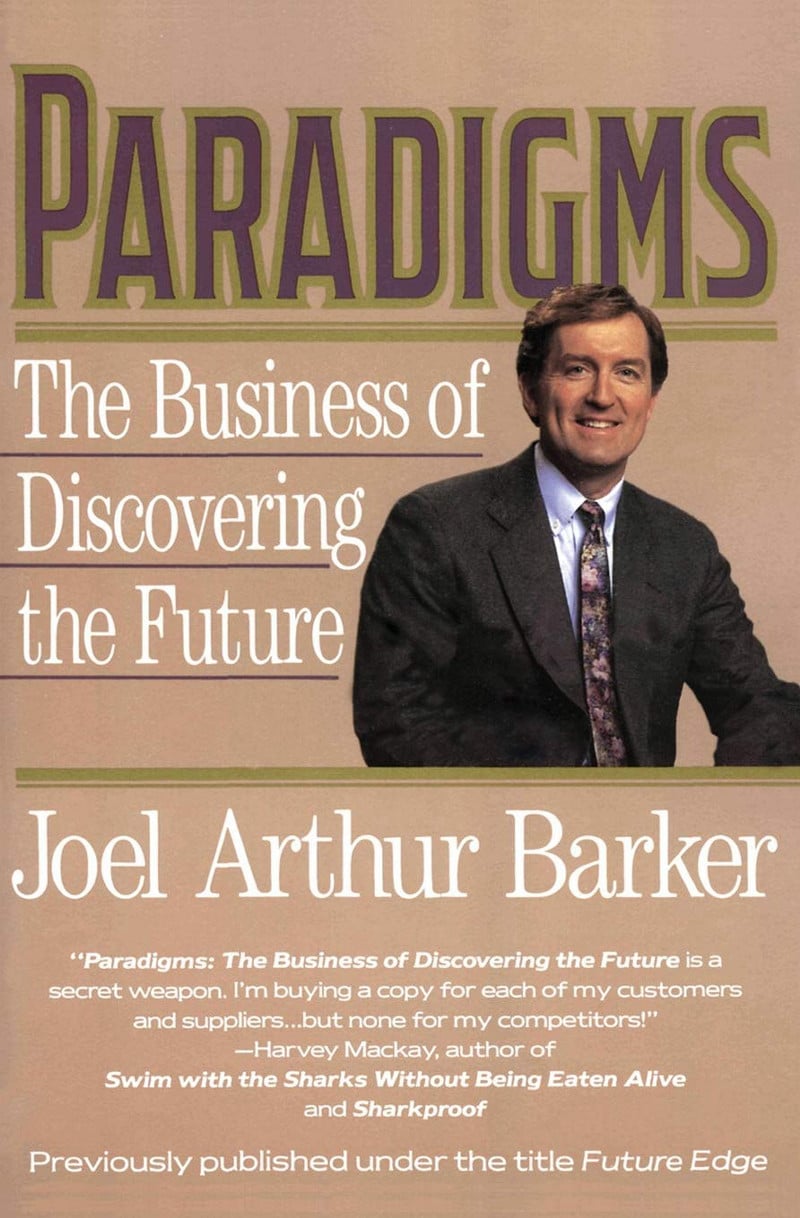
Paradigms: The Business of Discovering the Future
This book explores the concept of paradigms, the mental models we use to interpret the world and solve problems, and how understanding and shifting them can lead to business and personal success.
- Published1992
- TypeBook
- GenreBusiness, Management, Non-Fiction
- LanguageEnglish
About the Author

Joel A. Barker
Joel A. Barkers insights on paradigm shifts and strategic planning for success in futures studies and adapting to global changes.
View Profile