
Stanislaw Lec Biography Quotes 21 Report mistakes
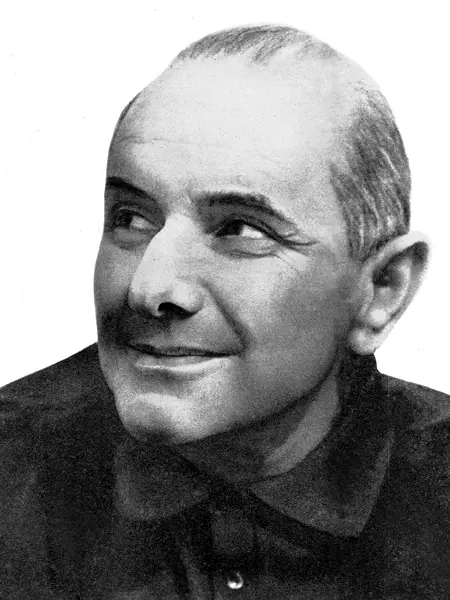
| 21 Quotes | |
| Born as | Stanisław Jerzy Lec |
| Known as | Stanislaw Lec |
| Occup. | Poet |
| From | Poland |
| Born | March 6, 1909 Lwów, Austria-Hungary (now Lviv, Ukraine) |
| Died | May 7, 1996 Warsaw, Poland |
| Cause | Heart attack |
| Aged | 87 years |
| Cite | |
Citation Formats
APA Style (7th ed.)
Stanislaw lec biography, facts and quotes. (2026, February 2). FixQuotes. https://fixquotes.com/authors/stanislaw-lec/
Chicago Style
"Stanislaw Lec biography, facts and quotes." FixQuotes. February 2, 2026. https://fixquotes.com/authors/stanislaw-lec/.
MLA Style (9th ed.)
"Stanislaw Lec biography, facts and quotes." FixQuotes, 2 Feb. 2026, https://fixquotes.com/authors/stanislaw-lec/. Accessed 8 Feb. 2026.
Early Life and Background
Stanislaw Jerzy Lec was born on March 6, 1909, in Lwow, then in the Austro-Hungarian province of Galicia (today Lviv, Ukraine), a polyglot borderland where Polish culture lived beside Ukrainian, Jewish, and imperial Austrian realities. His family background was assimilated Jewish, and he grew up hearing the competing idioms of empire, nationalism, and modern urban life - a formative lesson in how language can both connect and divide. The collapse of the Habsburg world after World War I and the turbulent birth of the Second Polish Republic made politics feel not like an abstraction but like weather: sudden, local, and dangerous.That early exposure to shifting borders and identities later fed Lec's instinct to distrust grand slogans. He absorbed, early on, the sense that public monuments can outlast the ideas that raised them, and that ideology can harden into ritual. Lwow's cafes, newspapers, and literary circles also offered a model for the writer as a civic participant - not merely a lyric voice, but a sharp witness moving through history with a notebook.
Education and Formative Influences
Lec studied Polish literature and law at Jan Kazimierz University in Lwow, an education that sharpened his feel for both rhetoric and power. He came of age amid Polish avant-garde experimentation and biting interwar satire, learning from the cabaret tradition, the epigram, and the moral pressure of political journalism. The period's volatility - coups, censorship, and ideological street fights - trained him to compress argument into the smallest possible space: the aphorism as self-defense, and as a weapon that could slip past official language.Career, Major Works, and Turning Points
He debuted as a poet in the interwar years, but World War II violently reordered his life and work. Under German occupation he was imprisoned and narrowly escaped death; the experience of arbitrary power and mass murder hardened his irony into something closer to survival instinct. After the war he worked in cultural institutions and diplomacy for the communist state, including a posting in Vienna, and became a recognized public writer - yet the compromises demanded by the new order clashed with his inner skepticism. His most enduring achievement, "Mysli nieuczesane" ("Unkempt Thoughts"), appeared in successive editions from the 1950s onward and became a defining book of Polish aphoristic literature: a ledger of paradoxes, political observations, and metaphysical jokes written under the pressure of censorship and historical memory.Philosophy, Style, and Themes
Lec's style is a fusion of lyric intelligence and corrosive wit: he compresses moral philosophy into jokes that refuse to stay jokes. The aphorism, for him, was not ornament but a moral form suited to an age of propaganda. When he asks, "Is it progress if a cannibal uses a fork?" he exposes modernity's favorite alibi - technical refinement mistaken for ethical advance. His lines repeatedly stage a duel between civilization's polished surfaces and the old brutality that keeps returning in new uniforms.Behind the barbs lies a psychology shaped by survival, exile, and the humiliations of public speech in authoritarian systems. Lec understood how ideas become lethal when turned into banners; his warning that "In a war of ideas it is people who get killed". reads as autobiography distilled into principle. Even his metaphysical quips carry the weight of someone who watched history treat human beings as disposable: "The first requisite for immortality is death". is funny only until it is read as an inventory of what total war demanded. Again and again he circles the same themes: the fragility of the individual under systems, the seductions of rhetoric, the permanence of moral cost, and the uneasy comedy that remains when certainty collapses.
Legacy and Influence
Lec died on May 7, 1966, in Warsaw, leaving behind a reputation that outgrew the circumstances that tried to contain him. In Poland he became a household name not through long treatises but through quotable shards that traveled by memory when print was policed; internationally, translations of "Unkempt Thoughts" placed him among the great modern aphorists, alongside writers who used brevity as a form of intellectual resistance. His enduring influence lies in the way he made skepticism humane rather than cynical: he taught readers to hear the violence inside noble phrases, and to defend inner freedom with the smallest, sharpest sentences.Our collection contains 21 quotes written by Stanislaw, under the main topics: Witty One-Liners - Ethics & Morality - Wisdom - Dark Humor - Aging.
Stanislaw Lec Famous Works
- 1964 More Unkempt Thoughts (Aphorisms)
- 1957 Unkempt Thoughts (Aphorisms)
Source / external links