
Narrative Poem: Reynard The Fox
Overview
John Masefield's "Reynard the Fox" is a narrative poem that revitalizes the medieval cycle of the trickster Reynard for early 20th-century readers. Masefield keeps the fable's dark humor and satirical bite while shaping it into a continuous, richly paced tale that reads like an epic told in approachable verse. The poem blends mock-heroic grandeur with earthy comedy, presenting animal court life as a mirror for human institutions.
Plot
The story centers on Reynard, a cunning fox whose life is a catalogue of thefts, lies and ingenious escapes. Summoned to answer charges before the royal court, Reynard faces accusations from rival animals who claim he has violated the laws and customs of the kingdom. Rather than face simple punishment, he turns every accusation into an occasion for deceit and persuasion, exploiting the pride and gullibility of nobles, clergy and fellow creatures.
Episodes alternate between courtroom scenes and ruses carried out in the countryside. Reynard manipulates friends and enemies alike, inventing tales, feigning injury, and engineering set-ups that leave his persecutors embarrassed or punished instead. When danger closes in, he slips away through a mixture of speech, disguise and audacity. The poem moves from satire to suspense as Reynard's schemes create cascading consequences, revealing both the fox's resourcefulness and the fragility of the social order that seeks to contain him.
Characters and Tone
The dramatis personae are vividly drawn animals who stand for human types: a regal but lumbering king, pompous courtiers, self-important clerics and brutish enforcers. Reynard himself is magnetic and morally ambiguous, alternately charming and unscrupulous. Masefield exploits contrasts between the court's ceremonial language and the fox's colloquial cunning to produce comedy that can shift suddenly into cruelty or melancholy.
The tone combines jaunty storytelling with pointed satire. Moments of slapstick and roguery sit beside sharper observations about cowardice, hypocrisy and the comforts of power. Masefield's voice remains sympathetic to Reynard's wit even as it exposes the fox's capacity for harm, so the poem resists simple moralizing and leaves readers both amused and unsettled.
Themes
A central theme is the tension between law and cunning: institutions designed to enforce order often become tools for vanity and self-preservation, while natural intelligence and opportunism subvert them. The poem interrogates justice by showing how process, rhetoric and social rank determine outcomes more than objective truth. It also explores the appeal of the trickster figure who survives by outwitting stronger opponents and who exposes the pretensions of the powerful.
Other themes include the social satire of hierarchy and privilege, the ambiguity of villainy and heroism, and the roles of language and performance in shaping reputation. Masefield suggests that civility can be a veneer over animal instincts, and that storytelling itself is both weapon and refuge for those who must navigate a crooked world.
Style and Legacy
Masefield adapts medieval material with modern poetic sensibilities, using brisk narrative movement, memorable scenes and conversational rhythms that keep the fable lively. The verse emphasizes character through dialogue and incident rather than prolonged reflection, making the poem theatrical and immediate. Humor and pathos are balanced by clear imagery and a storyteller's economy.
The poem renewed interest in the Reynard cycle by translating its cynical world into a form accessible to contemporary readers. It stands as a testament to Masefield's skill as a narrative poet: he preserves the original tales' subversive spirit while reshaping them into a cohesive, entertaining epic that continues to be admired for its craft and its incisive social commentary.
Citation Formats
APA Style (7th ed.)
Reynard the fox. (2026, January 1). FixQuotes. https://fixquotes.com/works/reynard-the-fox/
Chicago Style
"Reynard The Fox." FixQuotes. January 1, 2026. https://fixquotes.com/works/reynard-the-fox/.
MLA Style (9th ed.)
"Reynard The Fox." FixQuotes, 1 Jan. 2026, https://fixquotes.com/works/reynard-the-fox/. Accessed 22 Mar. 2026.
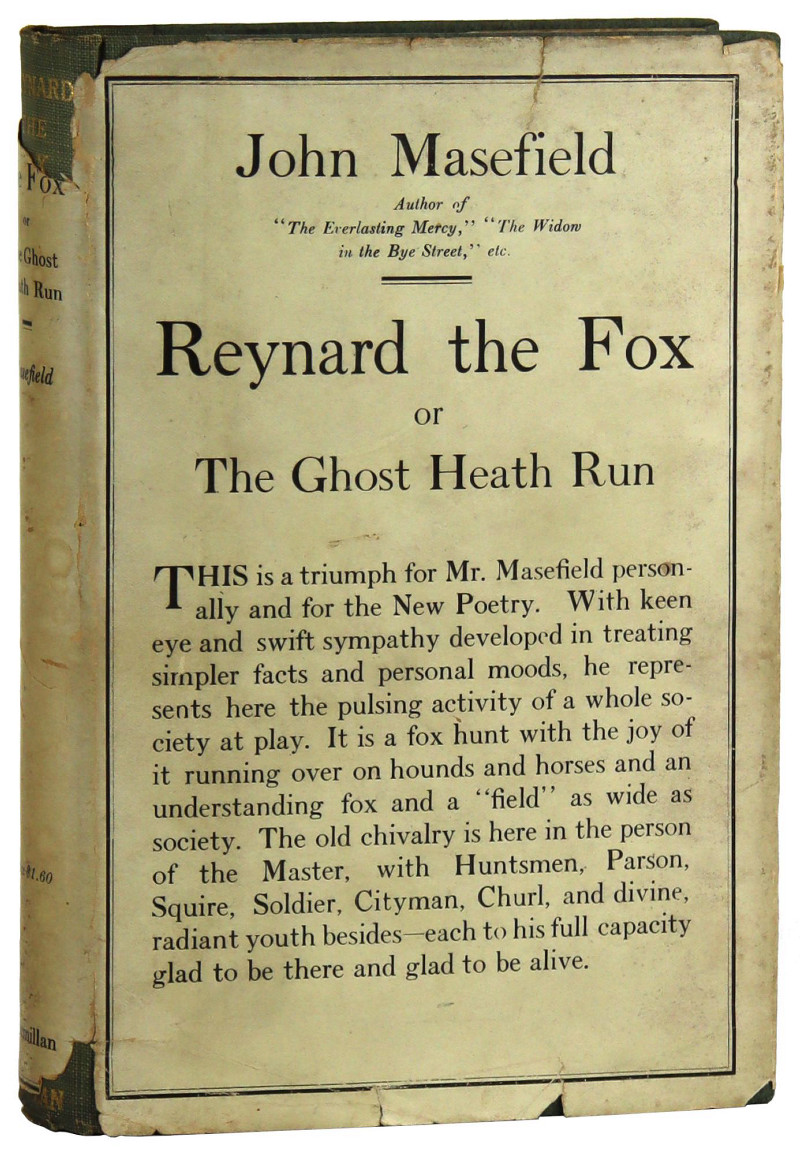
Reynard The Fox
This is a poem based on the Medieval fables of Reynard the Fox, a trickster character who can outwit nobles, clergy, and many other animals.
- Published1919
- TypeNarrative Poem
- GenrePoetry
- LanguageEnglish
- CharactersReynard the Fox
About the Author

John Masefield
John Masefield, English Poet Laureate, known for his poems and children's stories. Learn about his remarkable journey.
View Profile- OccupationPoet
- FromEngland
-
Other Works
- Sea-Fever (1902)
- The Tragedy of Pompey the Great (1910)
- The Everlasting Mercy (1911)
- The Midnight Folk (1927)
- The Box of Delights (1935)