
Novel: Room Temperature
Overview
Room Temperature is a concentrated, gently comic portrait of domestic life that unfolds almost entirely during a single evening feeding. The narrator, a young father, holds his infant daughter in his arms and warms a bottle, while the narrative moves outward from the immediate task into a steady flow of observations, memories, and little intellectual excursions. There is no conventional plot arc; the motion comes from the father's associative mind as he attends to the child and the small landscape of the living room.
The book compresses a long, interior stretch of time into careful prose, so that trivial actions, a stir of milk, the feel of a plastic rim, the shifting light, acquire weight. The scene remains quiet and ordinary, but the attention given to ordinary things turns the domestic moment into a sustained meditation on presence, love, and the passage of time.
Main Themes
Parenthood and responsibility thread through the narrative, but the book resists sentimental excess. Tenderness is often expressed through detail: the precise way a bottle cap fits, a remembered texture, the sound of a furnace starting. These small facts become a kind of ethical practice, an attempt to inhabit the moment fully while acknowledging the larger anxieties of caring for another human being.
Time and memory are constant companions. Short reflections on past encounters, etymologies, and consumer objects accumulate, reminding the reader that inner life is a collage of impressions. The book also probes how language and thought try, and sometimes fail, to grasp the immediacy of experience. Humor and curiosity diffuse any heavy-handed moralizing; wonder and slight bewilderment coexist.
Character and Voice
The narrator is observant, conversational, and quietly self-aware. He is not introspective in a melodramatic way but is consistently turned inward, noticing the mechanics of thinking as much as its content. His voice mixes plain domestic diction with sudden, precise lists and moments of linguistic play, revealing both affection for and impatience with his own mind.
The infant remains mostly an object of attention rather than a full verbal character; her needs and presence shape the narrative more than any explicit dialogue. Secondary figures, references to a partner, household items, or past acquaintances, appear via associative memory, giving a sense of a life beyond the room without leaving the immediate scene.
Style and Form
The prose favors long, flowing sentences that follow the narrator's associative leaps, but these sentences are carefully controlled and often punctuated by brief, quiet sentences that return attention to the baby. The structure is episodic and accumulative, building emotional resonance through repetition and the accruing of minute detail rather than through dramatic events.
Imagery is tactile and domestic: plastic, milk, upholstery, mismatched utensils. Baker's technique is to render these objects with intense specificity so that language itself becomes a tool for prolonging and savoring the moment. The result is both comic and poignant, attentive to the oddities of modern life and to the consolations of small rituals.
Significance
Room Temperature exemplifies a strand of fiction that finds depth in the everyday by amplifying the inner monologue. It operates as a compact study in mindfulness before the term became commonplace, suggesting that paying close attention to ordinary things can be a form of ethical and emotional practice. The book's intimacy and wit make it memorable: a quiet testament to how love and thought unfold in the smallest acts of care.
Citation Formats
APA Style (7th ed.)
Room temperature. (2025, September 13). FixQuotes. https://fixquotes.com/works/room-temperature/
Chicago Style
"Room Temperature." FixQuotes. September 13, 2025. https://fixquotes.com/works/room-temperature/.
MLA Style (9th ed.)
"Room Temperature." FixQuotes, 13 Sep. 2025, https://fixquotes.com/works/room-temperature/. Accessed 13 Feb. 2026.
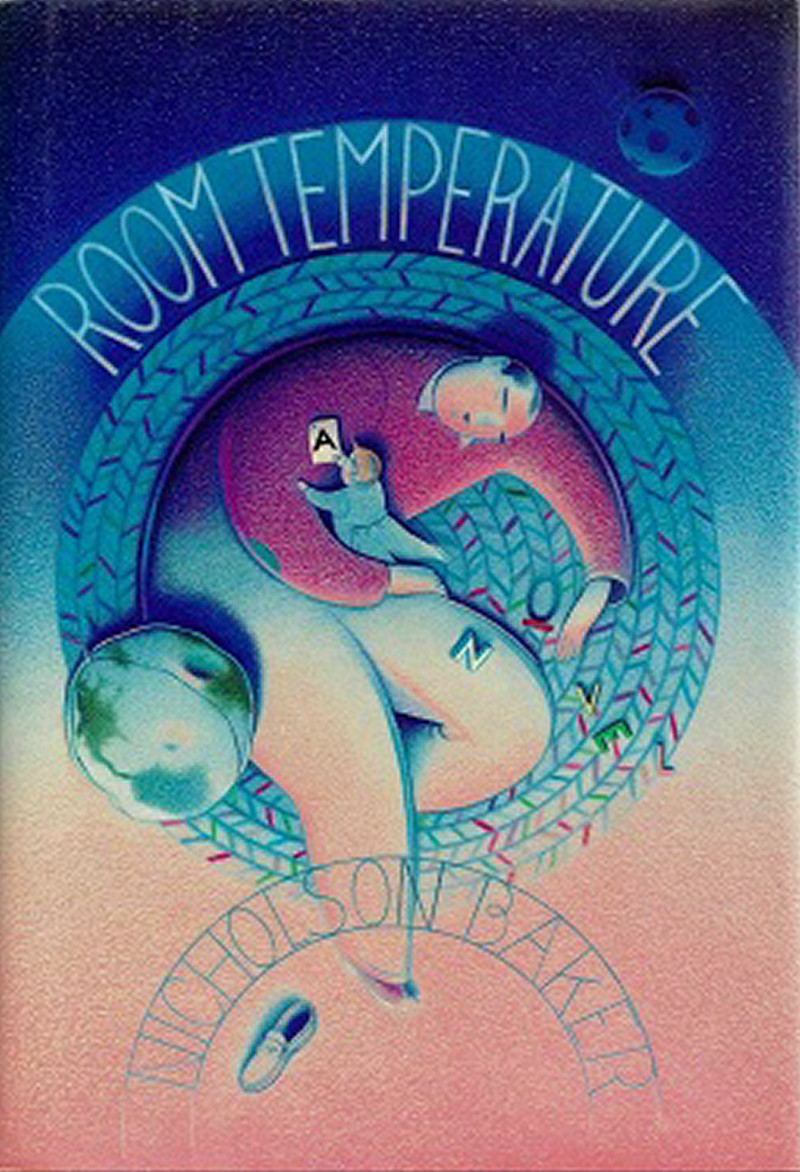
Room Temperature
The story revolves around a young father's contemplation while feeding his daughter a bottle of milk.
- Published1990
- TypeNovel
- GenreDomestic fiction
- LanguageEnglish
- CharactersMike, Patty
About the Author

Nicholson Baker
Nicholson Baker, an acclaimed author known for his unique writing style and focus on preserving the printed word.
View Profile- OccupationNovelist
- FromUSA
-
Other Works
- The Mezzanine (1988)
- Vox (1992)
- The Fermata (1994)
- The Everlasting Story of Nory (1998)
- A Box of Matches (2003)
- Checkpoint (2004)
- The Anthologist (2009)
- Traveling Sprinkler (2013)