
Book: Salt
Overview
Wislawa Szymborska's 1962 collection "Salt" marks a decisive deepening of her concise, philosophically inclined lyric voice. The poems operate on a small scale of everyday observation while opening into broad metaphysical and ethical vistas, turning commonplace objects and gestures into starting points for reflection. Quietly observant and often wry, the poems trade declamation for a keen attentiveness to detail that reveals complexity beneath apparent simplicity.
The title image of salt, everyday, preservative, crystalline, serves as a fitting emblem: something elemental and familiar that both seasons life and corrodes it, capable of conserving memory and altering taste. That ambivalence, preservation versus erosion, necessity versus excess, threads through the collection, letting ordinary materials and moments function as metaphors for human vulnerability, history, and moral choice.
Language and Form
Szymborska's diction in these poems is pared down and precise; sentences land with the economy of a carefully chosen adjective. Short lines and compact stanzas create an intimacy that invites the reader close, while sly tonal shifts, from conversational to astonished to caustically ironic, keep the reader alert to hidden depths. The voice often sounds like an intelligent interlocutor who both sympathizes and mistrusts sweeping generalities.
The poet's formal restraint is not aridity. Wordplay, small philosophical puzzles, and understated paradoxes give the poems momentum. Humor and skepticism work in tandem: a seemingly light gag will pivot into a somber observation about mortality or contingency, making each poem feel like a miniature inquiry that resists tidy resolution.
Themes and Imagery
A recurring technique is juxtaposition, placing a trivial object or domestic scene beside a vast question about fate, ethics, or the cosmos. Everyday items, salt crystals, a broken tool, a discarded photograph, become loci for speculation about time, identity, and loss. This grounding in the ordinary provides an ethical lens: the poet asks how attention to small things shapes responsibility and how the smallest acts echo larger consequences.
Mortality and historical consciousness are persistent concerns, but they are handled without sermonizing. The poems acknowledge human finitude and the randomness of survival while also marveling at continuity, memory, and the stubbornness of life. There is often a democratic empathy: individual experience matters precisely because it is concretely felt, not because it can be generalized into an ideology. Alongside moral reflection, intellectual curiosity about science, chance, and causality surfaces, giving many poems a quietly exploratory, almost forensic flavor.
Reception and Legacy
"Salt" helped consolidate Szymborska's reputation as a distinctive voice in postwar Polish poetry, marking a move away from earlier politically aligned verse toward a more personal, philosophical stance. The collection resonated with readers who appreciated poetry that engaged ethical and existential questions without rhetorical excess, and it deepened international interest in her work as translations appeared over subsequent decades.
The temper of these poems, modest yet deeply probing, witty yet serious, anticipated the qualities that would later be celebrated when Szymborska received the Nobel Prize. The collection remains notable for how it models a poetic ethics of attention: it shows that small observations, rendered with clarity and moral intelligence, can illuminate the largest of human concerns.
Citation Formats
APA Style (7th ed.)
Salt. (2026, February 13). FixQuotes. https://fixquotes.com/works/salt/
Chicago Style
"Salt." FixQuotes. February 13, 2026. https://fixquotes.com/works/salt/.
MLA Style (9th ed.)
"Salt." FixQuotes, 13 Feb. 2026, https://fixquotes.com/works/salt/. Accessed 6 Mar. 2026.
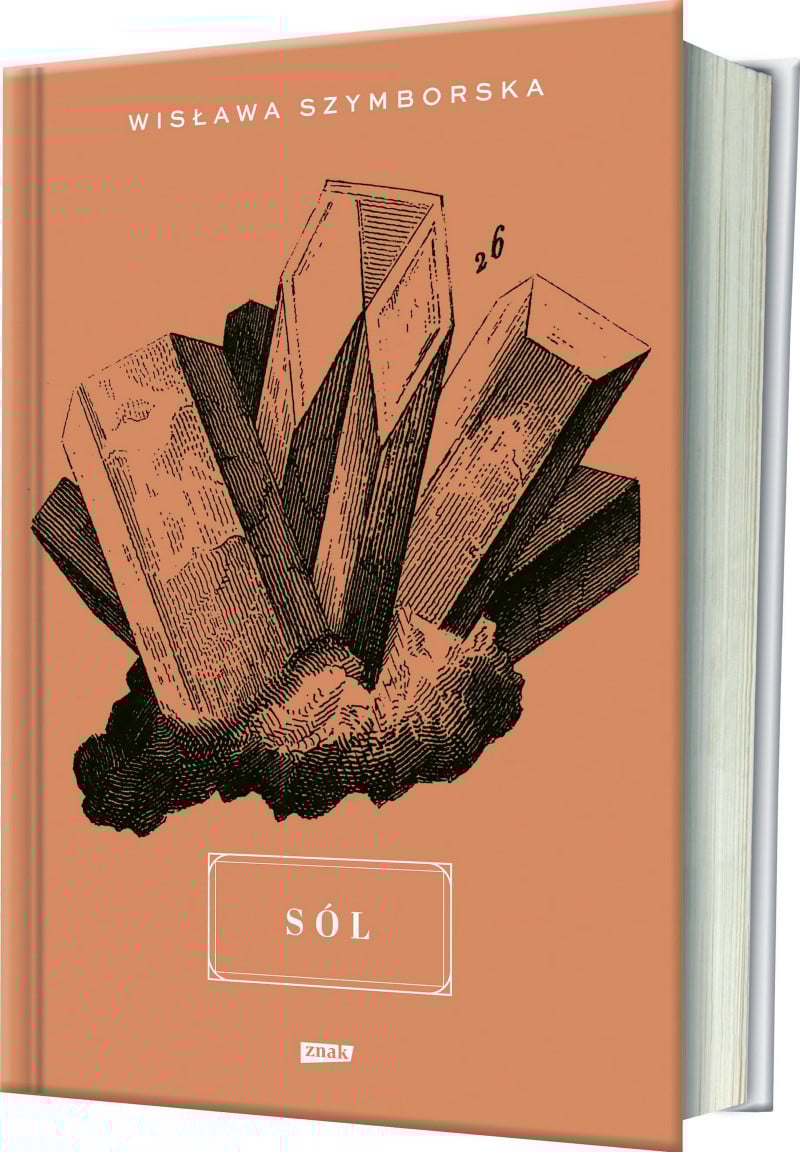
Salt
Original: Sól
Collection that continues her development toward concise, philosophical lyric; poems juxtapose ordinary objects and moments with larger metaphysical and ethical questions.
- Published1962
- TypeBook
- GenrePoetry
- Languagepl
- Links
About the Author

Wislawa Szymborska
Wislawa Szymborska covering her life, major works, literary circles, awards, and selected quotes.
View Profile- OccupationPoet
- FromPoland
-
Other Works
- That's Why We Are Alive (1952)
- The Poet and the World (Nobel Lecture) (1996)
- View with a Grain of Sand (1996)