
Poetry Collection: Summer with Monika
Overview
Roger McGough’s 1967 Summer with Monika is a single, extended sequence that charts a quicksilver summer romance from first spark to afterglow. Told in a conversational, streetwise voice, the poem threads together snapshots of a young couple’s days and nights in an urban Britain charged with pop energy and loosening rules. Its Monika is less a fixed portrait than an emblem of freedom and allure, while the speaker records with wit and tenderness how love briefly remakes the city, ordinary objects, and time itself.
Story
The poem begins in early-summer brightness, when chance encounters feel fated and every bus ride or cafe table is charged with possibility. The narrator and Monika slip easily into a life of shared jokes, cheap meals, and impulsive trips. A rented room becomes their makeshift sanctuary, transformed by flowers in a jar, a radio’s tinny soundtrack, and the grammar of private rituals. The outside world flows in through posters, headlines, and pop songs, but for a while the pair live inside a bubble where everything seems new because they are seeing it together.
Routine inevitably creeps in. The poem records the economics of youth, coins counted, rent eyed warily, clothes dried in launderettes, as well as the small negotiations of intimacy: whose turn it is to get up, whose mood sets the tone, which friends feel welcome. Arguments flicker and fade, often resolved by humour, sometimes set aside for a party, a walk by the water, or the promise of the next day’s heat. McGough’s speaker notes how desire and laughter share the same space, how even the city’s grime can look gilded in summer light.
As August tips toward September, the tone softens and shadows lengthen. Monika seems both present and already leaving, absorbed in plans the speaker only half knows. The poem’s scenes become more reflective: a late train, a cafe that feels colder than before, the awareness that the room’s borrowed furniture will outlast the lease of their love. The city regains its ordinary scale, and the speaker understands that the enchantment depended on a weather of hearts as much as of skies.
Style and voice
McGough writes in quick, flexible lines that pivot from slapstick to lyric in a breath. Wordplay, brand names, signage, and scraps of overheard talk sit alongside tender addresses to Monika, creating a collage that feels as nimble as the couple’s movements through streets, parks, docks, cinemas, and crowded rooms. The sequence is cinematic, jump cuts, dissolves, close-ups, and the title knowingly echoes a filmic archetype of summer love, while the poem resists melodrama by keeping faith with quotidian detail. The language is democratic and musical, making room for jokes without sacrificing ache.
Themes
Summer with Monika explores the intoxication of first love, the way private time overlays public space, and the friction between dream and daily logistics. It catches a moment in 1960s youth culture when freedoms were widening, yet money was short and futures hazy. The poem weighs how lovers mythologize themselves and each other, and how memory burns brightest around ephemeral things: bus tickets, warm pavements, condensation on a shared glass. It acknowledges the sweetness of impermanence without bitterness, accepting that part of love’s force lies in its brevity.
Afterglow
When the summer closes and Monika steps out of the narrator’s days, what remains is a city gently altered by remembrance. The speaker carries a portable season inside him, a series of bright frames that can be replayed whenever the weather of mind allows. The collection ends not with heartbreak but with a poised, wistful clarity: the summer was real, it changed things, and its light is folded into the year that follows.
Citation Formats
APA Style (7th ed.)
Summer with monika. (2026, February 4). FixQuotes. https://fixquotes.com/works/summer-with-monika/
Chicago Style
"Summer with Monika." FixQuotes. February 4, 2026. https://fixquotes.com/works/summer-with-monika/.
MLA Style (9th ed.)
"Summer with Monika." FixQuotes, 4 Feb. 2026, https://fixquotes.com/works/summer-with-monika/. Accessed 12 Feb. 2026.
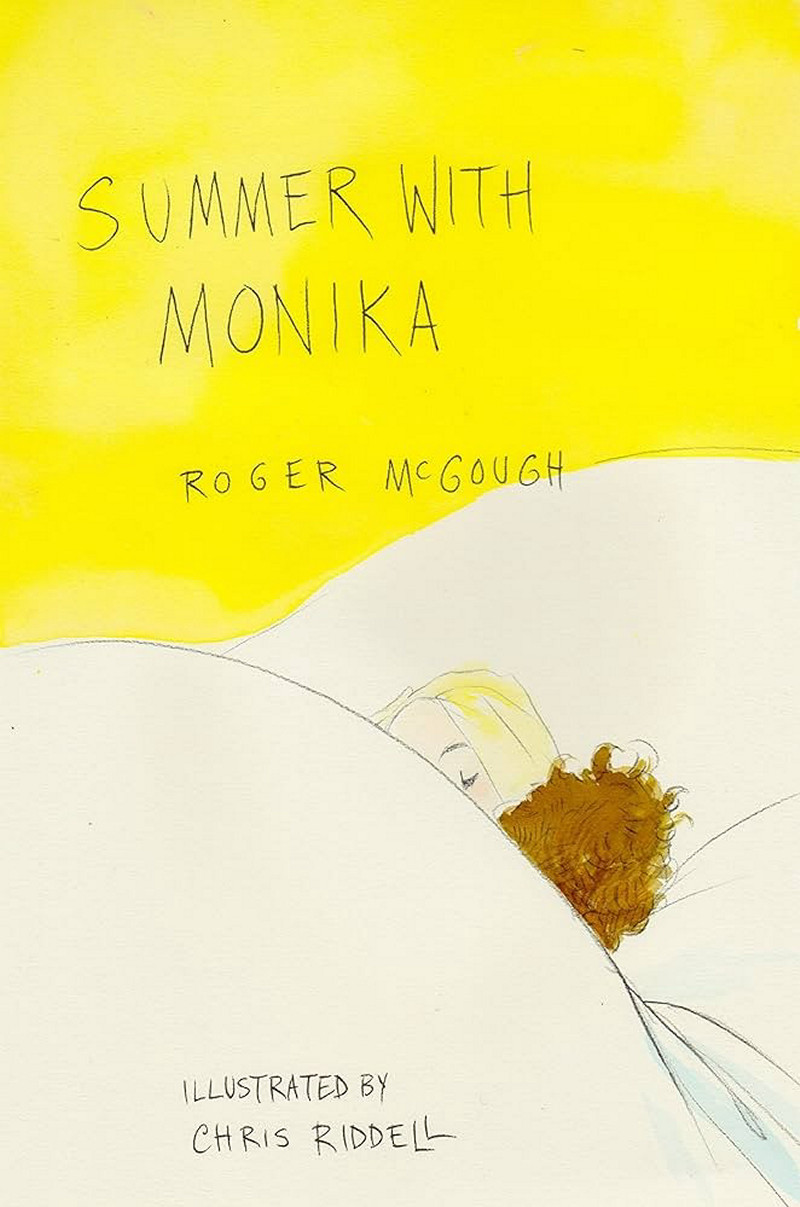
Summer with Monika
Summer with Monika is a collection of romantic and humorous poetry reflecting Roger McGough's experiences and insights.
- Published1967
- TypePoetry Collection
- GenrePoetry
- LanguageEnglish
About the Author

Roger McGough
Roger McGough, a celebrated English poet, playwright, and broadcaster known for his witty and accessible verse.
View Profile- OccupationPoet
- FromUnited Kingdom
-
Other Works
- The Mersey Sound (1967)
- Watchwords (1969)
- Blazing Fruit (1989)
- As Far as I Know (2013)