
Novella: The Brownie of Bodsbeck and Other Tales
Overview
James Hogg's The Brownie of Bodsbeck and Other Tales (1818) gathers a series of short narratives rooted in Scottish popular tradition, the rural imagination, and the uncanny. The title story draws on the figure of the Brownie, a household spirit known from Scots folklore for unseen, well-intentioned labors and a close but precarious relationship with human families. Hogg treats the Brownie not as mere superstition but as a living presence in a community whose rules, loyalties, and anxieties are shaped by the land and its stories.
Across the collection Hogg balances affection for local custom with an appetite for eerie incident. The tales move between gentle domestic marvels and darker, more unsettling encounters with ghosts, witches, and mysterious omens. Hogg's voice blends rustic sympathy and sly narrative intelligence, so that the supernatural is often as much about human need, fear, and misunderstanding as about the paranormal itself.
Plot and Narrative Shape
The central tale follows a rural household whose fortunes are quietly sustained by a Brownie's ministrations. Hogg gives the creature a kind of moral agency: its interventions are small, practical, and deeply entwined with local notions of honor and reciprocity. When outsiders, sceptical neighbors, officious ministers, or inquisitive magistrates, threaten the household's peace, the Brownie's presence exposes the fault lines between community values and imposed authority. The narrative unfolds through a conversational, sometimes ironic storyteller who relays events as both commonplace and uncanny, so readers are left to weigh whether the marvels are supernatural facts or folklore-shaped interpretations of human behavior.
The other tales in the volume are short, varied, and atmospheric. Some are warm and comic, celebrating rural wit; others are charged with melancholy or menace, presenting spectral visitations, prophetic dreams, and uncanny transformations. Hogg often uses abrupt shifts of mood and vivid local detail rather than elaborate plotting, creating scenes that feel like oral recollections or fragments of larger, living traditions.
Themes and Style
Hogg's central concern is the relationship between the visible and the invisible: between everyday labor and the mysterious forces the community invokes to explain good fortune and misfortune. Sympathy for marginalized figures, the poor, the eccentric, the good-natured folk who live close to the land, runs through the stories. Superstition is neither simply condemned nor blindly endorsed; it is shown as a social language that manages anxieties, preserves boundaries, and occasionally obstructs compassion.
Stylistically Hogg mixes a ballad-inflected cadence with colloquial idiom and energetic description. His narrative persona toggles between genial storyteller and pointed commentator, allowing humor and a darker strain of Gothic unease to coexist. The landscapes are characters in their own right: windswept farms, shadowed hills, and hearth-lit interiors supply the mood and moral backdrop against which strange events take shape.
Significance and Reception
The collection showcases Hogg's role as a mediator between oral tradition and Romantic literature, an author who preserved vernacular tales while reshaping them for print. His treatment of the Brownie and allied motifs helped legitimize Scottish folk belief as a rich source for imaginative fiction, influencing later writers attracted to regional supernaturalism. While some contemporary readers found the mixture of rustic frankness and eerie suggestion disconcerting, others praised Hogg's fidelity to local speech and his imaginative sympathy for the poor and uncanny.
Read today, the volume offers a compact, lively introduction to Hogg's narrative range: an author who could be comic and compassionate, eerie and earthy, and who continually probed the porous borders between communal memory and the strange consolations of folklore.
Citation Formats
APA Style (7th ed.)
The brownie of bodsbeck and other tales. (2025, September 13). FixQuotes. https://fixquotes.com/works/the-brownie-of-bodsbeck-and-other-tales/
Chicago Style
"The Brownie of Bodsbeck and Other Tales." FixQuotes. September 13, 2025. https://fixquotes.com/works/the-brownie-of-bodsbeck-and-other-tales/.
MLA Style (9th ed.)
"The Brownie of Bodsbeck and Other Tales." FixQuotes, 13 Sep. 2025, https://fixquotes.com/works/the-brownie-of-bodsbeck-and-other-tales/. Accessed 12 Feb. 2026.
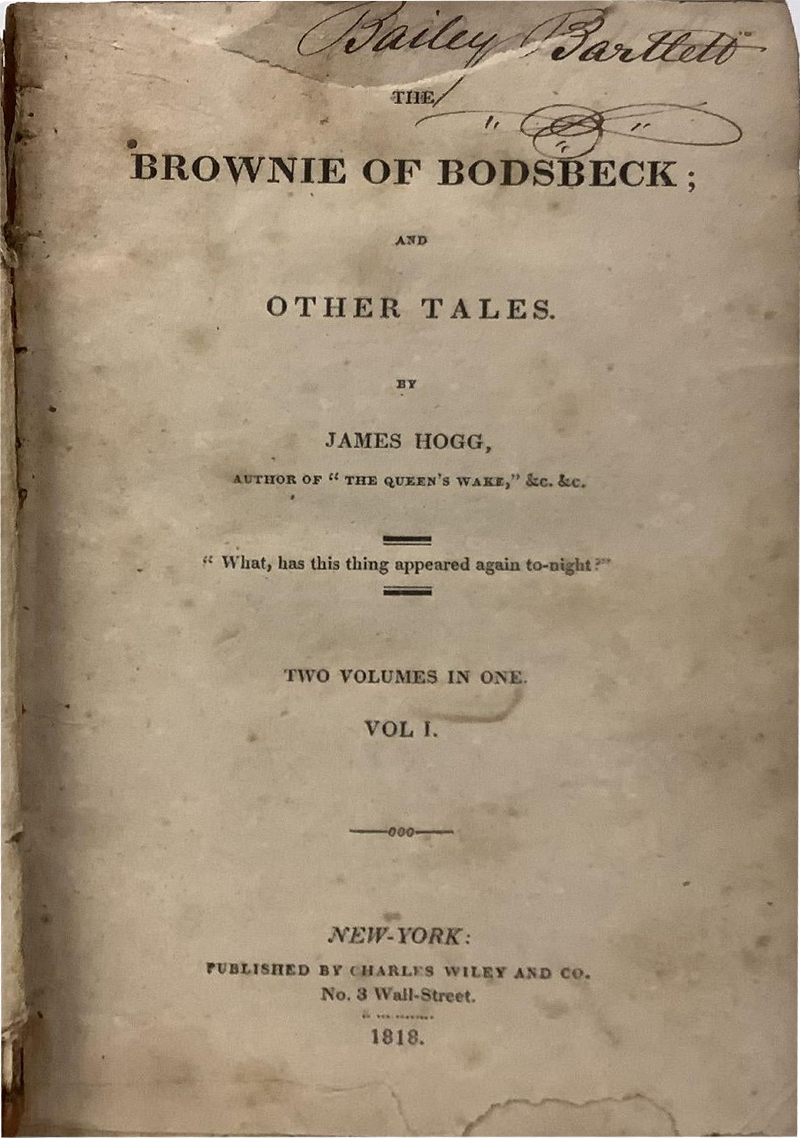
The Brownie of Bodsbeck and Other Tales
The Brownie of Bodsbeck is a story based on the imagined supernatural figure of the Brownie, typically seen as a helpful household spirit in Scottish folklore. The other tales in this collection demonstrate Hogg's interest in the supernatural themes of old Scottish legends.
- Published1818
- TypeNovella
- GenreFolklore, Supernatural, Short Stories
- LanguageEnglish
About the Author

James Hogg
James Hogg, the Scottish poet known as the Ettrick Shepherd, renowned for his novels and poetry collections.
View Profile