
Photograph: The Falling Man
Overview
Richard Drew’s photograph known as "The Falling Man" captures a single individual in midair during the September 11, 2001 attacks on the World Trade Center. Taken in a rapid sequence as people fell from the North Tower, one frame isolates the figure headfirst, aligned with the building’s vertical bands. The image is stark, uncluttered, and unforgettable, distilling the vastness of a public catastrophe into the intimate, solitary trajectory of one person.
Context
The photograph was made on the morning of September 11 in lower Manhattan as flames and smoke consumed the upper floors of the North Tower. With stairwells impassable and heat and smoke overwhelming, some occupants were seen falling or leaping from windows. Drew, an Associated Press photojournalist, recorded a series that included this frame at approximately 9:41 a.m., within the hour after the attacks and before the collapse of the towers.
Composition and Aesthetics
The image’s power resides in its formal clarity. The human figure appears almost perfectly vertical, echoing the severe, repeating lines of the tower’s facade. There is no horizon to fix orientation, no crowd to contextualize scale, and no visible ground to complete the narrative. The result is a suspended, sculptural moment in which motion becomes stillness. The background’s rigid geometry contrasts with the organic vulnerability of the body, and the near-symmetry evokes an unsettling calm in the midst of disaster. A sequence of frames shows the man tumbling, but this single exposure captures alignment so exact it seems deliberate, a compositional accident that heightens the photograph’s haunting resonance.
Subject and Identification
The person’s identity has never been definitively established. Early efforts to name him, including suggestions that he worked at the Windows on the World restaurant, remain unconfirmed. Journalistic investigations and a later documentary examined candidates, but the anonymity endures. That absence of certainty has turned the figure into an emblem, at once an individual with a life, relations, and history, and a representative for those whose final moments were undocumented or unrecognized.
Publication and Reception
First published widely on September 12, 2001, the photograph provoked intense responses. Some newspapers ran it prominently, while others withdrew it following reader complaints. Many outlets thereafter avoided images of people falling, reflecting the climate of grief and the sensitivities of families. Over time, the photograph has been reprinted and exhibited in contexts that explore trauma, memory, and the ethics of witnessing. It has become one of the defining visual records of that day, even as it remains less frequently shown than other iconic images.
Ethical Debate
The picture sits at the center of contested questions about representation. To some, it violates privacy and risks turning a final act into spectacle. To others, it restores individual humanity to a catastrophe often conveyed through smoke, rubble, and skyline. The image’s refusal to resolve whether the person jumped by choice or was driven by unendurable conditions sidesteps reductive narratives of intent and emphasizes the impossible circumstances inside the towers.
Legacy
"The Falling Man" persists as a concentrated meditation on choice, chance, and the limits of what photographs can reveal. Its compositional poise and factual bluntness resist sentimentality while refusing indifference. As historical evidence and as a moral provocation, it frames a single human life at the intersection of public catastrophe and private fate, asking viewers to remember that even the most collective tragedies are lived one person at a time.
Citation Formats
APA Style (7th ed.)
The falling man. (2026, February 4). FixQuotes. https://fixquotes.com/works/the-falling-man/
Chicago Style
"The Falling Man." FixQuotes. February 4, 2026. https://fixquotes.com/works/the-falling-man/.
MLA Style (9th ed.)
"The Falling Man." FixQuotes, 4 Feb. 2026, https://fixquotes.com/works/the-falling-man/. Accessed 28 Mar. 2026.
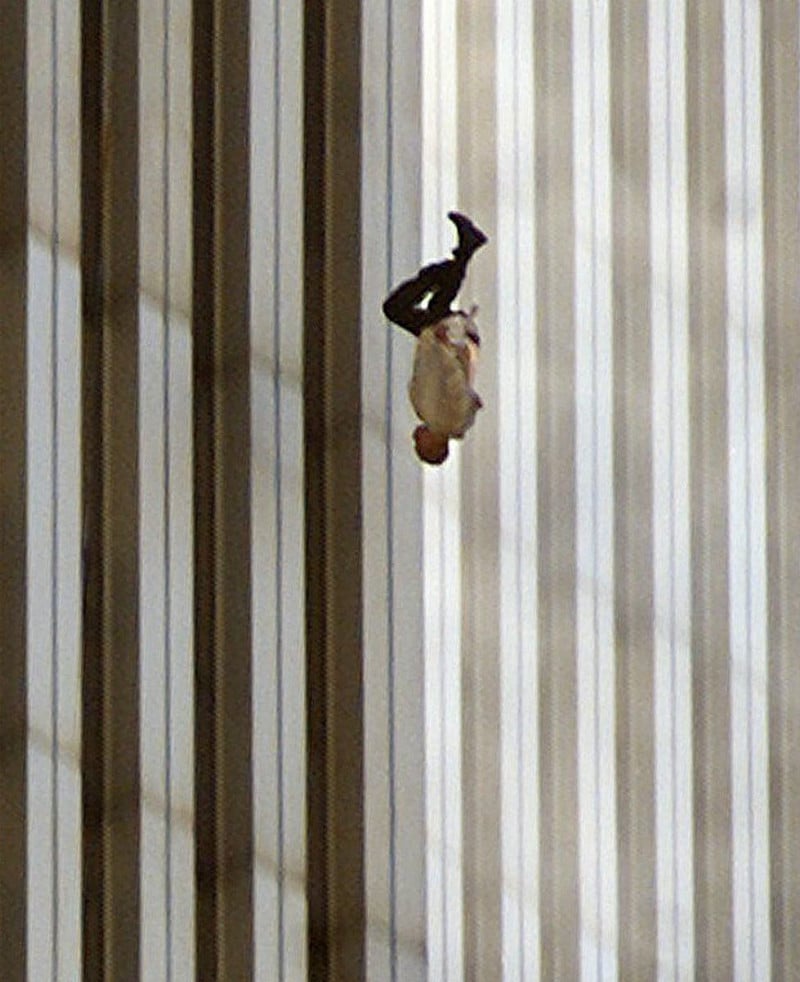
The Falling Man
Iconic Associated Press photograph taken by Richard Drew on September 11, 2001, showing a man falling from the North Tower of the World Trade Center during the terrorist attacks. The image provoked widespread discussion about media ethics, anonymity, and the human toll of the attacks.
- Published2001
- TypePhotograph
- GenrePhotojournalism, News photography
- CharactersUnnamed jumper
About the Author

Richard Drew
Richard Drew, award-winning photographer known for his compelling images advocating for social justice.
View Profile- OccupationPhotographer
- FromUSA