
Novel: The Fermata
Premise
A man discovers he can stop time at will, stepping out of the flow of daily life into a frozen world he alone can move through. The stoppage becomes a private realm where ordinary constraints vanish and curiosity takes shape as a kind of control. The novel follows the consequences of that power as it reshapes the protagonist's relationship to desire, solitude, and moral responsibility.
The protagonist's secret life
The central character uses the time-freeze to move among people who are unaware and unaltered, most often to observe and undress women without their knowledge. These intrusions are described with clinical attention to physical detail and procedural exactness rather than erotic flourish, and much of the narrative consists of the narrator cataloging what he notices, how he acts, and how he justifies those acts to himself. He also experiments with other possibilities of frozen time, rearranging objects, testing boundaries, and attempting fantasies he cannot achieve in ordinary wakefulness.
Structure and voice
The prose is concentrated, digressive, and intensely interior. Sentences linger on sensory minutiae, minutiae of objects and bodily features, and the narrator's tangential trains of thought. The voice alternates between wry, confessional, and analytical, often breaking into extended rhetorical asides that probe the narrator's motives and the technicalities of stopping time. This close focus on small particulars creates a claustrophobic intimacy: readers are drawn into the narrator's mental workshop even as they are made complicit in his observational practices.
Themes and ethical questions
At its core the story is an exploration of power, consent, and loneliness. The protagonist continually wrestles with whether his frozen intrusions constitute harm, framing his actions against competing ideas about desire, respect, and the right to another person's autonomy. The book interrogates the imagination's capacity to transgress when its author faces no immediate consequences, raising uncomfortable questions about how private fantasies translate into behavior. Questions about technology and surveillance also surface: the ability to pause time functions as a metaphor for contemporary conditions in which access, observation, and control are increasingly detachable from accountability.
Controversy and reception
The novel generated intense debate on publication. Some readers and critics praised its formal inventiveness and Baker's skill at rendering interior life and physical detail. Others condemned the book's central conceit as morally troubling and accused the narrator's rationalizations of normalizing voyeurism and non-consensual sexual exploration. The polarity of reactions highlights the uneasy tension between literary experimentation and ethical responsibility, and the novel continues to be a touchstone in conversations about how fiction treats desire and transgression.
Legacy and interpretation
Beyond the immediate shock of its premise, the book asks persistent questions about how imagination, solitude, and power intersect. It functions both as a psychological portrait of a man who retreats into a private sovereign temporality and as a formal experiment in confessional narration. For readers willing to engage with its provocations, the novel offers a rigorous, if contentious, meditation on the limits of sympathy, the mechanisms of self-justification, and the ways that modern life can erode or amplify ethical restraints.
Citation Formats
APA Style (7th ed.)
The fermata. (2025, September 13). FixQuotes. https://fixquotes.com/works/the-fermata/
Chicago Style
"The Fermata." FixQuotes. September 13, 2025. https://fixquotes.com/works/the-fermata/.
MLA Style (9th ed.)
"The Fermata." FixQuotes, 13 Sep. 2025, https://fixquotes.com/works/the-fermata/. Accessed 5 Mar. 2026.
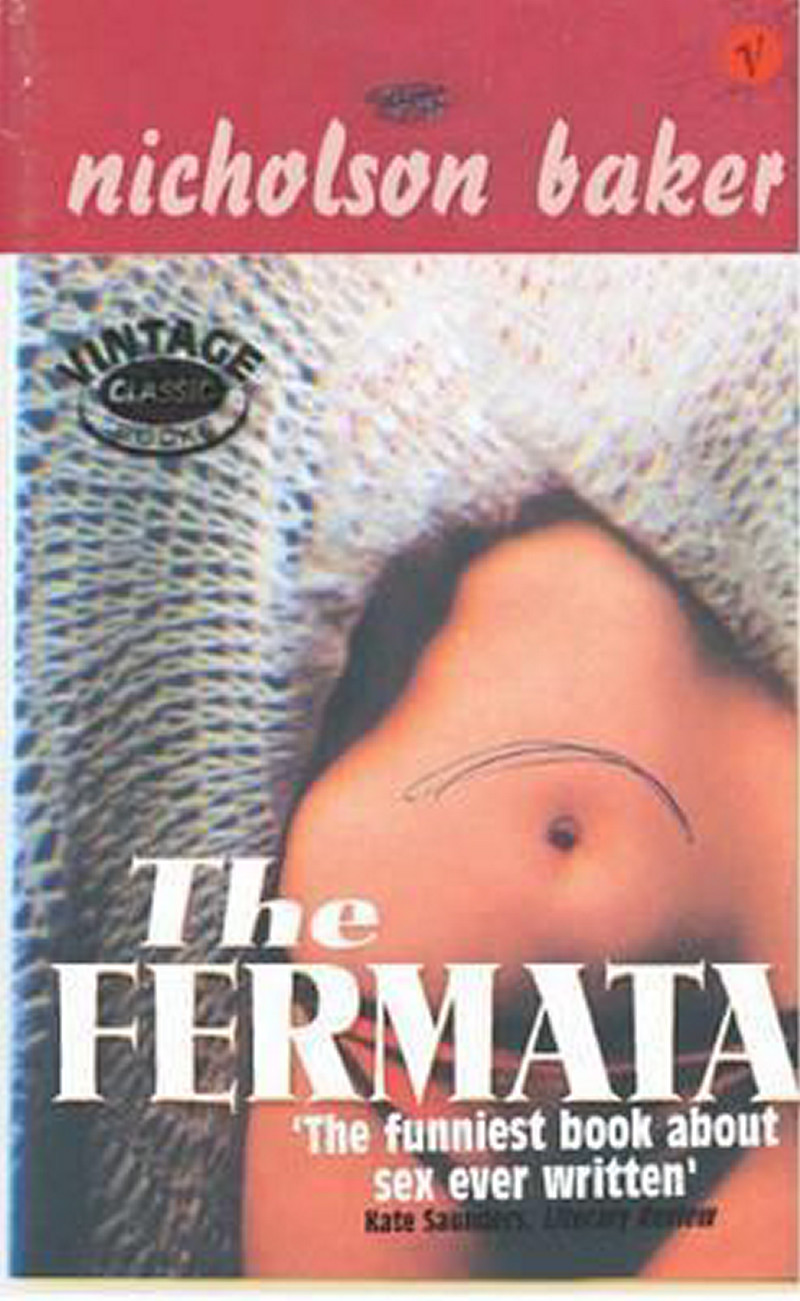
The Fermata
A story about a man who has the ability to stop time, which he uses to undress and explore women without their knowledge.
- Published1994
- TypeNovel
- GenreScience Fiction
- LanguageEnglish
- CharactersArno Strine
About the Author

Nicholson Baker
Nicholson Baker, an acclaimed author known for his unique writing style and focus on preserving the printed word.
View Profile- OccupationNovelist
- FromUSA
-
Other Works
- The Mezzanine (1988)
- Room Temperature (1990)
- Vox (1992)
- The Everlasting Story of Nory (1998)
- A Box of Matches (2003)
- Checkpoint (2004)
- The Anthologist (2009)
- Traveling Sprinkler (2013)