
Essay: The Fixation of Belief
Purpose and Frame
Peirce sets out to describe how human beings move from unsettling doubt to settled belief, and to compare the main methods by which beliefs are fixed. He treats inquiry as a practical activity directed at calming the “irritation of doubt, ” not as a quest for certainty for its own sake. Thought serves action by producing beliefs that establish habits; logic, accordingly, studies the means of settling belief well rather than the machinery of consciousness.
Belief, Doubt, and the Aim of Inquiry
Belief, for Peirce, is a disposition to act in certain ways; it is soothing, stable, and guides conduct. Doubt is uneasy, stimulating, and interrupts action. We cannot simply choose to believe or to doubt; genuine doubt arises from surprise, conflict of ideas, or recalcitrant experience. The proper aim of inquiry is to transform doubt into belief in a way that will endure when challenged. Hence the central question becomes which method best fixes belief so that it remains steady under the pressures of experience and discussion.
Four Methods of Fixing Belief
The method of tenacity counsels clinging firmly to whatever one already believes and avoiding contrary evidence or company. It can bring psychological peace, but only through deliberate isolation. Once the tenacious believer encounters others who think differently, trouble returns, because mere obstinacy gives no reason to prefer one stance over another.
The method of authority extends tenacity socially. Institutions enforce doctrine through education, censorship, and penalties, thereby creating widespread uniformity. It is powerful and historically prevalent, yet it cannot easily suppress all doubts, especially as contacts between cultures multiply and as reflective individuals compare rules with observed facts.
The a priori method fixes belief by what seems agreeable to reason, relying on taste, intuitions of rationality, or the fashions of learned circles. It often yields elegant systems, but their conclusions shift with changing sentiments; it stabilizes opinion no better than custom stabilizes dress. What seems reasonable today can seem quaint tomorrow.
The method of science differs by submitting belief to a permanently external control: experience of a real world whose characters are independent of what anyone thinks. It employs observation, experimentation, and reasoning, and it welcomes criticism because tests do not depend on individual preference. Its ideal is not comfort or authority but the discovery of true relations.
Why Science Prevails
Peirce argues that the method of science is superior because it uniquely provides a way for beliefs to withstand the broadest and most severe trials. Tenacity fails in the face of social contact; authority falters when diversity and inquiry expose inconsistencies; the a priori method drifts with taste. Science alone ties belief to something not at our disposal and builds procedures for correction. To adopt any other method consistently leaves no reason to think one’s settled beliefs are more than the accidents of training or temperament.
Reality and the Community of Inquiry
“Real” denotes what will ultimately be represented in the conclusions to which inquiry would lead, were it pursued indefinitely. On this view, truth is the destined upshot of convergent investigation, not the stamp of any present authority. The social character of science, public criteria, replicable tests, and open criticism, is therefore essential. Over time, the opinions of investigators tend to agreement, not because minds are made alike, but because the same independent reality continuously corrects them.
Implications
Peirce rejects Cartesian resolve to doubt everything at will and grounds logic in the practical business of fixing belief. He prepares the way for pragmatism by tying meaning and truth to the habits of action formed under the discipline of experience. The essay’s enduring claim is that only a method accountable to an external world and a critical community can secure beliefs fit to guide life.
Citation Formats
APA Style (7th ed.)
The fixation of belief. (2026, February 4). FixQuotes. https://fixquotes.com/works/the-fixation-of-belief/
Chicago Style
"The Fixation of Belief." FixQuotes. February 4, 2026. https://fixquotes.com/works/the-fixation-of-belief/.
MLA Style (9th ed.)
"The Fixation of Belief." FixQuotes, 4 Feb. 2026, https://fixquotes.com/works/the-fixation-of-belief/. Accessed 12 Feb. 2026.
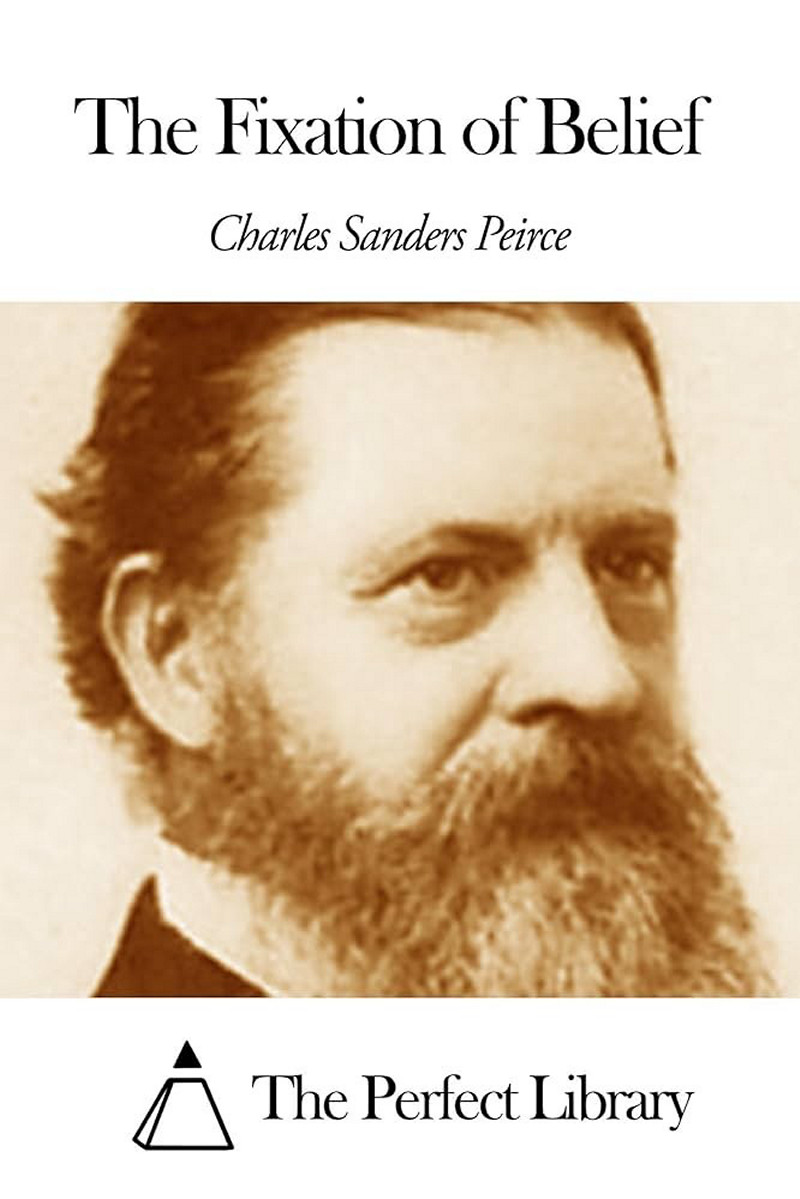
The Fixation of Belief
An account of four methods by which beliefs become fixed (tenacity, authority, a priori, and the scientific method), arguing for the superiority of the scientific (experimental) method in securing stable, revisable opinion.
- Published1877
- TypeEssay
- GenrePhilosophy, Epistemology, Science
- Languageen
About the Author

Charles Sanders Peirce
Charles Sanders Peirce, the founder of pragmatism and pioneer in philosophy, logic, and scientific inquiry.
View Profile- OccupationPhilosopher
- FromUSA
-
Other Works
- On a New List of Categories (1867)
- Illustrations of the Logic of Science (1877)
- How to Make Our Ideas Clear (1878)
- A Guess at the Riddle (1891)
- Syllabus of Certain Topics of Logic (1903)