
Screenplay: The Grand Budapest Hotel
Overview
The Grand Budapest Hotel follows the chaotic, bittersweet adventures of the legendary concierge M. Gustave H. and his loyal lobby boy, Zero Moustafa, as they navigate murder, inheritance, and the restless politics of a 1930s Central European republic. Told through multiple framing devices that move from a present-day author to an older Zero and back to the hotel's heyday, the story balances caper-like momentum with elegiac nostalgia for a vanished world of manners and refinement. The film's narrative is at once an affectionate homage to a bygone Europe and a rapid-fire farce about loyalty, friendship, and the costs of devotion.
Plot
When the wealthy dowager Madame D. dies under mysterious circumstances, she leaves the priceless Renaissance painting "Boy with Apple" to Gustave, inciting outrage from her heirs, especially her wrathful son Dmitri. Gustave is accused of murder and thrown into prison, but with the help of the devoted Zero and a ragged band of allies, he engineers an audacious escape. The pair then embark on a cross-country hunt to prove Gustave's innocence, uncover the truth behind Madame D.'s death, and recover the disputed inheritance, all while evading Dmitri's ruthless henchman and increasingly authoritarian forces in their homeland.
The caper unfolds as a series of episodic set pieces: a daring prison break, a courtroom farce, a break-in at a mausoleum, and a chaotic chase across snowbound mountains. Each episode sharpens the bond between Gustave and Zero, and each setback underscores the encroaching historical turmoil that will soon erase the peculiar civility Gustave embodies. The pursuit reaches a violent climax that leaves indelible consequences for the principal characters and reshapes the future of the hotel.
Characters
M. Gustave H. is an exacting, eloquent concierge whose cultivated manners and unapologetic devotion to wealthy guests define both his talent and his vulnerabilities. He is equal parts swashbuckling mentor and tragic idealist, treating etiquette like an art and loyalty like an unbreakable code. Zero Moustafa begins as a shy, immigrant lobby boy who blossoms under Gustave's tutelage into a resourceful companion, his own quiet courage and affection forming the emotional backbone of the story.
Around them swirl a cast of eccentric figures: the imperious Madame D., her volatile son Dmitri, the implacable enforcer who pursues them, and Agatha, a kind-hearted pâtissière who becomes Zero's romantic anchor. Each character contributes a comic beat or a moral pivot, creating a world where eccentricity, cruelty, and tenderness coexist in miniature.
Themes and Tone
The screenplay juxtaposes light, meticulous comedy with a melancholic meditation on loss. Gustave's devotion to ritual and beauty reads as both heroic and doomed, a last stand against the brutality and homogenization of the modern age. Friendship and loyalty are celebrated as redemptive forces, while greed, spite, and the march of history expose human frailty. Humor arises from precise dialogue, absurd situations, and the collision of social codes, but an undercurrent of elegy gives the narrative real emotional weight.
Style and Structure
The story is organized into nested narratives, each layer shifting perspective and time to create a fairy-tale quality. The script's structure emphasizes chapters and tableaus, with quick, witty exchanges and carefully choreographed scenes that highlight ritual, symmetry, and whimsy. The dialogue is sharp, often deadpan, and the pacing alternates brisk farce with tender, still moments that let relationships resonate. Visual imagination and meticulously staged sequences are intrinsic to the screenplay's identity, making it as much an exercise in tone and design as in plot.
Legacy
At its core, the screenplay is a fable about a graceful vocation and its erosion by forces beyond the characters' control. It leaves a poignant impression of a world both irresistible and already receding, celebrating the improbable devotion between two very different men while mourning the inevitable passing of an era.
Citation Formats
APA Style (7th ed.)
The grand budapest hotel. (2026, February 5). FixQuotes. https://fixquotes.com/works/the-grand-budapest-hotel/
Chicago Style
"The Grand Budapest Hotel." FixQuotes. February 5, 2026. https://fixquotes.com/works/the-grand-budapest-hotel/.
MLA Style (9th ed.)
"The Grand Budapest Hotel." FixQuotes, 5 Feb. 2026, https://fixquotes.com/works/the-grand-budapest-hotel/. Accessed 26 Mar. 2026.
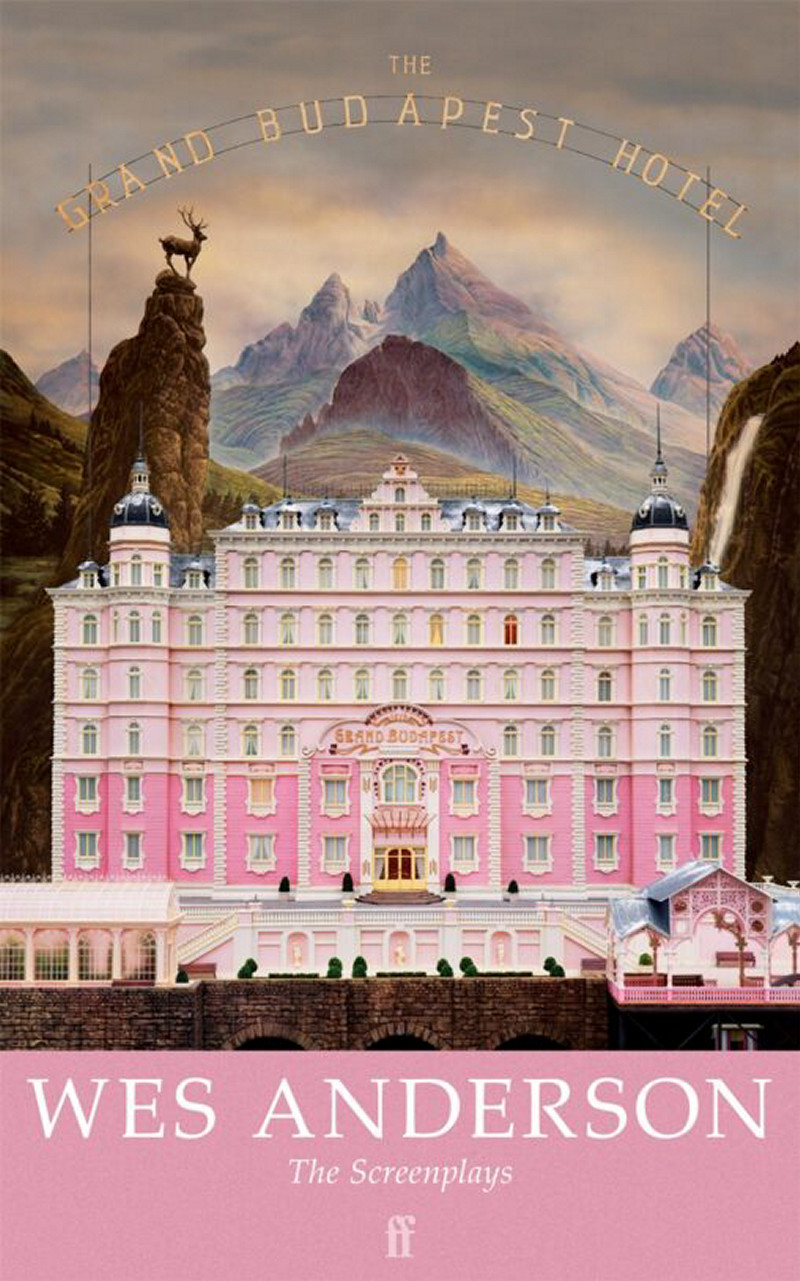
The Grand Budapest Hotel
The Grand Budapest Hotel is a comedy-drama film written and directed by Wes Anderson. It tells the story of a legendary concierge at a famous European hotel and the lobby boy who accompanies him on a series of misadventures.
About the Author

Wes Anderson
Wes Anderson, celebrated for his unique film style, with detailed biography and famous quotes.
View Profile- OccupationWriter
- FromUSA
-
Other Works
- Bottle Rocket (1996)
- Rushmore (1998)
- The Royal Tenenbaums (2001)
- The Life Aquatic with Steve Zissou (2004)
- The Darjeeling Limited (2007)
- Fantastic Mr. Fox (2009)
- Moonrise Kingdom (2012)
- Isle of Dogs (2018)
- The French Dispatch (2021)