
Elmer Davis Biography Quotes 7 Report mistakes
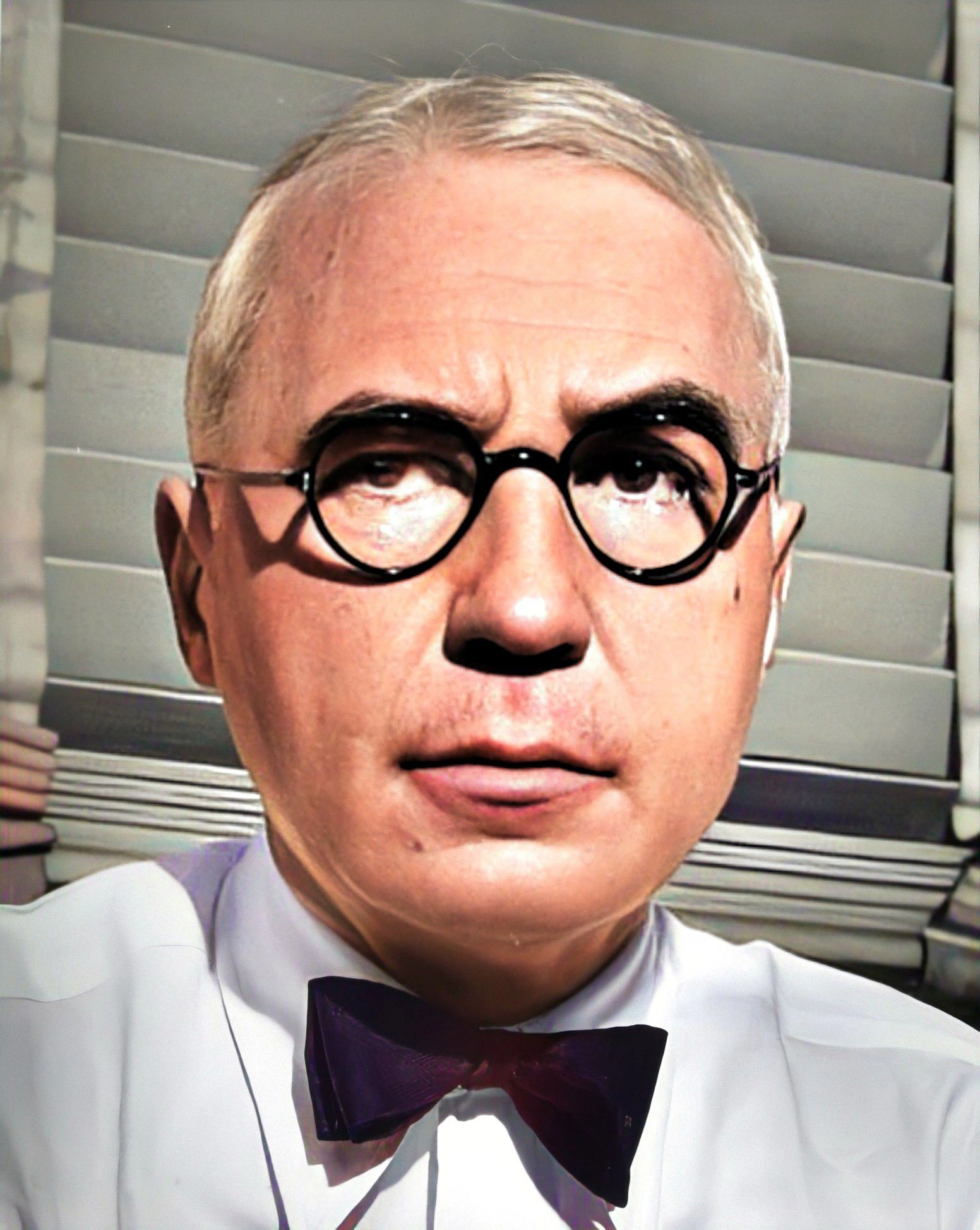
| 7 Quotes | |
| Born as | Elmer Holmes Davis |
| Occup. | Journalist |
| From | USA |
| Born | January 13, 1890 Aurora, Indiana, US |
| Died | May 18, 1958 Washington, D.C., US |
| Cause | Heart attack |
| Aged | 68 years |
| Cite | |
Citation Formats
APA Style (7th ed.)
Elmer davis biography, facts and quotes. (2026, February 11). FixQuotes. https://fixquotes.com/authors/elmer-davis/
Chicago Style
"Elmer Davis biography, facts and quotes." FixQuotes. February 11, 2026. https://fixquotes.com/authors/elmer-davis/.
MLA Style (9th ed.)
"Elmer Davis biography, facts and quotes." FixQuotes, 11 Feb. 2026, https://fixquotes.com/authors/elmer-davis/. Accessed 12 Feb. 2026.
Early Life and Background
Elmer Holmes Davis was born on January 13, 1890, in Aurora, Illinois, a Midwestern railroad town whose mix of small-city respectability and industrial energy shaped his lifelong belief that public life should be intelligible to ordinary citizens. He grew up in an America that still talked like a frontier democracy but was rapidly becoming a modern, corporate nation, and he learned early to distrust both boosterish slogans and the quiet intimidation of local orthodoxies.The tensions of his era - progressive reform, the rise of mass media, and then world war - formed the emotional backdrop to his inner life: a mixture of brisk rationality and moral alarm. Friends and listeners later recognized in him a man who could sound dry, even sardonic, while carrying a deeper anxiety about how quickly free societies could be bullied into lies or silence. That underlying fear, disciplined into prose, became his signature.
Education and Formative Influences
Davis attended the University of Illinois, where he absorbed the habits of argument and the progressive-era conviction that facts were a civic tool, not a private ornament. Like many ambitious young writers of his generation, he was drawn to New York, where magazines and newspapers offered a faster education than any classroom - a competitive milieu that rewarded speed, clarity, and a willingness to puncture cant. The early 20th-century press was both a marketplace and a moral theater; Davis learned to treat it as a public trust even when it behaved like an industry.Career, Major Works, and Turning Points
He became a journalist and editor in New York, writing for major publications, including The New York Times, and built a reputation as an exact, historically minded explainer with a novelist's ear for how people justify themselves. He also wrote books - notably The New York Times Book of the War (1921) and the later, widely read But We Were Born Free (1954) - that translated events into civic lessons rather than mere chronicles. His defining turning point came in World War II, when Franklin D. Roosevelt appointed him director of the Office of War Information (1942-1945). In that role, Davis confronted the central paradox of democratic propaganda: the nation needed persuasion without surrendering honesty. After the war he returned to writing and broadcasting, most famously as the calm, unsparing voice of "Elmer Davis and the News", shaping millions of listeners' sense that citizenship meant attention.Philosophy, Style, and Themes
Davis wrote and spoke as if democracy were a daily practice of nerve. His sentences aimed for the cadence of common sense, but beneath them was a theory of power: fear is the cheapest political currency, and the public must learn to refuse it. "The first and great commandment is, don't let them scare you". In Davis's psychology, courage was not romantic bravado but the ability to keep thinking when pressured, to resist the comforting lie, and to endure unpopularity when facts required it.He also believed that pluralism was not a weakness but the American operating system - provided citizens defended open argument from intimidation and demagoguery. "This nation was conceived in liberty and dedicated to the principle - among others - that honest men may honestly disagree; that if they all say what they think, a majority of the people will be able to distinguish truth from error". That faith made him suspicious of celebrity expertise and overconfident punditry, as in his warning that "One of the things that is wrong with America is that everybody who has done anything at all in his own field is expected to be an authority on every subject under the sun". The theme running through his work is disciplined humility: know what you know, say it plainly, and defend the conditions under which others can answer back.
Legacy and Influence
Davis died on May 18, 1958, having become a model of the mid-century public intellectual-journalist: historically literate, allergic to hysteria, and willing to treat patriotism as a demand for accuracy. His tenure at OWI remains a case study in how democracies communicate in wartime without fully surrendering to manipulation, and his broadcasts helped define a standard for radio news as civic education rather than performance. In an age still tempted by fear, conformity, and the cult of expertise, Davis endures as a voice insisting that liberty survives only when citizens keep their nerve, keep their skepticism, and keep talking to one another in good faith.Our collection contains 7 quotes written by Elmer, under the main topics: Freedom - Knowledge - Aging - Fear.
Other people related to Elmer: Robert E. Sherwood (Playwright)
Elmer Davis Famous Works
- 1955 Two Minutes Till Midnight (Novel)
- 1938 No Star Is Lost (Novel)
- 1921 History of the New York Times, 1851-1921 (Book)
Source / external links